What is occupational therapy?
Occupational therapy helps people to carry out daily activities as independently, pleasantly and appropriately as possible once again. These are activities that are important to you. For example, looking after yourself, working, studying, doing household chores, caring for others, maintaining social contacts or enjoying your leisure time.
Sometimes these activities no longer come naturally. For example, due to physical symptoms, a chronic condition, mental health issues, overwork, fatigue, ageing or changes in daily life. An occupational therapist helps you to rediscover a balance between what you want, what you can do and what is expected of you.
In doing so, we look not only at symptoms, but above all at possibilities. Within occupational therapy, we often use the PEO model. This model examines the interrelationship between:
- yourself: who you are, what you can do and what is important to you;
- your surroundings: such as your home, workplace and the people around you;
- your daily activities: for example, working, caring for others, exercising or relaxing.
By looking at these aspects together, we can work out why certain activities have become difficult and what might help. For example, a different way of doing things, an aid or an adjustment to your environment.
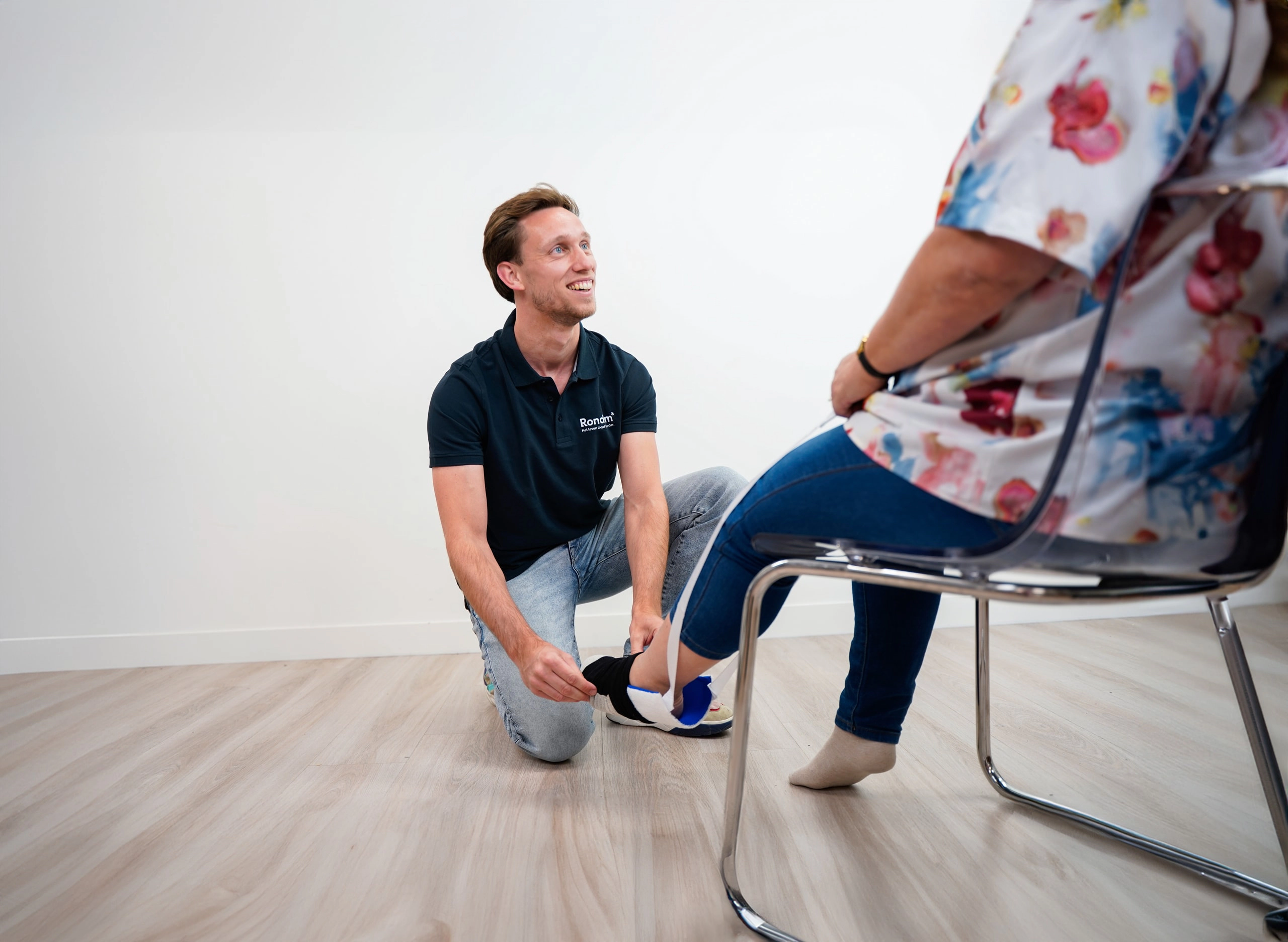
What does an occupational therapist do?
An occupational therapist will work with you to identify which everyday activities have become difficult and why this is the case. In doing so, we look not only at what you are unable to do, but also at what is still possible. An occupational therapist can, for example, provide support with:
- the distribution of energy and workload throughout the day;
- the implementation of daily activities;
- deal with physical or cognitive restrictions;
- advice on assistive devices or amendments;
- improving independence at home, at school or at work;
- finding a better balance between activities and recovery.
Together, we’ll look at which approach best suits your situation and goals.
Would you like to know whether your condition is suitable for occupational therapy? Then read on on the page When should you see an occupational therapist?
Working with the physiotherapist
Movement is an important part of daily life. That is why physiotherapists are also part of Rondom. They support people in improving their movement, strength, fitness and recovery when physical complaints are a factor.
Where appropriate, the occupational therapist works together with one of our physiotherapists. The occupational therapist focuses on carrying out daily activities, whilst the physiotherapist helps to improve the movement required for this. In this way, the treatments complement each other well and you receive support that is tailored to your personal situation and goals.
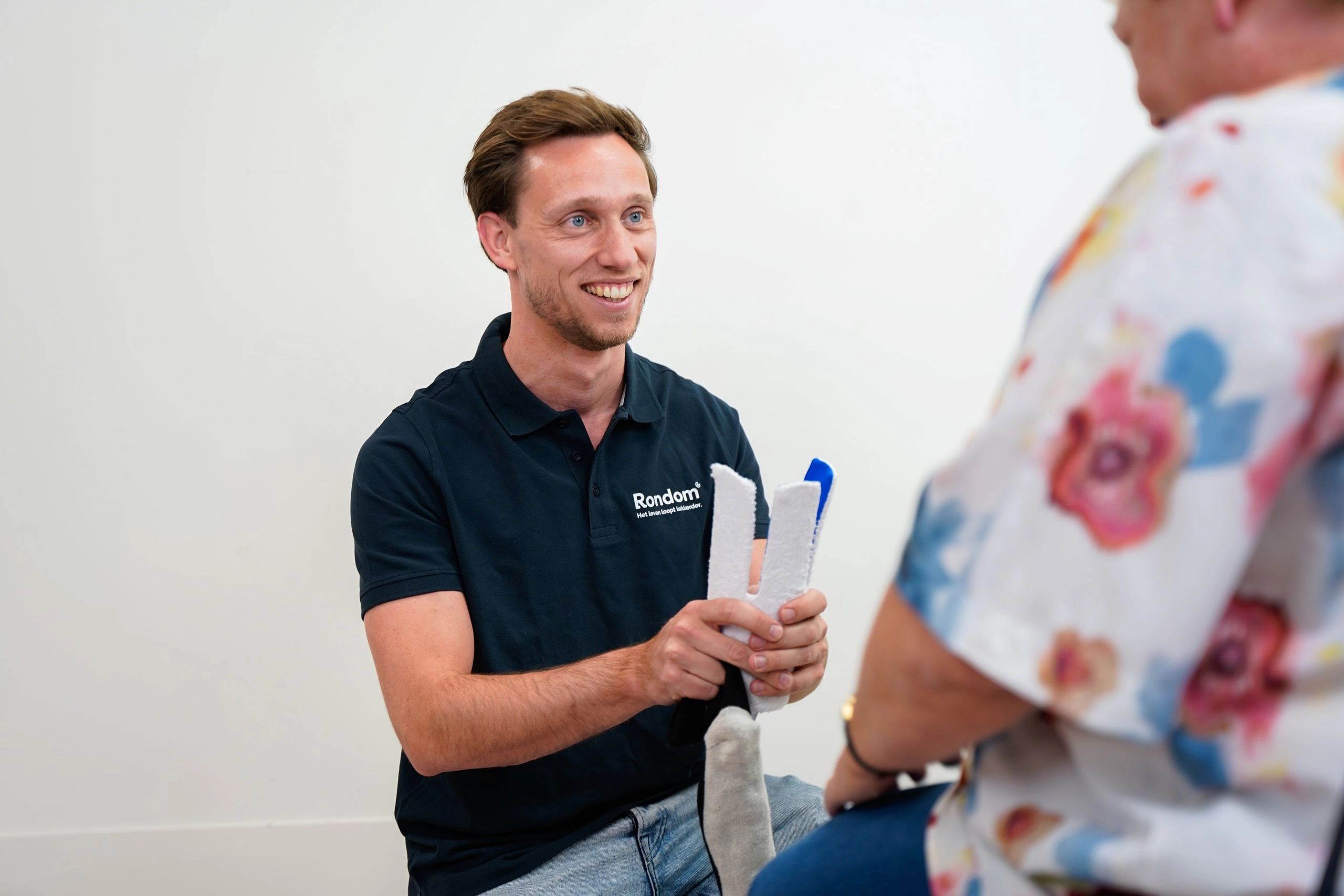
Areas of focus within occupational therapy
Occupational therapy is a broad field. Our occupational therapists have different areas of expertise and specialisms, ensuring that the support provided is tailored to your needs and circumstances.
The following areas of focus are available within Rondom:
- Problems with day-to-day functioning
- Children and young people
- Adults
- Older people
- Work and reintegration
- Workplace advice
- Advice on assistive devices
- Concussion or brain contusion
- Dementia
- Informal carers
- Rheumatism
- Neurological disorders
- Chronic conditions
- Pain symptoms
- Mental and psychosocial health issues
- Cognitive problems
- Developmental disorders
- Intellectual disabilities
- Physical disabilities
- Rehabilitation and recovery
- Burn-out and bore-out
- Physiotherapy services within Rondom
Collaboration with other healthcare providers
Sometimes, several factors play a role simultaneously in daily activities and functioning. That is why, where appropriate, our occupational therapists work together with other healthcare professionals both within and outside Rondom.
Consider, for example, collaboration with physiotherapists, psychologists, lifestyle coaches, dietitians, podiatrists or other practitioners.
By working together, we ensure that care is well co-ordinated and that you receive support that fits in with your everyday life.
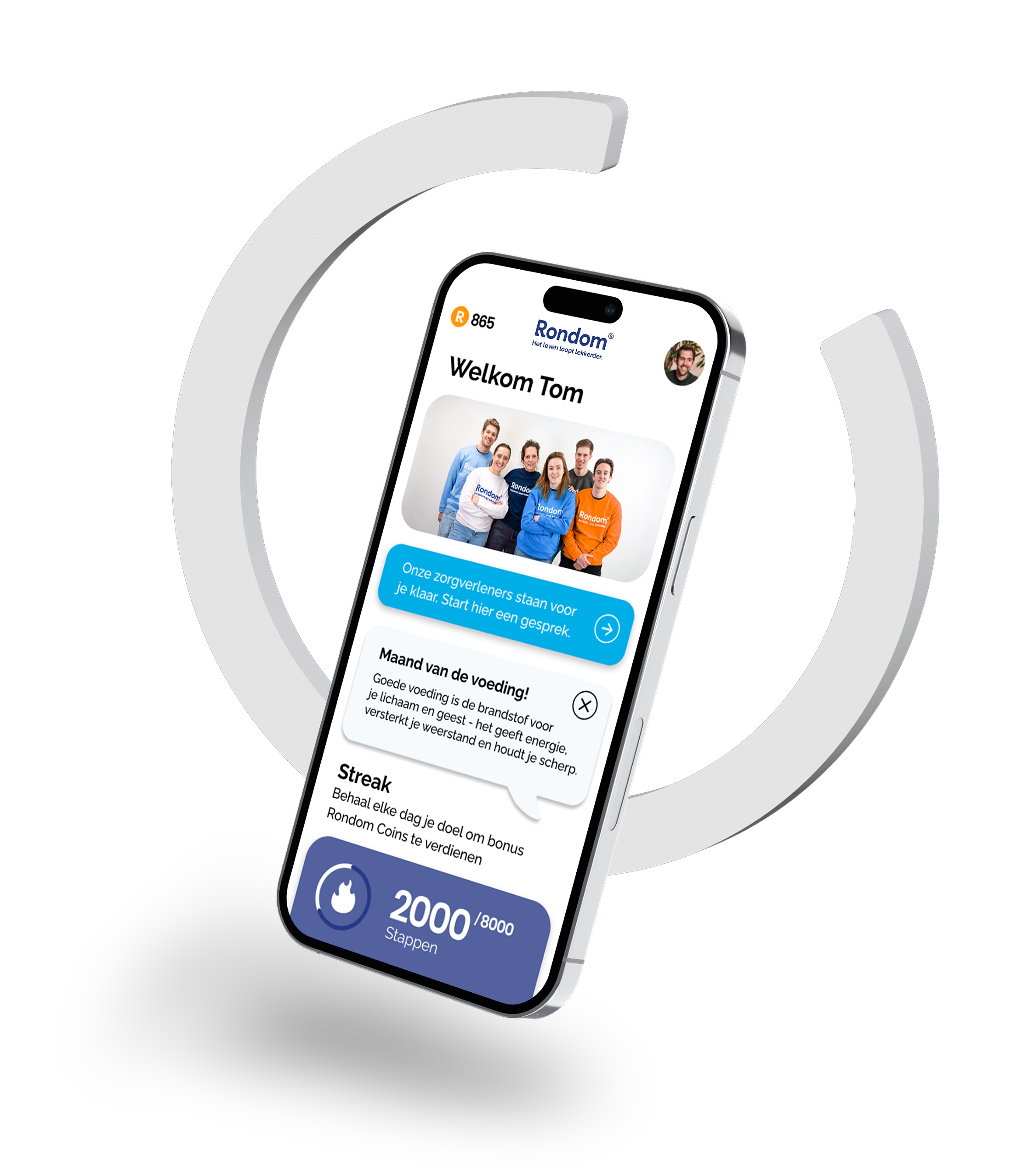
Work on your health with the Rondom app
- Direct contact with healthcare professionals via chat
- A community where you share experiences and motivate one another
- Personal challenges that match your goals
- Step counter for your daily exercise
- Earn points for healthy choices
- Articles, videos, recipes and assignments
- Register for (online) events