Occupational therapy for concussion or brain contusion
A concussion or brain contusion often heals on its own. However, many people find that their symptoms persist for longer than expected. Things that used to come easily can suddenly take a lot of energy or cause them to become overstimulated more quickly.
You may be experiencing headaches, tiredness or difficulty concentrating. Sensitivity to light, noise or crowds is also common. As a result, work, household chores, social activities or driving may require more effort than before.
Occupational therapy helps you regain control of your daily life. Together, we look at what drains your energy, what gives you energy, and how you can gradually build up your activities in a way that suits you. In this way, we work together towards a recovery that is tailored to your abilities and your daily life.

What do we offer?
Occupational therapy for concussion or brain contusion focuses on recovery, finding a good balance between exertion and rest, and resuming daily activities.
During an initial assessment, for example, we look at:
- what symptoms you experience in your daily life;
- activities that require a lot of energy or trigger symptoms;
- how your days are structured and where overload occurs;
- how you cope with stimuli such as noise, light and crowds;
- which activities you would like to take up again.
Depending on your situation, our support may include energy management, stimulus regulation, building up activities, advice on daily routines, support with returning to work, or practical adjustments tailored to your daily life.
Who is this offer intended for?
Occupational therapy for concussion or a brain contusion may be appropriate if you:
- gets tired easily or has little energy;
- has difficulty concentrating or remembering;
- are sensitive to light, noise or crowds;
- notices that everyday activities require more effort;
- symptoms persist following a concussion or brain contusion;
- seeks support in organising work, study or other activities;
- struggles to find a good balance between exertion and recovery;
- want to regain control of your daily life.
What can you expect?
An appointment with the occupational therapist begins with a discussion about your symptoms, daily activities and what is important to you in terms of regaining your ability to do these things. In doing so, we look not only at what you are struggling with, but also at what is already going well and what we can build on.
Together, we’ll identify where stress arises and what signals your body is giving. This may involve looking at your daily routine, periods of rest, sensory overload, energy levels and the balance of activities such as work, study, household chores or social interactions.
In any case, you can count on:
- practical advice tailored to your everyday life;
- focus on energy, recovery and resilience;
- support in managing stimuli;
- practical guidance for developing activities;
- support tailored to your personal situation and goals.
Would you like to know more about registering, appointments or the treatment process? Then take a look at the page ‘What to expect during your visit’. Or read our frequently asked questions.
Collaboration with other healthcare providers
Symptoms following a concussion or brain contusion often affect several aspects of daily life. That is why, where necessary, our occupational therapists work together with other healthcare professionals at Rondom.
Depending on your situation, this could be, for example, a physiotherapist, psychologist, lifestyle coach or other practitioner. By combining knowledge and expertise, we provide support that is not only aimed at alleviating your symptoms, but also at enabling you to do the things that matter to you again.
Costs and reimbursement
Occupational therapy is covered under the basic health insurance. You are entitled to 10 hours of occupational therapy per calendar year. Do you have supplementary insurance? If so, you may be entitled to additional treatment hours on top of these 10 hours. This varies depending on your health insurer and policy. You should therefore always read your policy terms and conditions carefully or contact your health insurer. This way, you’ll know exactly how many treatment sessions are covered for you. Check our price guide for our current rates. Would you like to know more about cover? Then click here.
Frequently Asked Questions
We have already compiled a number of answers to practical questions about our occupational therapy services for you. For example:
- Can occupational therapy help with symptoms that persist after a concussion?
- How do I deal with sensory overload?
- How do I responsibly resume activities?
- Can occupational therapy help with a return to work or study?
- Is occupational therapy covered by insurance?
View all frequently asked questions about occupational therapy here.
View here all frequently asked questions about occupational therapy.
Contact
Would you like to know whether occupational therapy is suitable for your situation, or do you have any questions about the services we offer? We’d be happy to discuss this with you.
Together, we’ll look at what support best meets your needs.
- Please contact us via: Telephone: 088-1180541 (Monday to Friday, 08.00–17.00) Email: info@rondomergotherapeuten.nl
- Or book an appointment straight away via our appointment planner
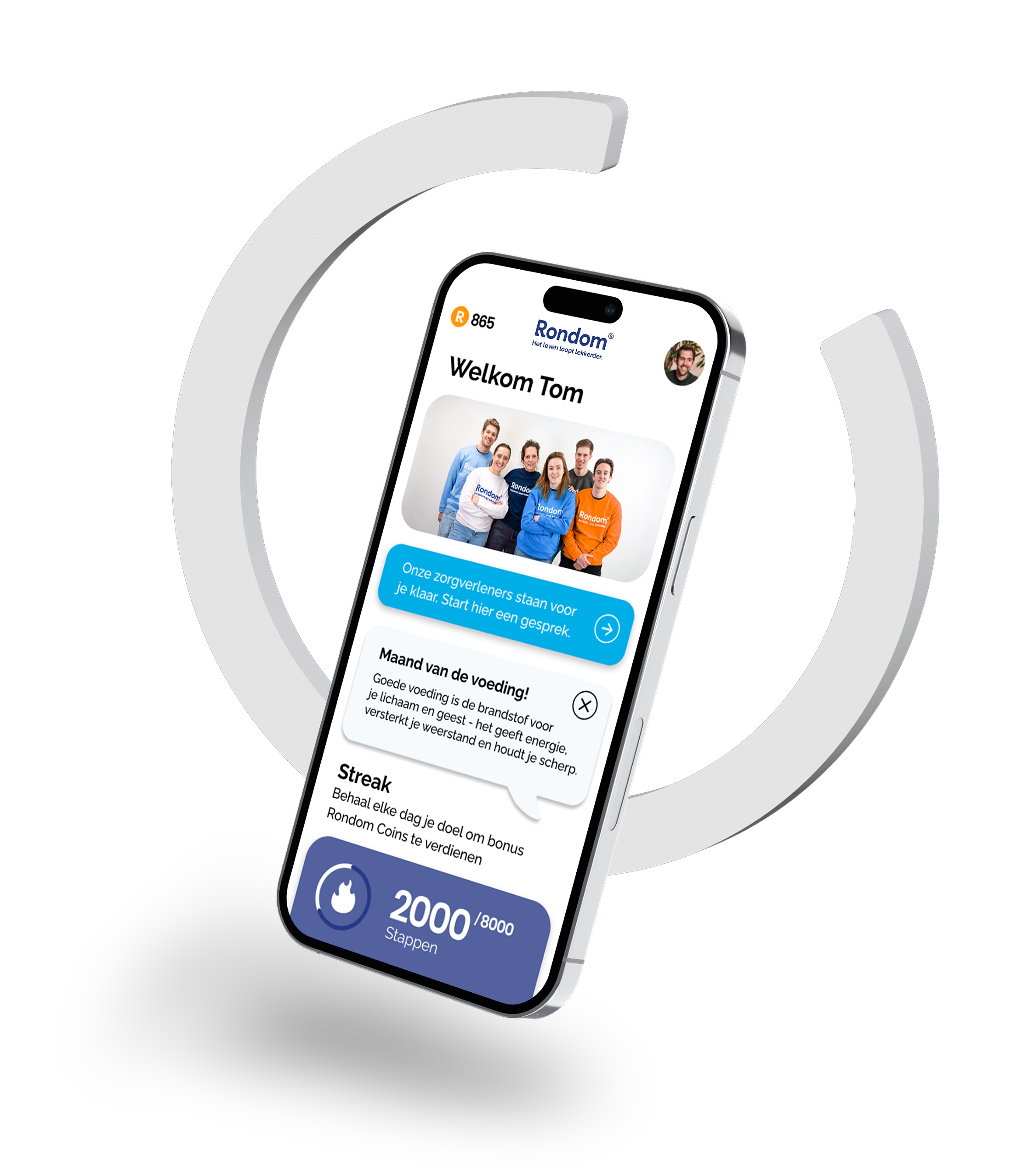
Work on your health with the Rondom app
- Direct contact with healthcare professionals via chat
- A community where you share experiences and motivate one another
- Personal challenges that match your goals
- Step counter for your daily exercise
- Earn points for healthy choices
- Articles, videos, recipes and assignments
- Register for (online) events