Occupational therapy for pain symptoms
Pain can have a significant impact on daily life. Sometimes limitations arise because activities cause pain, require more energy or become less predictable. As a result, it can be tempting to avoid activities, put them off or, conversely, carry on for too long when things seem to be going better.
You may find that ordinary everyday activities take more effort, that you feel less confident about moving around, or that you increasingly have to make choices about what you do and do not do. Chronic pain can also affect your work, leisure, social activities and the distribution of energy throughout the day.
Occupational therapy helps you to carry out daily activities in a way that suits your abilities and capacity. In doing so, we focus not only on the pain itself, but above all on how you can continue to do the activities that are important to you.

What do we offer?
Occupational therapy for pain focuses on maintaining or rebuilding daily activities despite pain.
During an initial assessment, for example, we look at:
- which activities have become difficult due to pain;
- how exertion and recovery alternate throughout the day;
- patterns of overexertion or, conversely, avoidance of activities;
- the impact of pain on work, household chores and leisure;
- opportunities to organise or carry out activities differently.
Depending on your situation, our support may consist of advice, energy management, better organisation and structuring of activities, coaching, practising skills, assistive devices or practical adjustments that fit in with your daily life.
Who is this offer intended for?
Occupational therapy for pain may be appropriate if you:
- notice that pain is affecting your daily activities;
- have started avoiding activities for fear of worsening your symptoms;
- struggles to strike a balance between exertion and recovery;
- experiences fluctuating capacity;
- have become less active than you would like;
- seeks support in setting up activities;
- work, household or find it harder to keep up your leisure activities;
- want to gain better control over your functioning despite pain.
This service may, for example, be suitable for long-term or recurring pain, such as muscle or joint pain, chronic pain or pain that affects daily activities.
What can you expect?
An appointment with the occupational therapist begins with a discussion about your symptoms, your daily activities and what is important for you to continue doing. In doing so, we look not only at times when you are in pain, but also at how activities and recovery influence one another.
Depending on your situation, we’ll work together to identify patterns. For example, when you push yourself too hard, put off activities or, conversely, take on too much on good days. We’ll then look for ways to distribute activities more evenly and build them up in a manageable way.
In any case, you can count on:
- practical advice tailored to your everyday situation;
- support in the allocation of activities and energy;
- support aimed at ensuring the long-term continuation of activities;
- focus on confidence in movement and functioning;
- collaboration with other healthcare providers from Rondom where this adds value.
Would you like to know more about registering, appointments or the course of a treatment programme? Then take a look at the page What can you expect during your visit to us? Or read our frequently asked questions.
Collaboration with other healthcare providers
Pain is often influenced by several factors at the same time. It is not just physical strain that plays a role, but also recovery, sleep, stress, fitness, expectations and daily habits. That is why our occupational therapists work alongside other healthcare professionals at Rondom where necessary.
Depending on your situation, this could be, for example, a physiotherapist, lifestyle coach, psychologist, podiatrist or another practitioner. Together, we look at how exercise, recovery, energy and daily activities influence one another, so that support helps you to maintain these activities in a feasible and sustainable way.
Costs and reimbursement
Occupational therapy is covered by basic health insurance. You are entitled to 10 hours of occupational therapy per calendar year. Do you have supplementary insurance? If so, you may be entitled to additional treatment hours on top of these 10 hours. This varies depending on your health insurer and policy. You should therefore always read your policy terms and conditions carefully or contact your health insurer. That way, you’ll know exactly how many treatment sessions are covered for you. View here our rates. Would you like to know more about reimbursements? Then click here.
Frequently Asked Questions
We have already compiled a number of answers to practical questions about our occupational therapy services for you. For example:
View all here frequently asked questions about occupational therapy.
Contact
Would you like to know whether occupational therapy is suitable for your situation, or do you have any questions about the services we offer? We’d be happy to discuss this with you. Together, we’ll look at what support best meets your needs.
- Please contact us via: Telephone: 088-1180541 (Monday to Friday, 08.00–17.00) Email: info@rondomergotherapeuten.nl
- Or book an appointment straight away via our appointment scheduler.
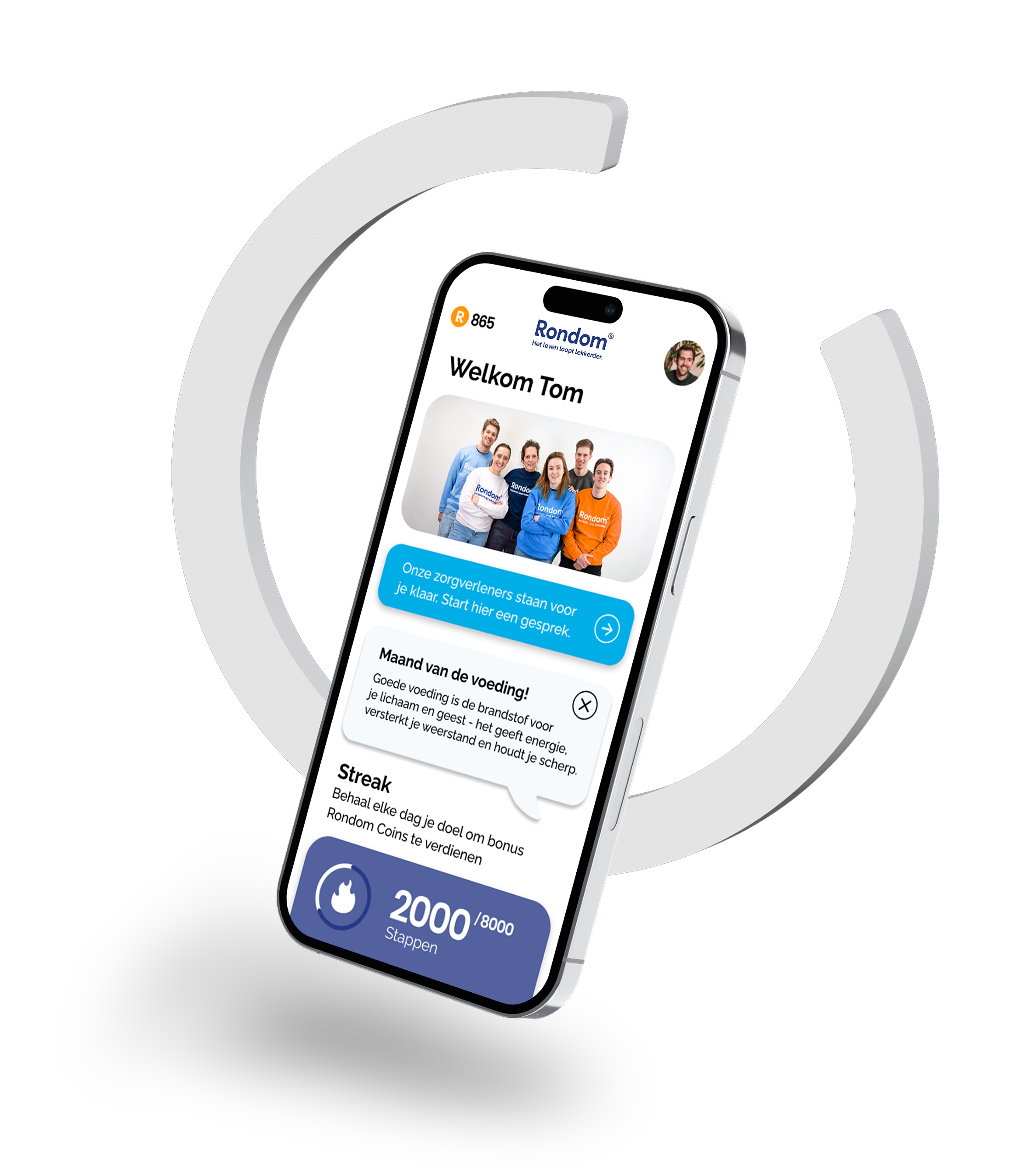
Work on your health with the Rondom app
- Direct contact with healthcare professionals via chat
- A community where you share experiences and motivate one another
- Personal challenges that match your goals
- Step counter for your daily exercise
- Earn points for healthy choices
- Articles, videos, recipes and assignments
- Register for (online) events