Occupational therapy for people with intellectual disabilities
Cognitive difficulties can affect how you process information and carry out everyday activities. Activities that used to come naturally may now require more attention, time or energy. Sometimes you may find that you get distracted more easily, struggle to keep track of things, or that ordinary tasks take more effort.
Perhaps you forget appointments, find it easier to lose track of things, or struggle to plan and complete activities. Problems with concentration, processing information or multitasking can also affect your work, household chores and social activities.
Occupational therapy helps to make daily activities manageable and achievable again. In doing so, we do not focus on improving cognition itself, but on ways to better organise and sustain daily activities.

What do we offer?
Occupational therapy for people with intellectual disabilities focuses on supporting independence and participation in everyday activities.
During an initial assessment, for example, we look at:
- how daily activities take place at home, at school, at work or at a day centre;
- independence in personal care and daily routines;
- understanding, plans and carrying out activities;
- the influence of structure, stimuli and the environment;
- ways of making activities clearer and easier to carry out.
Depending on the situation, our support may consist of advice, skills training, visual aids, structure, assistive devices or practical adjustments that fit in with everyday life.
Who is this offer intended for?
Occupational therapy for people with intellectual disabilities may be appropriate when someone:
- has difficulty with daily activities or maintaining independence;
- needs support with routines and structure;
- wishes to develop greater independence in terms of care or daily activities;
- experiences challenges at school, work or in their daily activities;
- has difficulty coping with changes or new situations;
- needs support in carrying out activities;
- has become dependent on help from others;
- wants to create more opportunities for people to get actively involved.
This service may be suitable for children, young people and adults with an intellectual disability who require extra support with daily activities, independence or participation.
What can you expect?
An appointment with the occupational therapist begins with a discussion with you. Sometimes parents, carers or other relevant people are also present. Together, we look at which everyday activities are important and where extra help is needed.
Depending on the situation, we assess how activities are carried out in practice and what adjustments might help. This may involve focusing on carrying out activities step by step, predictability, visual support, assistive devices and promoting independence.
In any case, you can count on:
- support tailored to an individual’s abilities and pace;
- practical advice for home, school, work or leisure activities;
- support focused on independence and self-determination;
- a focus on activities that are meaningful;
- collaboration with other healthcare providers from Rondom where this adds value.
Would you like to find out more about registering, appointments or the course of a treatment programme? Then take a look at the page What can you expect during your visit to us? Or read our frequently asked questions.
Collaboration with other healthcare providers
In cases of intellectual disabilities, daily activities, communication, the environment and support are often closely interlinked. That is why our occupational therapists work alongside other care providers at Rondom where necessary.
Depending on your situation, this could, for example, be a psychologist, physiotherapist, lifestyle coach, podiatrist or another practitioner. Where appropriate, we also coordinate support with parents, carers, the school or day care centre. In this way, we ensure that advice is not only effective during appointments, but can actually be applied in everyday life.

Costs and reimbursement
Occupational therapy is covered by basic health insurance. You are entitled to 10 hours of occupational therapy per calendar year. Do you have supplementary insurance? If so, you may be entitled to additional treatment hours on top of these 10 hours. This varies depending on your health insurer and policy. You should therefore always read your policy terms and conditions carefully or contact your health insurer. That way, you’ll know exactly how many treatment sessions are covered for you. View here our rates. Would you like to know more about reimbursements? If so, click here.
Frequently Asked Questions
We have already compiled a number of answers to practical questions about our occupational therapy services for you. For example:
View all here frequently asked questions about occupational therapy.
Contact
Would you like to know whether occupational therapy is suitable for your situation, or do you have any questions about the services we offer? We’d be happy to discuss this with you. Together, we’ll look at which support best meets your needs.
- Please contact us via: Telephone: 088-1180541 (Monday to Friday, 08.00–17.00) Email: info@rondomergotherapeuten.nl
- Or book an appointment directly via our appointment scheduler.
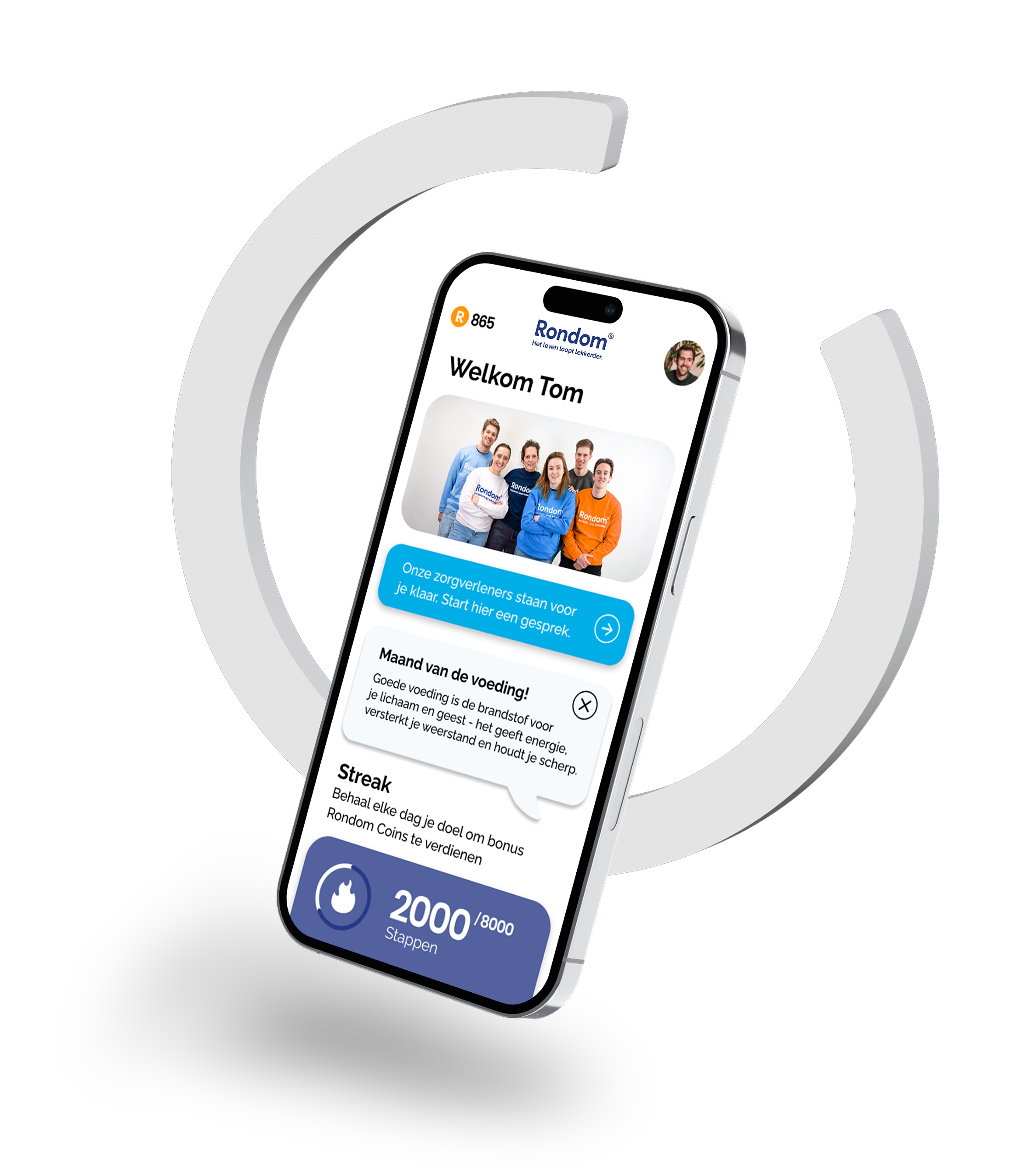
Work on your health with the Rondom app
- Direct contact with healthcare professionals via chat
- A community where you share experiences and motivate one another
- Personal challenges that match your goals
- Step counter for your daily exercise
- Earn points for healthy choices
- Articles, videos, recipes and assignments
- Register for (online) events