When should you see an occupational therapist?
Everyone carries out important activities every day. Such as looking after yourself, working, studying, doing the housework, caring for others, social contacts staying active or relaxing. Sometimes these activities no longer come naturally.
There may be various reasons for this. For example physical symptoms, fatigue, pain, overwork, mental health issues, a chronic condition, getting older or changes in your life. For example, you may notice that you have less energy, find it harder to keep track of things, or that everyday tasks take more effort than they used to.
The reason for seeing an occupational therapist varies from person to person. It is important to remember that the focus is not on the diagnosis, but on the question: are you still able to do the things that are important to you?
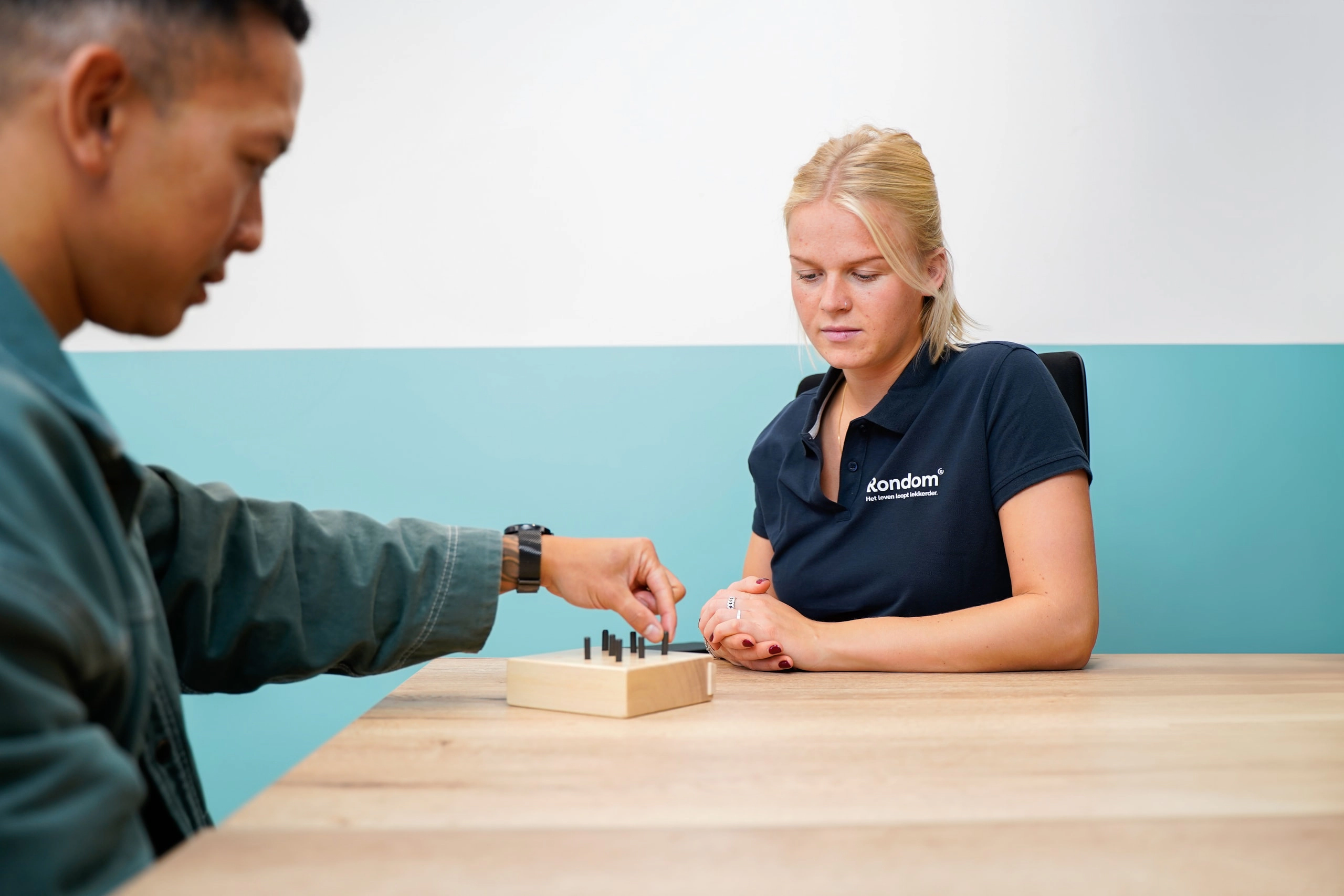
When can occupational therapy help?
A visit to an occupational therapist can help if everyday activities no longer come naturally or require more energy than you are used to. Not only when you are struggling with something, but also if you want to prevent problems or cope better with changes in your health or circumstances.
A visit to an occupational therapist may be appropriate if you:
- notes that daily activities cost a lot of energy;
- has difficulty with balance between exertion and relaxation;
- gets stuck in work, study or household chores;
- pain, fatigue or overwork experiences;
- has problems with concentration, planning or overview;
- more independent want to function at home, at work or at school;
- want to prevent symptoms from getting worse;
- seeks support from a chronic condition or changes in health.
Occupational therapy can provide support in various situations. Below you can read more about common requests for help.
Fatigue, overexertion and energy balance
Sometimes it becomes difficult to keep up with all your daily activities. You get tired more quickly, need to rest more often, or find that it is hard to balance work, family and leisure.
Occupational therapy may be appropriate if you find that you have started organising your activities differently, putting things off or are unable to do as much as you would like.
Occupational therapy can, for example, help with:
- burn-out or chronic stress;
- chronic fatigue symptoms;
- Long COVID;
- chronic pain;
- fibromyalgia or ME/CFS;
- recovery following illness or medical treatment;
- recurring overwork in everyday life.
Problems with day-to-day functioning at home, at work or at school
Sometimes everyday activities become more complicated. For example, because planning tasks becomes more difficult, carrying out activities takes longer, or because your environment no longer meets your needs.
The occupational therapist will work with you to identify which adjustments, strategies or aids might help. You don’t need to wait until you’re unable to work or find yourself struggling at home. It is precisely when you notice that everyday activities are becoming increasingly difficult that early support can help.
Occupational therapy may be suitable for:
- problems with concentration or overview;
- difficulty with planning and organising;
- restrictions on work or during study;
- problems with household activities;
- continuing to live independently;
- practical questions regarding assistive devices or home adaptations;
- limitations without a clear medical diagnosis.

Neurological, chronic or physical conditions
Some conditions affect how you carry out activities. Not because you want to do less, but because your body or energy levels work differently than they used to.
The occupational therapist helps people to continue carrying out daily activities as independently and comfortably as possible.
Occupational therapy can provide support with:
- dementia or memory problems;
- acquired brain injury, such as following a stroke or concussion;
- Parkinson’s disease;
- multiple sclerosis (MS);
- rheumatism or osteoarthritis;
- muscle diseases or other neurological disorders;
- physical disabilities;
- recovery after an operation or an accident.
Collaboration with other healthcare providers
Day-to-day functioning is influenced by various factors. Sometimes physical symptoms play a part. Sometimes it is energy levels, lifestyle, work, recovery or mental health.
That is why our occupational therapists work alongside other healthcare professionals at Rondom where necessary. Depending on your situation, this could, for example, be a physiotherapist, lifestyle coach, psychologist, podiatrist or another practitioner.
Not every request for help requires occupational therapy alone. By looking together at your goals, capabilities and day-to-day functioning, the assessment and support provided are better tailored to your needs. This ensures you receive support that is suited to your situation.

Work on your health with the Rondom app
- Direct contact with healthcare professionals via chat
- A community where you share experiences and motivate one another
- Personal challenges that match your goals
- Step counter for your daily exercise
- Earn points for healthy choices
- Articles, videos, recipes and assignments
- Register for (online) events