When should you see a psychologist?
Everyone experiences situations that affect how you feel, think or function. Often, you manage to cope with these on your own, or things return to normal of their own accord. But sometimes you may find that symptoms persist, recur or increasingly affect your daily life.
The reason for seeing a psychologist varies from person to person. It is important to remember that the focus is not on the diagnosis, but on the question: does what you are experiencing affect how you live, work, learn or feel?
Even if, as a parent or carer, you are concerned about your child or young person, it can be helpful to explore together what support is appropriate.

When can psychology help?
A visit to a psychologist can help when thoughts, emotions or behaviour start to affect your daily life. Not only when your symptoms are severe, but also when you feel stuck, want to understand certain patterns, or are looking for support to cope better with what is going on.
Psychology may be appropriate if you:
- notice that stress or tension has a significant impact on your daily life;
- often worries or finds it difficult to relax;
- feels gloomy, anxious or emotionally unbalanced;
- gets stuck in work, studies, relationships or parenting;
- struggles with change or major events;
- notices that symptoms are recurring;
- want to understand better why you think, feel or react in certain ways;
- looking for support for yourself, your child or your family.
A psychologist can offer support in a variety of situations. Below, you can read more about common issues for which you can seek help from our psychologists.
Stress, burnout and emotional difficulties
Sometimes you find it difficult to keep up with everything as you are used to. You may notice that you get stressed more easily, have less energy or find it harder to recover. Your emotions may also feel different from what you are used to.
A psychologist can, for example, help with:
- stress or long-term overwork;
- symptoms of burnout;
- worrying or persistent anxiety;
- anxiety symptoms;
- gloom or feelings of depression;
- stress-related symptoms;
- difficulty coping with change or loss.
Getting stuck in daily life, work, study or relationships
Sometimes symptoms do not stem from a single clear cause, but you may simply notice that things are not going as well as they used to. You may feel stuck in your work, studies, relationships or everyday situations and notice that this is affecting how you feel.
Psychological support may be appropriate for:
- difficulty setting boundaries;
- perfectionism or high expectations of yourself;
- problems with concentration or keeping track of things;
- getting stuck at work or whilst studying;
- recurring patterns in relationships;
- insecurity or a negative self-image;
- difficulty coping with change or major life events
Anxiety, low mood and other mental health issues
Some symptoms persist for a long time or recur frequently. Other symptoms arise following an event or during a particular stage of life. It is not always immediately clear why symptoms arise.
A psychologist can offer support with:
- anxiety or panic symptoms;
- gloom or depressive symptoms;
- trauma or life-changing experiences;
- difficulty in dealing with emotions;
- questions relating to self-image or identity;
- psychological vulnerability;
- recurring mental health symptoms.
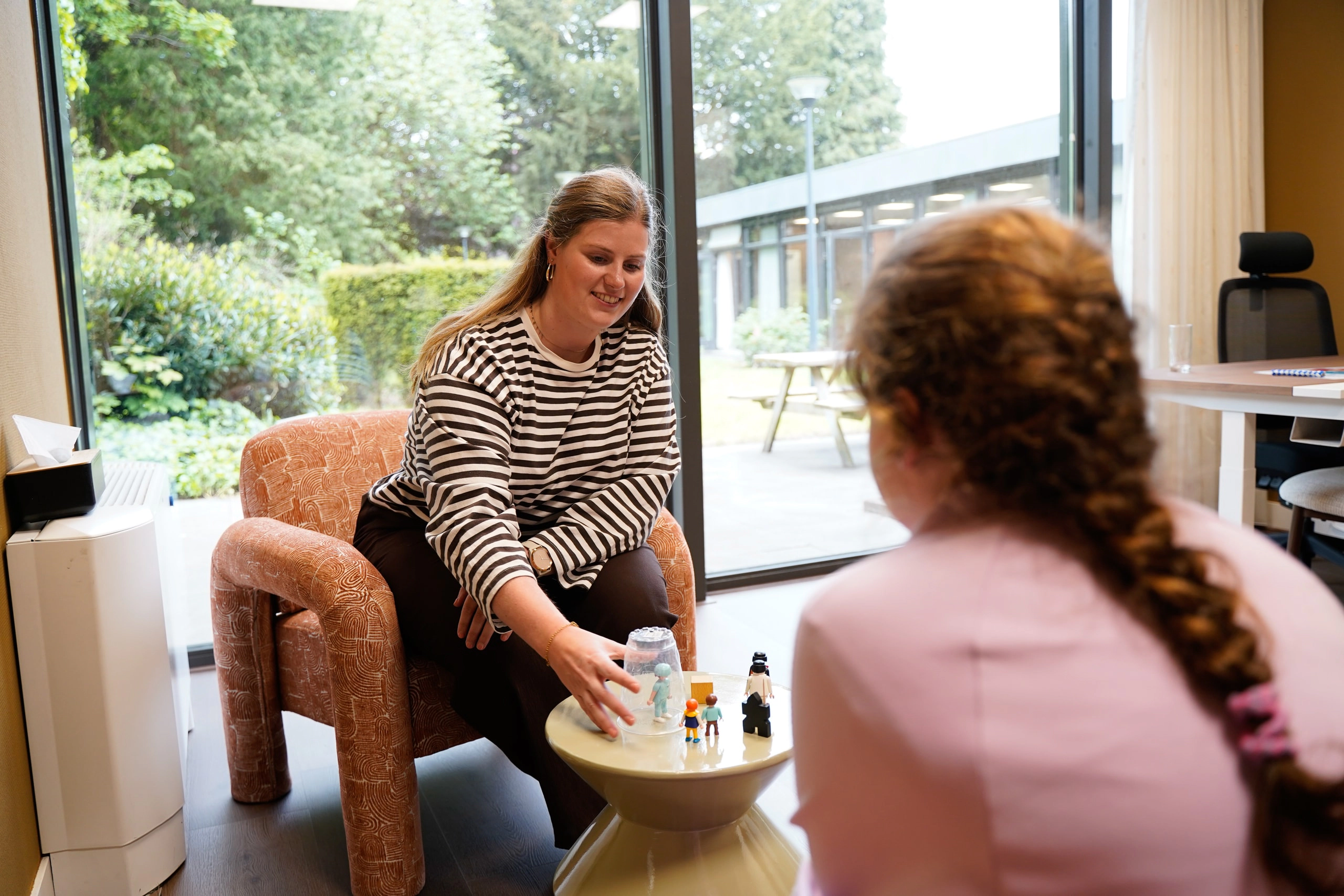
For children, young people, adults and parents
Psychological support is available to people of all ages. Every stage of life brings its own questions, changes and challenges.
At children it may concern emotions, behaviour or development, such as dealing with anger, anxiety or social situations. In the case of young people These issues often relate to school, self-image, identity or mental health. In adults Issues such as workload, relationships, stress or finding a balance in daily life can play a role. For parents, support can be helpful with questions about parenting, behaviour or their child’s development. In addition, families increasingly seek support when facing changes or difficult situations within the family.
Collaboration with other healthcare providers
Mental health is not separate from other aspects of daily life. Sometimes physical symptoms play a part. Sometimes work, lifestyle, recovery, exercise or daily stress affect how a person feels.
That is why our practitioners work together with other healthcare providers from Rondom. Depending on your situation, this could, for example, be a physiotherapist, occupational therapist, lifestyle coach or another practitioner.
Not every request for help requires psychological support alone. By looking at your situation, goals and day-to-day functioning together, assessments and support can be better tailored to your needs. This ensures you receive support that is suited to your situation.
Contact
Would you like to know whether psychology is right for your situation, or do you have any questions about the services we offer? We’d be happy to discuss this with you. Together, we’ll work out what best suits your needs. Please contact us at:
OnsPsychologie (Eindhoven area)
Website: www.onspsychologie.nl
Telephone: 088 1180530
Email: info@onspsychologie.nl
Daadkracht Psychologie (Dongen area)
Website: www.daadkrachtpsychologie.nl
Telephone: 0162 321815 (Mon to Fri 8.00 to 17.00)
Email: info@daadkrachtpsychologie.nl
Or book an appointment straight away via our appointment scheduler.