What is psychology?
Psychology is about mental health and how thoughts, emotions and behaviour influence daily life. It helps us to better understand why people react differently to situations, how feelings arise and what influence thoughts, experiences and circumstances can have on behaviour and day-to-day functioning. Psychology also provides insight into how mental health issues can arise and why certain issues sometimes persist or recur. A better understanding of these connections provides greater insight into what influences how you feel and how you experience your daily life.

What does a psychologist do?
A psychologist can help you to better understand your thoughts, emotions and behaviour, and to deal with them in an appropriate way.
Together, we will explore the symptoms or concerns you are experiencing and how they affect your daily life. In doing so, we will look not only at the symptoms themselves, but also at factors that may contribute to their onset or persistence.
For example, a psychologist can provide support with:
- gaining a better understanding of symptoms;
- coping with stress or tension;
- the process of coming to terms with events or changes;
- recognising patterns;
- dealing with emotions or mental strain;
- strengthening resilience;
- improving balance in daily life;
- supporting recovery and personal goals.
Would you like to know whether your complaint is suitable for psychological support? If so, please read on on the page ‘When should you see a psychologist?’
Working with the social worker
Mental health issues do not always occur in isolation. Sometimes social, practical or societal circumstances also play a role, such as family problems, financial worries, major life changes or other situations that affect daily life.
That is why, when necessary, our psychologists can draw on Rondom’s expertise in social work to complement the treatment. In this way, support can be provided for social and practical challenges that affect well-being and day-to-day functioning.
The psychologist focuses on treating mental health issues. The social worker provides support with the social and practical matters that come into play. By carefully coordinating this support, we can develop an approach that best suits your situation.
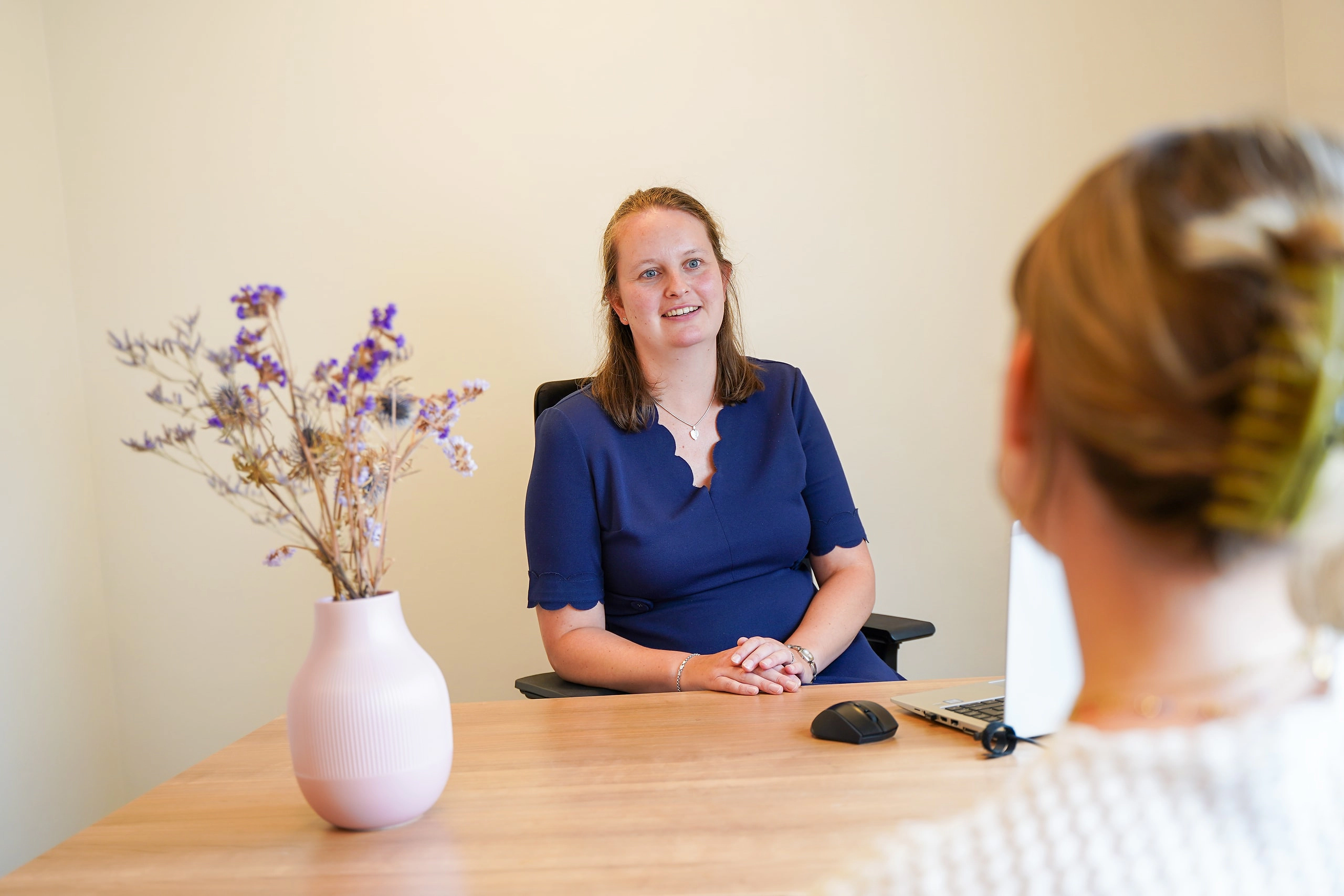
Areas of focus within psychology
Psychology is a broad field. At Rondom Psychologen, we have a variety of care providers, each with their own background and expertise, ensuring that the support you receive is tailored to your specific needs and circumstances. Our team includes, amongst others:
- Healthcare psychologists;
- psychologists;
- orthopedagogues;
- Mental health counsellors;
- trainee psychologists.
The type of expertise or support that is appropriate depends on your situation and goals. Together, we will look at which care best meets your needs.
Collaboration with other healthcare providers
Mental health does not always exist in isolation. Symptoms may be linked to physical health, lifestyle, work or other circumstances that affect day-to-day functioning.
That is why, where appropriate, our psychologists work together with other healthcare professionals at Rondom. This includes, for example, collaboration with occupational therapists, lifestyle coaches, physiotherapists or other practitioners.
By tailoring our expertise and guidance to your needs, we ensure that the support we provide is well suited to your situation and goals.
Contact
Would you like to know whether psychology is right for your situation, or do you have any questions about the services we offer? We’d be happy to discuss this with you. Together, we’ll look at what best suits your needs. Please contact us via:
OnsPsychologie (Eindhoven area)
Website: www.onspsychologie.nl
Telephone: 088 1180530
Email: info@onspsychologie.nl
Daadkracht Psychologie (Dongen area)
Website: www.daadkrachtpsychologie.nl
Telephone: 0162 321815 (Mon to Fri 8.00 to 17.00)
Email: info@daadkrachtpsychologie.nl
Or book an appointment directly via our appointment scheduler.