1. Home
  2. Healthy living and participation
  3. Mantelzorg gezin en relaties
  4. Minder kunnen doen voor partner of kinderen

What do you think of our website?

We would love to hear what works well and what could be better. Your feedback helps us improve our website.

What would you like to give feedback on?

Read how we use feedback data.

Please note: Do not share medical details or a citizen service number (BSN).

Rondom – Het leven loopt lekkerder
Nederlands
  • Employers
  • Partners
  • Research
  • Working at
Rondom app
Ordering insolesAfspraak maken
Rondom – Het leven loopt lekkerder
Afspraak maken
Rondom – Het leven loopt lekkerder

We’d be happy to help you further.

  • info@rondomlopengroep.nl
  • 088-1180570

Need help?

  • Frequently Asked Questions
  • Reimbursement
  • Complaints procedure
  • What does your health insurer cover?

Contact

  • Book an appointment

Need help?

  • Frequently Asked Questions
  • Reimbursement
  • Complaints procedure
  • What does your health insurer cover?

Contact

  • Book an appointment

Services

  • Occupational therapy
  • Lifestyle and Dietetics
  • Podiatry and chiropody care
  • Psychology and social work
  • Physiotherapy
  • Rondom in Business
  • Rondom Shoes

Discover Rondom

  • Healthy living and participation
  • Activities
  • Rondom app
  • Social impact
  • Research

About Rondom

  • Current
  • Find a location near you

Follow Rondom

LinkedInInstagramFacebook

Life runs more smoothly.

General (payment) terms and conditionsPrivacy StatementCookie Policy
  • What do you notice?
  • What might be the reason for this?
  • What can you do yourself?
  • When is it advisable to seek help?
  • How Rondom can help
  • Download the Rondom app
  • Make an appointment

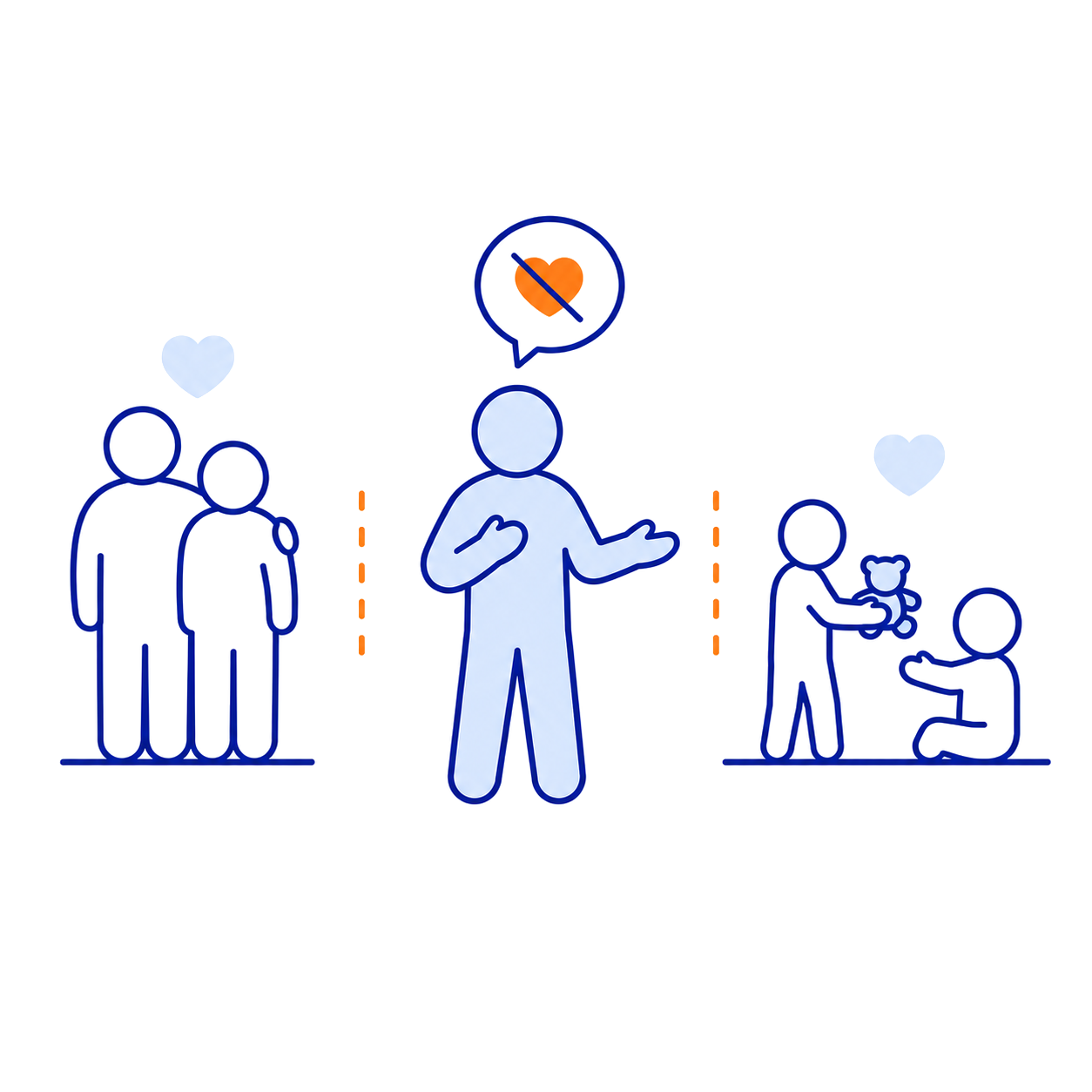
Being unable to do as much for one’s partner or children

Do you find it difficult that you are unable to do as much for your partner or children? Perhaps you find it harder to manage practical tasks, have less energy to give them your full attention, or find yourself having to say ‘no’ more often. That can be painful, especially if looking after others is a key part of who you are. Being able to do less does not mean you are any less important. Yet it can certainly feel that way. You may feel guilty, sad or insecure. It helps to consider what you can still do and how you can remain involved in different ways.
Being unable to do as much for one’s partner or children
What do you notice?

Being unable to do as much for your partner or children can stir up a lot of emotions.

You may, for example, notice that:

  • you feel guilty;
  • you get tired more quickly when you’re with your family;
  • avoids activities involving children;
  • you must leave your household chores undone;
  • you have less patience;
  • you feel more dependent on your partner;
  • you feel sad about what you can no longer do;
  • you are afraid of disappointing others;
  • you find it difficult to accept help.

Sometimes you try to carry on anyway so as not to be a burden to anyone. But that is precisely how you can end up pushing yourself beyond your limits.
What might be the reason for this?

Related topics

  • Asking for help without straining the relationship

    Would you like to ask your partner, family or friends for help, but are you worried that this might put a strain on the relationship? Perhaps that is why you ask for less help than you actually need. Or you only ask for help when you really can’t cope any longer. This can cause tension, because the other person then suddenly has to take on a lot more. Asking for help within a relationship or family is a sensitive matter. You don’t want to ask too much of the other person. At the same time, you sometimes need support. By discussing the need for help clearly and in good time, the relationship often remains better balanced.

  • Balancing informal care with work or family life

Was this information helpful?

Physical symptoms such as pain, as well as tiredness or mental strain, can mean you have less energy for your partner or children. Stress and poor sleep can also reduce your patience and resilience.

In addition, past expectations may play a part. You may want to carry on doing what you have always done. If that doesn’t work out, it feels like a failure.

The reactions of others can also have an impact. Sometimes family members want to help, but nobody really knows how.

What can you do yourself?

It helps to look for other ways to stay involved. Not everything has to be done in the same way as it used to be.

For example, you could:

  • explain what you can and cannot cope with;
  • planning small moments of attention;
  • share tasks with your partner or network;
  • adapt your activities to suit your energy levels;
  • ask for help with practical tasks;
  • take a rest before you become overworked;
  • involve children in an appropriate manner;
  • Be kind to yourself.

Attention doesn’t always have to be a big deal. Reading together, chatting, sitting outside for a bit or doing a small task together can also be valuable.

When is it advisable to seek help?

Seeking help is a sensible thing to do if feelings of guilt or sadness are taking up a lot of your thoughts. It is also worth seeking advice if tension at home is mounting or if you are pushing yourself beyond your limits to avoid disappointing others.

Please get in touch if you’re feeling down, having trouble sleeping or feel as though you’re getting stuck.

How Rondom can help

Together, we’ll look at what you’d like to continue doing for your partner or children and what’s feasible. In doing so, we’ll take into account your energy levels, symptoms, tasks, emotions and family routine.

A occupational therapist can help you adapt your activities, manage your energy more effectively and explore ways to stay involved in the things that matter to you and your family. Psychological Support can help with feelings of guilt, grief and changing roles. A lifestyle coach can support recovery and energy levels.

Together, we’ll look for ways for you to stay involved without overburdening yourself.

Are you caring for a loved one and trying to balance this with work, family or other commitments? Perhaps you do it out of love and as a matter of course, but you’re finding that your days are becoming increasingly full. You work, organise appointments, help out at home, keep in touch with care providers and try to make time for your family as well. That can take a lot out of you. Balancing informal care with work or family life often involves finding the right balance. You want to be there for the other person, but you also have your own life, health and responsibilities. If that balance comes under pressure, informal care can become a heavy burden. It is important to assess early on what you need to keep going.

  • Changed family roles due to health issues

    Have you noticed that roles within your family are changing due to health issues? Perhaps you are able to do less around the house, work less or look after your partner or children less. Or perhaps someone else in the family has health issues, meaning you have to take on more responsibilities. This can have a significant impact on the atmosphere at home. Family roles often change gradually. Responsibilities shift, habits change, and everyone has to find a new balance. This can be difficult in practical terms, but also emotionally. It may feel as though you no longer have the role you were used to.

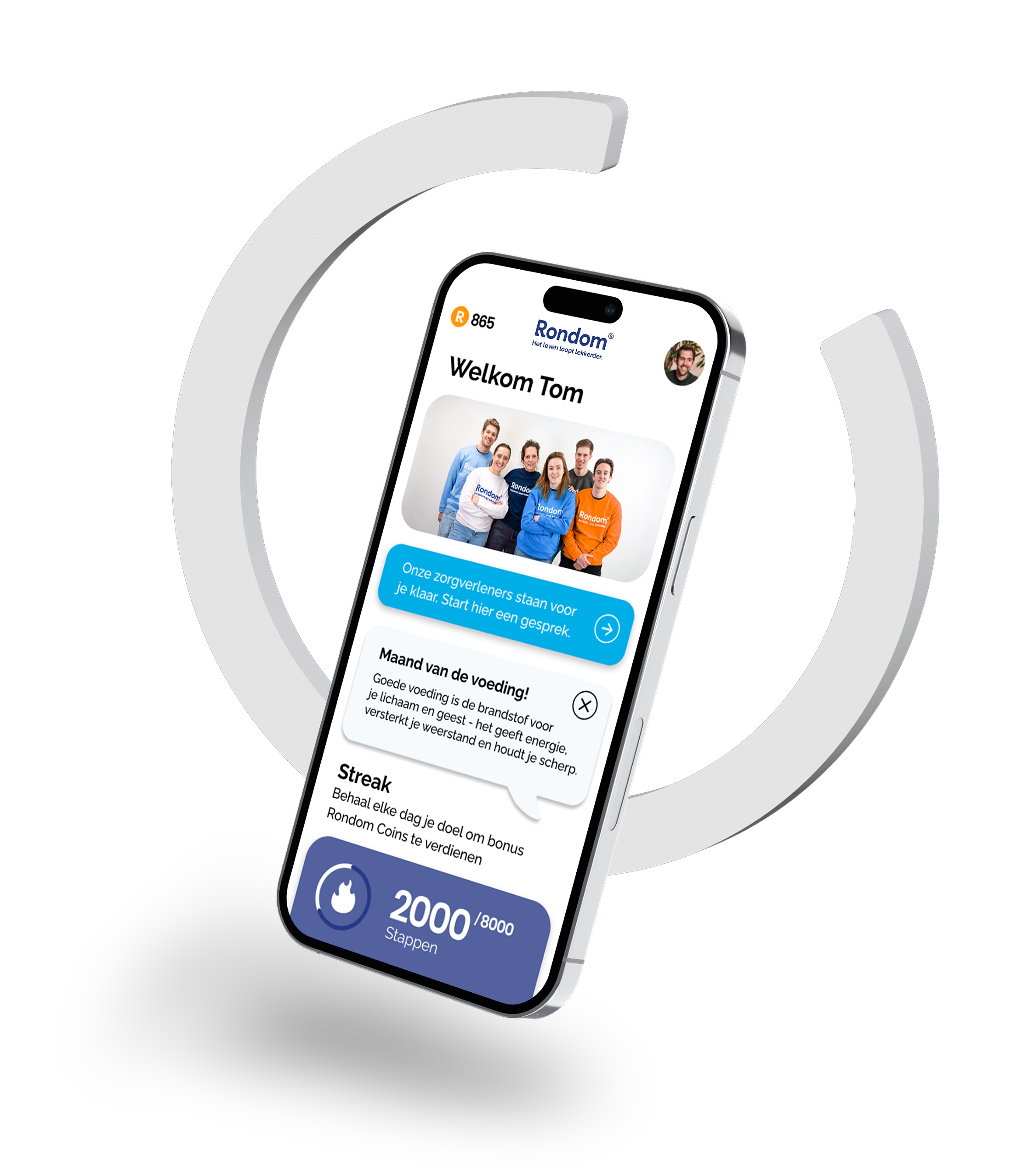
  • Work on your health with the Rondom app

    • Direct contact with healthcare professionals via chat
    • A community where you share experiences and motivate one another
    • Personal challenges that match your goals
    • Step counter for your daily exercise
    • Earn points for healthy choices
    • Articles, videos, recipes and assignments
    • Register for (online) events
    Discover the Rondom app

    Find a healthcare provider near you

    Book an appointmentCall usDownload the Rondom app