1. Home
  2. Healthy living and participation
  3. Mantelzorg gezin en relaties
  4. Afhankelijkheid van partner of familie

What do you think of our website?

We would love to hear what works well and what could be better. Your feedback helps us improve our website.

What would you like to give feedback on?

Read how we use feedback data.

Please note: Do not share medical details or a citizen service number (BSN).

Rondom – Het leven loopt lekkerder
Nederlands
  • Employers
  • Partners
  • Research
  • Working at
Rondom app
Ordering insolesAfspraak maken
Rondom – Het leven loopt lekkerder
Afspraak maken
Rondom – Het leven loopt lekkerder

We’d be happy to help you further.

  • info@rondomlopengroep.nl
  • 088-1180570

Need help?

  • Frequently Asked Questions
  • Reimbursement
  • Complaints procedure
  • What does your health insurer cover?

Contact

  • Book an appointment

Need help?

  • Frequently Asked Questions
  • Reimbursement
  • Complaints procedure
  • What does your health insurer cover?

Contact

  • Book an appointment

Services

  • Occupational therapy
  • Lifestyle and Dietetics
  • Podiatry and chiropody care
  • Psychology and social work
  • Physiotherapy
  • Rondom in Business
  • Rondom Shoes

Discover Rondom

  • Healthy living and participation
  • Activities
  • Rondom app
  • Social impact
  • Research

About Rondom

  • Current
  • Find a location near you

Follow Rondom

LinkedInInstagramFacebook

Life runs more smoothly.

General (payment) terms and conditionsPrivacy StatementCookie Policy
  • What do you notice?
  • What might be the reason for this?
  • What can you do yourself?
  • When is it advisable to seek help?
  • How Rondom can help
  • Download the Rondom app
  • Make an appointment

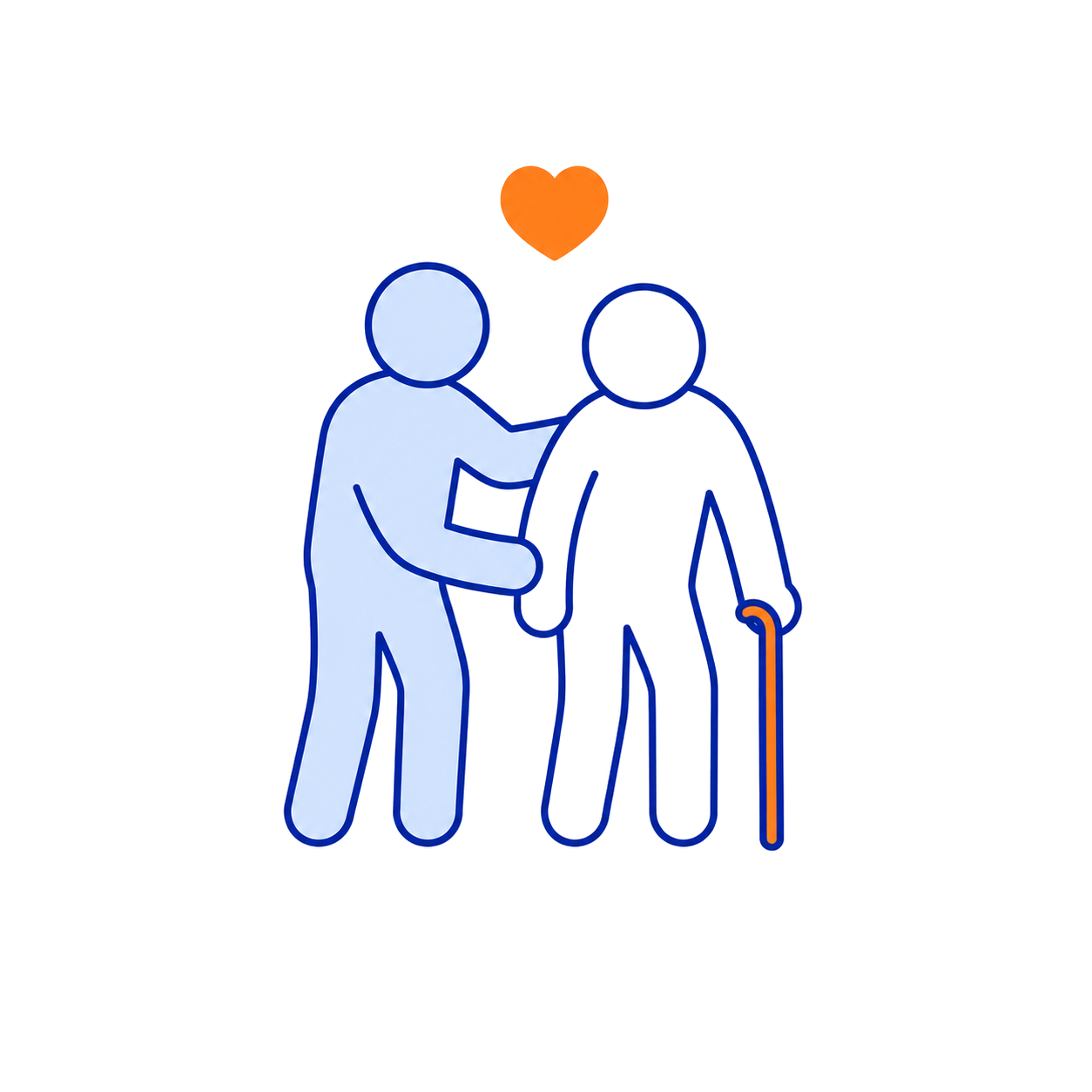
Dependence on a partner or family

Do you find it difficult to become more dependent on your partner or family? Perhaps you need help with daily tasks, transport, care or administrative matters. This can bring a sense of gratitude, but also shame, frustration or sadness. Dependence affects your independence and self-esteem. Help from a partner or family can mean a great deal. Yet it can also cause tension if the dynamic changes. You may not want to be a burden. The other person wants to help, but doesn’t always know how. It is important to work together to find a way that remains manageable for everyone.
Dependence on a partner
What do you notice?

Dependence can be noticeable both practically and emotionally.

You may, for example, notice that:

  • you need help more often;
  • if you feel uncomfortable;
  • you feel you have less freedom;
  • you get angry or sad when something doesn’t work out;
  • you refuse help even though you need it;
  • your partner or family member becomes overburdened;
  • you have less say;
  • tension arises over responsibilities;
  • you are afraid of asking the other person too much.

Sometimes, receiving help can be both pleasant and painful. That is normal.
What might be the reason for this?

Related topics

  • Asking for help without straining the relationship

    Would you like to ask your partner, family or friends for help, but are you worried that this might put a strain on the relationship? Perhaps that is why you ask for less help than you actually need. Or you only ask for help when you really can’t cope any longer. This can cause tension, because the other person then suddenly has to take on a lot more. Asking for help within a relationship or family is a sensitive matter. You don’t want to ask too much of the other person. At the same time, you sometimes need support. By discussing the need for help clearly and in good time, the relationship often remains better balanced.

  • Balancing informal care with work or family life

Was this information helpful?

Dependency can arise as a result of symptoms, limitations, fatigue, illness or recovery following surgery. Tasks that used to be carried out independently now require support.

Practical circumstances also play a part. If there is little professional help available or if family live nearby, much of the responsibility naturally falls to loved ones.

In addition, the emotional aspect can be difficult. You have to get used to receiving help, and the other person has to get used to giving help.

What can you do yourself?

It helps to make agreements about support and independence. This way, it remains clear what you want to do yourself and where you need support.

For example, you could:

  • identify what kind of help is welcome;
  • indicate what you wish to continue doing yourself;
  • distribute tasks amongst several people;
  • ask for help at set times;
  • consider seeking professional support;
  • expressing gratitude without belittling yourself;
  • discuss when the support becomes too much;
  • leave room for a normal relationship or family contact.

Independence does not mean that you have to do everything yourself. It means that, as far as possible, you can continue to live in a way that suits you.

When is it advisable to seek help?

Seeking help is advisable if dependency is causing strain in a relationship or within the family. Support can also be helpful if the carer becomes overburdened or if you constantly feel burdened.

Please contact your GP or local council if you need further support to ensure your home remains manageable and safe.

How Rondom can help

Together, we look at how support from a partner or family can be better organised. In doing so, we take into account independence, capacity, tasks, aids and emotions.

A occupational therapist can help you determine what you can continue to do yourself and what help you need. Psychological Support can help with feelings of shame, frustration or changing roles. A lifestyle coach can support recovery and the daily routine.

Together, we seek to strike a balance between receiving help and remaining in control.

Are you caring for a loved one and trying to balance this with work, family or other commitments? Perhaps you do it out of love and as a matter of course, but you’re finding that your days are becoming increasingly full. You work, organise appointments, help out at home, keep in touch with care providers and try to make time for your family as well. That can take a lot out of you. Balancing informal care with work or family life often involves finding the right balance. You want to be there for the other person, but you also have your own life, health and responsibilities. If that balance comes under pressure, informal care can become a heavy burden. It is important to assess early on what you need to keep going.

  • Being unable to do as much for one’s partner or children

    Do you find it difficult that you are unable to do as much for your partner or children? Perhaps you find it harder to manage practical tasks, have less energy to give them your full attention, or find yourself having to say ‘no’ more often. That can be painful, especially if looking after others is a key part of who you are. Being able to do less does not mean you are any less important. Yet it can certainly feel that way. You may feel guilty, sad or insecure. It helps to consider what you can still do and how you can remain involved in different ways.

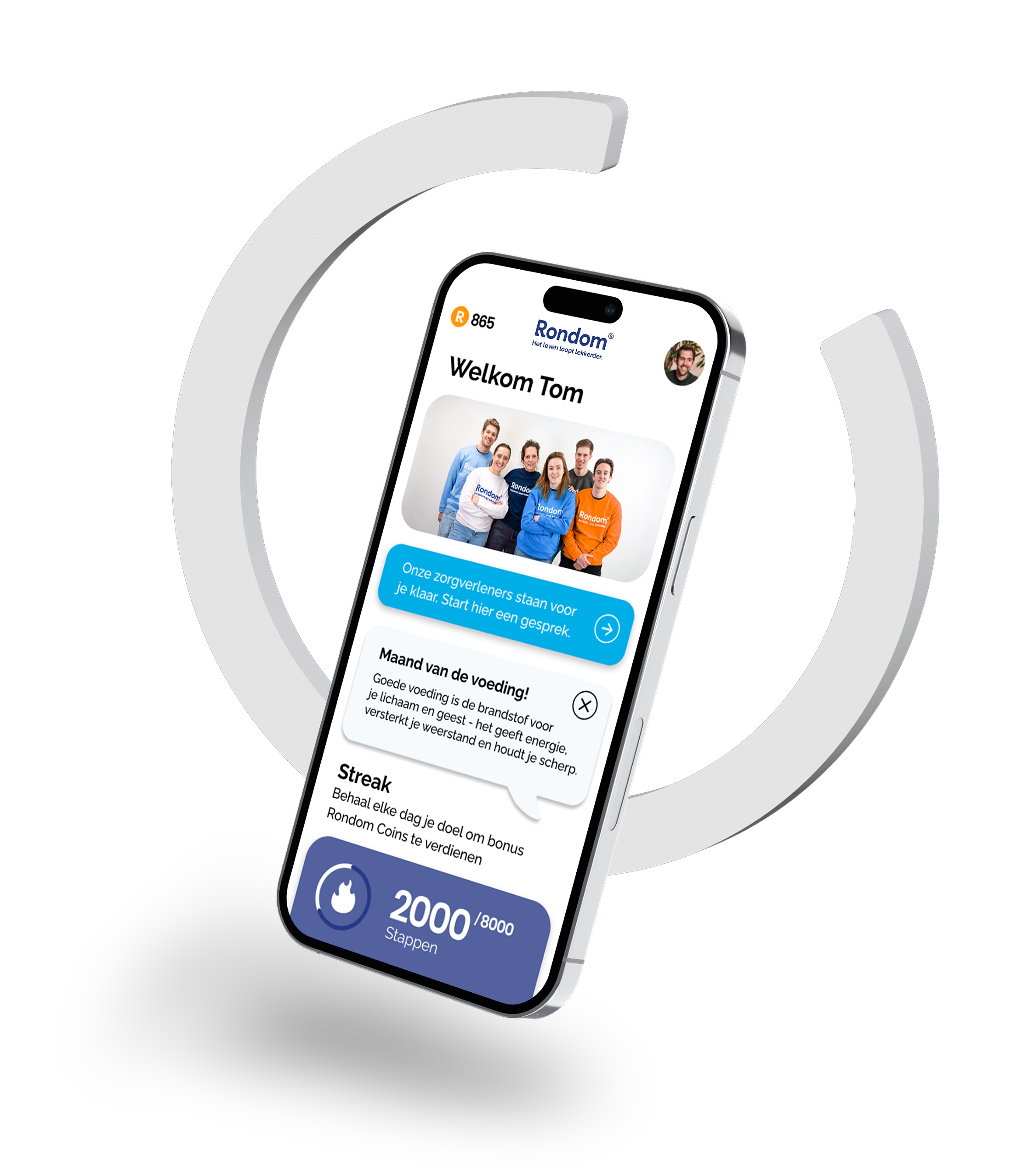
  • Work on your health with the Rondom app

    • Direct contact with healthcare professionals via chat
    • A community where you share experiences and motivate one another
    • Personal challenges that match your goals
    • Step counter for your daily exercise
    • Earn points for healthy choices
    • Articles, videos, recipes and assignments
    • Register for (online) events
    Discover the Rondom app

    Find a healthcare provider near you

    Book an appointmentCall usDownload the Rondom app