Panic or anxiety
Do you ever experience a sudden wave of panic or anxiety? Perhaps your heart is racing, you’re finding it harder to breathe, or it feels as though you’re losing control. This can be very frightening, especially if you don’t fully understand what’s happening. Panic or anxiety can arise suddenly, but it can also build up gradually. Sometimes panic occurs in busy or stressful situations. Sometimes your body reacts as if there is danger, even though there isn’t any immediate danger. It’s important to take these symptoms seriously, without immediately assuming that there is something wrong with you. Many people experience panic or severe anxiety at some point in their lives.
What do you notice?
Panic and anxiety can cause many physical symptoms. This can make it feel as though something serious is happening.
You may, for example, notice that:
- your heart is beating fast;
- you are feeling short of breath;
- you are shaking or sweating;
- you feel dizzy;
- your chest feels tight;
- you are afraid of fainting;
- if you feel you need to get away from the situation;
- you’re afraid it will happen again;
- you will avoid such situations.
After a panic attack, you may feel tired or uncertain. Sometimes, the fear of another attack lingers. This can make your world feel smaller.
What might be the reason for this?
Panic or anxiety can be caused by prolonged stress, tiredness, fear, overstimulation or traumatic events. Concerns about health, work, studies or home life can also play a part.
Sometimes your body reacts as if there is a danger, even though there is no immediate danger. Your breathing, heart rate and muscles then go into ‘fight-or-flight’ mode. The physical reactions that occur are unpleasant, but usually not dangerous, and the panic subsides of its own accord after a while.
Avoiding situations can also perpetuate panic. If you constantly avoid certain situations, your fear of them may increase.
What can you do yourself?
Try to remind yourself that panic usually subsides on its own, even if it doesn’t feel that way at the time. Don’t try to fight every feeling, but calmly bring your attention back to the present moment.
For example, you could:
- breathe out slowly and calmly;
- to plant your feet firmly on the ground;
- say out loud what you see or hear;
- do something small, such as drinking water;
- stay where you are if it is safe to do so;
- write down afterwards what preceded it;
- limit your intake of caffeine and alcohol if you notice that they are having an effect;
- talk to someone you trust.
Practising during quiet moments is often more helpful than only starting once you’re already panicking.
When is it advisable to seek help?
Call your GP or the GP out-of-hours service straight away if you are experiencing very severe panic attacks for the first time and are unsure what is wrong. You should also do this if you have chest pain, severe shortness of breath, fainting spells or symptoms that are different from what you are used to.
Seek professional help if the panic attacks recur frequently, if you start avoiding certain situations, or if you remain afraid of another attack.
How Rondom can help
Together, we’ll explore what triggers panic or anxiety for you and how you can build more confidence in your body and its responses. In doing so, we’ll look at stress, sleep, stimuli, thoughts and daily demands.
Psychological Support can help you to understand panic better and, step by step, deal with anxiety differently. A lifestyle coach can help with relaxation, rhythm and recovery. A occupational therapist "can help if panic is affecting your work, studies or daily tasks. Together, we look at your energy balance, sensory overload and practical strategies for gradually resuming your activities."
We are looking for ways to ensure that your world does not become smaller as a result of panic or anxiety.
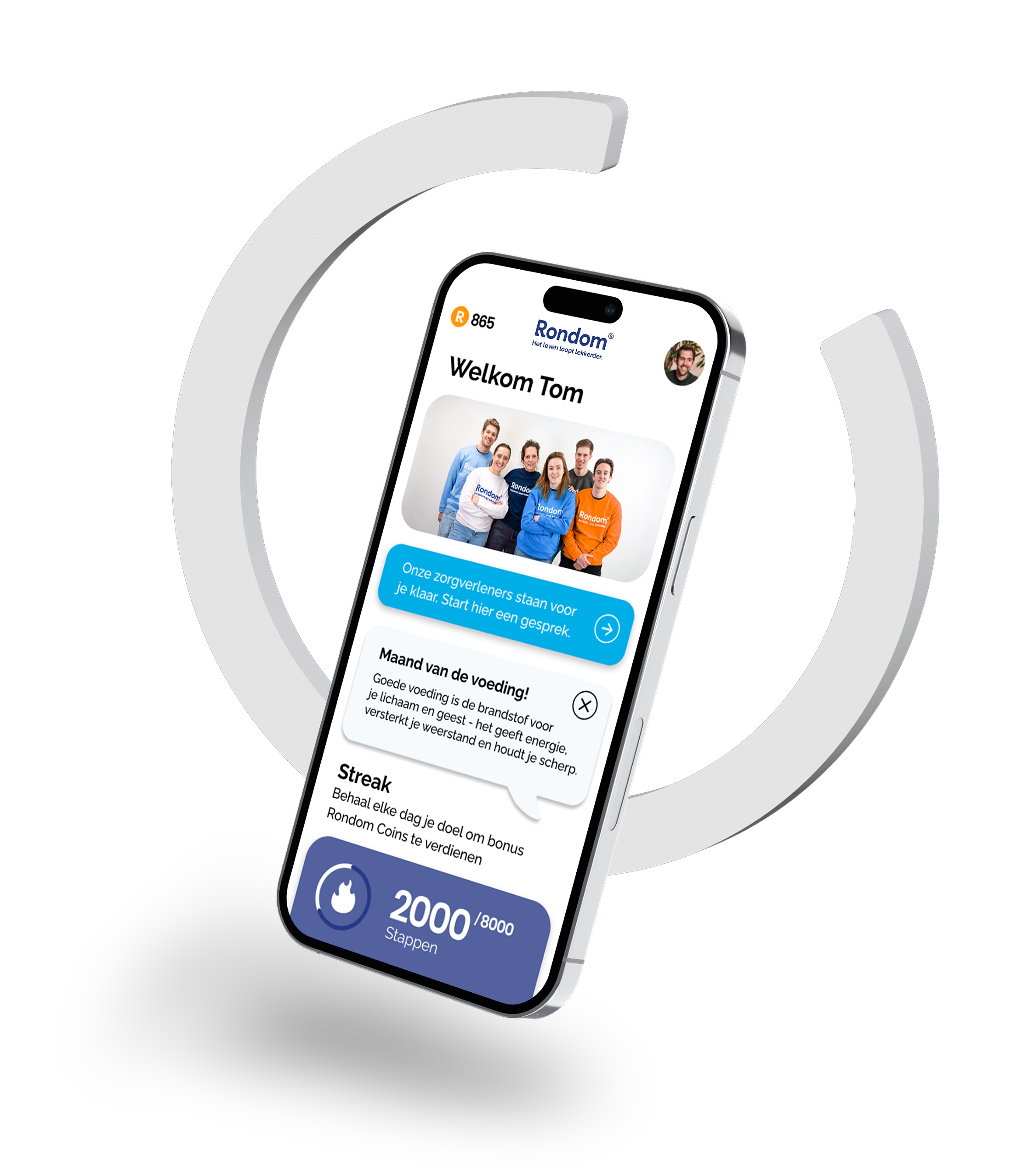
Work on your health with the Rondom app
- Direct contact with healthcare professionals via chat
- A community where you share experiences and motivate one another
- Personal challenges that match your goals
- Step counter for your daily exercise
- Earn points for healthy choices
- Articles, videos, recipes and assignments
- Register for (online) events