Emotional strain caused by physical symptoms
Do you find that your symptoms are not only physically taxing, but also take a heavy emotional toll on you? Perhaps you feel sad, angry or frustrated because things no longer come naturally. Or you may feel insecure about your body, your future or what others expect of you. Physical symptoms often affect more areas than just the place where you feel pain or have a limitation. They can impact your work, family, social life, sleep and self-image. This can be emotionally draining. It’s only natural that you don’t always remain strong or positive in the face of this.
What do you notice?
The emotional strain caused by physical symptoms can manifest itself in various ways.
You may, for example, notice that:
- you find yourself feeling sad or angry more quickly;
- you feel powerless;
- you are worried that complaints will persist;
- you feel less like yourself;
- you cancel your social engagements;
- you feel guilty towards others;
- if you are unsure about work or your future;
- you are very preoccupied with your symptoms;
- you have less confidence in your body.
Sometimes it feels as though your symptoms are controlling your life. That can be lonely, especially when others don’t fully understand how it affects you.
What might be the reason for this?
Physical symptoms can lead to many losses: loss of energy, freedom, work, hobbies, social contacts or confidence in your body. Even if physical symptoms are not life-threatening, they can have a significant impact on your daily life.
In addition, long-term pain or fatigue can affect your mood. If you constantly have to adapt, plan or recover, there is less time left for relaxation and enjoyment.
Uncertainty also plays a part. Not knowing how long symptoms will last or what you are still capable of can cause a great deal of stress.
What can you do yourself?
It helps to take your feelings seriously. You don’t just have to deal with physical symptoms in a practical way. The emotional side is also valid.
For example, you could:
- talk to someone you trust;
- write down how your symptoms affect you;
- making space for grief or frustration;
- continue to carry out small activities that are worthwhile;
- don’t let your day revolve solely around your symptoms;
- setting boundaries with others;
- ask for help if it gets too much;
- Accept that at the moment you cannot do everything you would like to.
Try not to compare yourself with how you used to be or with others. Recovery and adjustment are different for everyone.
When is it advisable to seek help?
Together, we’ll look at how your physical symptoms affect your daily life. In doing so, we’ll focus on your energy levels, activities, emotions, thoughts and what matters to you.
Psychological Support can help when physical symptoms affect your mood, self-image or sense of control over your life. A occupational therapist can help you organise your daily activities differently. A physiotherapist can support you with movement and help you gain confidence in your body. A lifestyle coach can offer advice on recovery, sleep and healthy habits.
We are looking for ways to help you regain some breathing space in your life, even if your symptoms do not disappear straight away.
How Rondom can help
Together, we’ll look at when your worrying starts and what helps you find more peace of mind. In doing so, we’ll focus on stress, sleep, energy levels, your daily routine and the pressure you’re feeling.
Psychological Support can help you deal with your thoughts, worries and stress in a different way. A lifestyle coach can support sleep, relaxation and rhythm. A occupational therapist can help if worrying is linked to having too many tasks, a lack of overview or difficulty with planning.
We are looking for practical ways to clear your mind and make your day more organised.
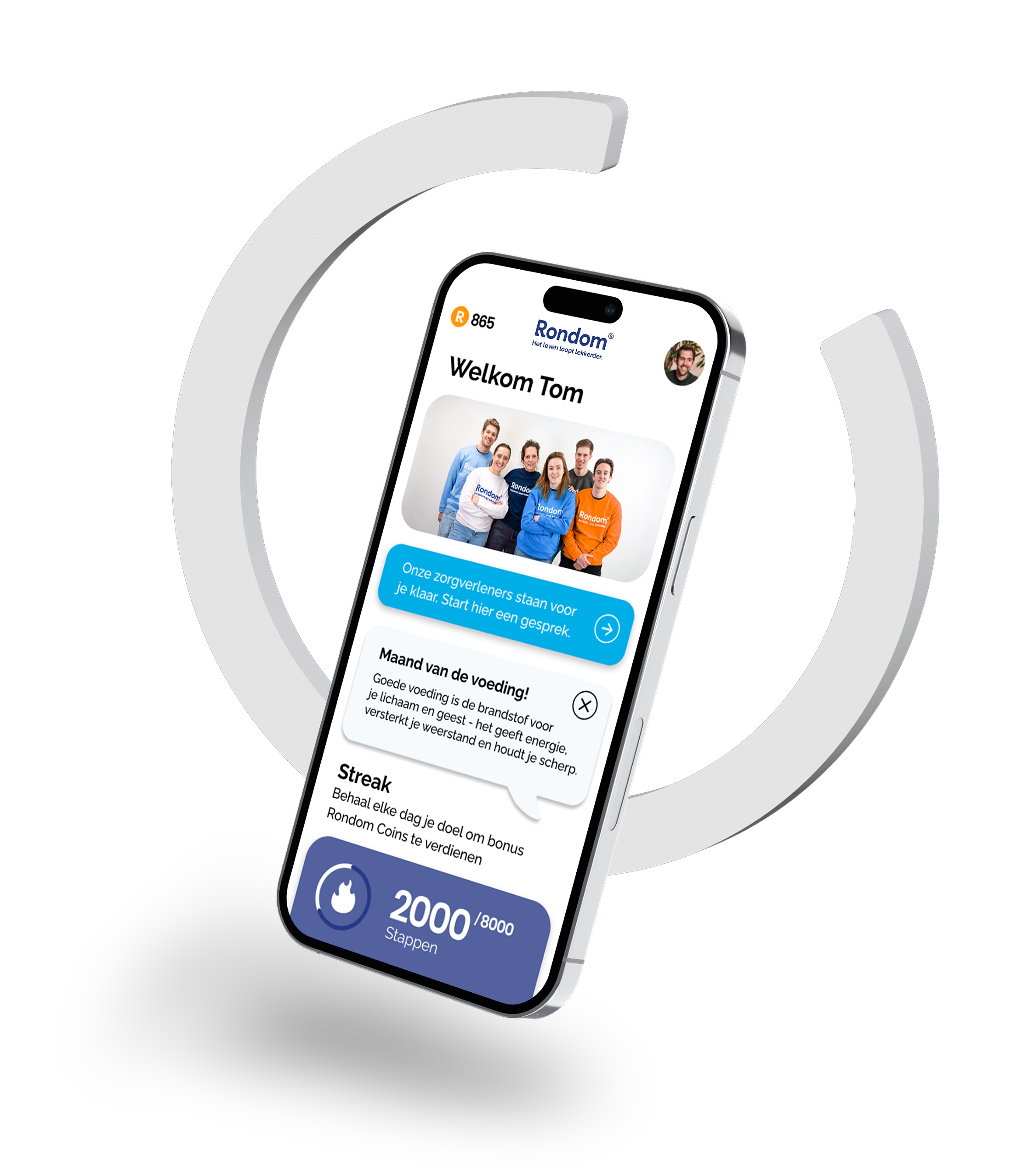
Work on your health with the Rondom app
- Direct contact with healthcare professionals via chat
- A community where you share experiences and motivate one another
- Personal challenges that match your goals
- Step counter for your daily exercise
- Earn points for healthy choices
- Articles, videos, recipes and assignments
- Register for (online) events