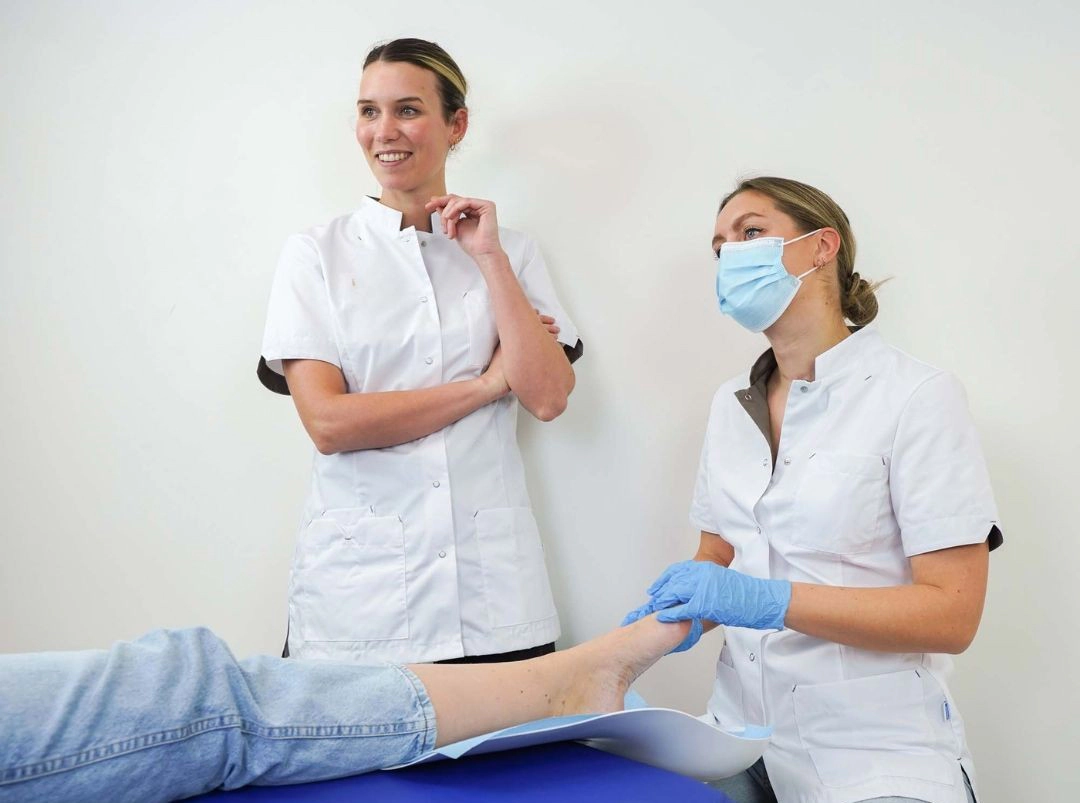
A successful webinar on foot screening for patients at increased risk of foot complications
For a long time, only people with diabetes were entitled to medical foot care to prevent the development of poorly healing wounds; this was covered by basic health insurance. However, since January 2023, the National Health Care Institute has stated that people with other medical conditions and an increased risk of poorly healing wounds should also be reimbursed for this care.

**For a long time, only people with diabetes were entitled to medical foot care to prevent the development of poorly healing wounds; this was covered by basic health insurance. However, since January 2023, the National Health Care Institute has stated that people with other medical conditions and an increased risk of poorly healing wounds should also be reimbursed for this care.**
When someone has a slow-healing wound on their feet, this has a significant negative impact on their quality of life in the short term, and often in the long term as well. It also costs society a great deal of money. That is why we organised a free webinar for no fewer than 200 healthcare professionals to raise awareness of this issue.
Comprehensive basic foot care cover
During this webinar, led by our colleagues Monique Gouw, Monique Janssen and Laura Zantboer-Eijsackers, it was explained how healthcare professionals can carry out a foot screening quickly and professionally to determine whether a patient is entitled to care covered by basic health insurance. This includes people with other medical conditions that carry an increased risk of developing a foot ulcer, such as rheumatism, kidney failure, neuropathy or peripheral arterial disease.
With the knowledge we’ve shared this evening, we’ll work together to prevent as many injuries as possible and help even more people enjoy life to the full!
-w2560.webp?v=mtj3a1fw)