Organising the structure
Do you find that your day quickly becomes chaotic? Perhaps you know what needs to be done, but you can’t seem to organise everything in the right order. Or you start doing too many things at once and then lose track. This can cause anxiety and drain your energy. Creating structure helps you get a grip on things. Not because everything has to be strictly planned, but because clarity brings peace of mind. Especially if your energy levels, symptoms or capacity fluctuate, structure can help you make better choices about what you can and cannot manage.
What do you notice?
Difficulties with organisation can become apparent in many areas: at home, at work, in your studies or during healthcare appointments.
You may, for example, notice that:
- you don’t know where to start;
- tasks remain undone;
- you forget your appointments;
- you try to remember a lot in your head;
- you get distracted easily;
- you get tired of all the things you have to do;
- you are always playing catch-up;
- you have few moments of rest;
- you lose track of the big picture when changes are made.
Sometimes just thinking about tasks takes a lot of energy. Then getting started feels almost impossible.
What might be causing this?
Structure requires clarity, focus and energy. This is more difficult when you are tired, stressed, in pain or overstimulated. Your mind then has less capacity to plan.
Too many separate tasks can also cause stress. Work, household chores, care, appointments and recovery then become intertwined.
Furthermore, your old routine may no longer be suitable. If your capacity changes, you may need to reorganise your day.
What can you do yourself?
It helps to keep the structure simple. A good system doesn’t have to be complicated.
For example, you could:
- writing down tasks in one fixed place;
- Choose 3 important tasks per day;
- set times for meals, rest and exercise;
- break large tasks down into small steps;
- enter appointments into a diary;
- finding a permanent place for things;
- leave space between activities;
- Take a quick look each week at what’s coming up.
Structure should help you, not put you under extra pressure. So start small.
When is it advisable to seek help?
Seeking help is a sensible thing to do if a lack of structure is constantly disrupting your day. Support can also help if appointments, household chores, work or self-care are falling by the wayside.
Please also ask for help if stress, tiredness or health issues are making it difficult for you to plan effectively. Drawing up an overview together can then provide a great deal of peace of mind.
How Rondom can help
Together, we’ll look at where structure is lacking and what you need to gain a clearer overview. In doing so, we’ll take into account your energy levels, tasks, habits, appointments and recovery.
A occupational therapist can help to establish a daily routine and distribute tasks more effectively. A lifestyle coach can help with rhythm, sleep and healthy habits. In cases of stress, worrying or feeling stuck, it can psychological support should be appropriate.
Together, we will look for a structure that suits your lifestyle and your capacity.
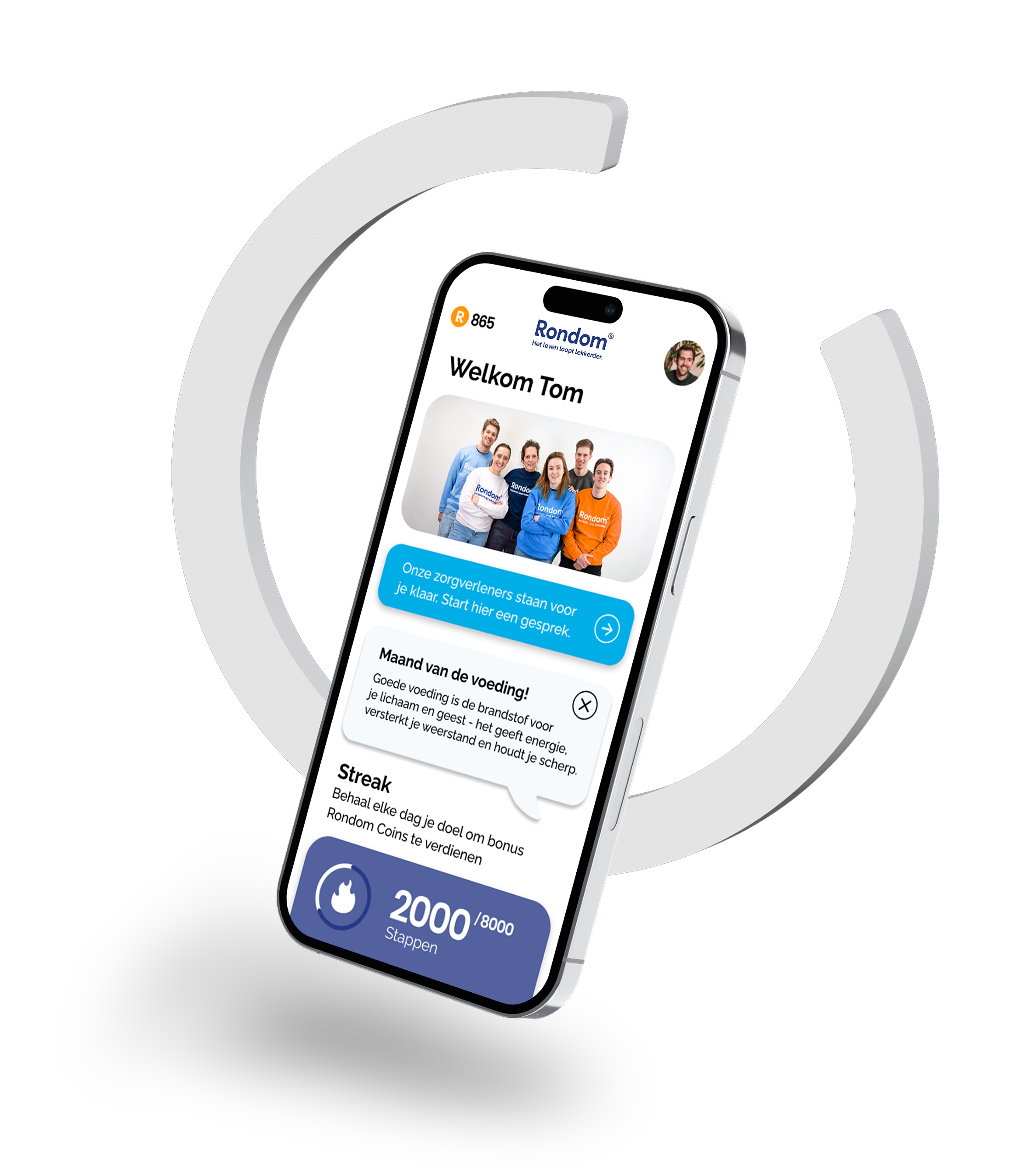
Work on your health with the Rondom app
- Direct contact with healthcare professionals via chat
- A community where you share experiences and motivate one another
- Personal challenges that match your goals
- Step counter for your daily exercise
- Earn points for healthy choices
- Articles, videos, recipes and assignments
- Register for (online) events