Daring to go outside
Do you find going outside a bit daunting? Perhaps you’re worried about falling, experiencing symptoms, losing your bearings or panicking. Or you may feel insecure because you’ve lost confidence in your body. Going outside may seem simple, but it can be a big step if you feel vulnerable. Being outdoors is important for exercise, social interaction, daylight and independence. If you’re less willing to go outside, your world can quickly become smaller. It’s important to take this seriously and see, step by step, what helps.
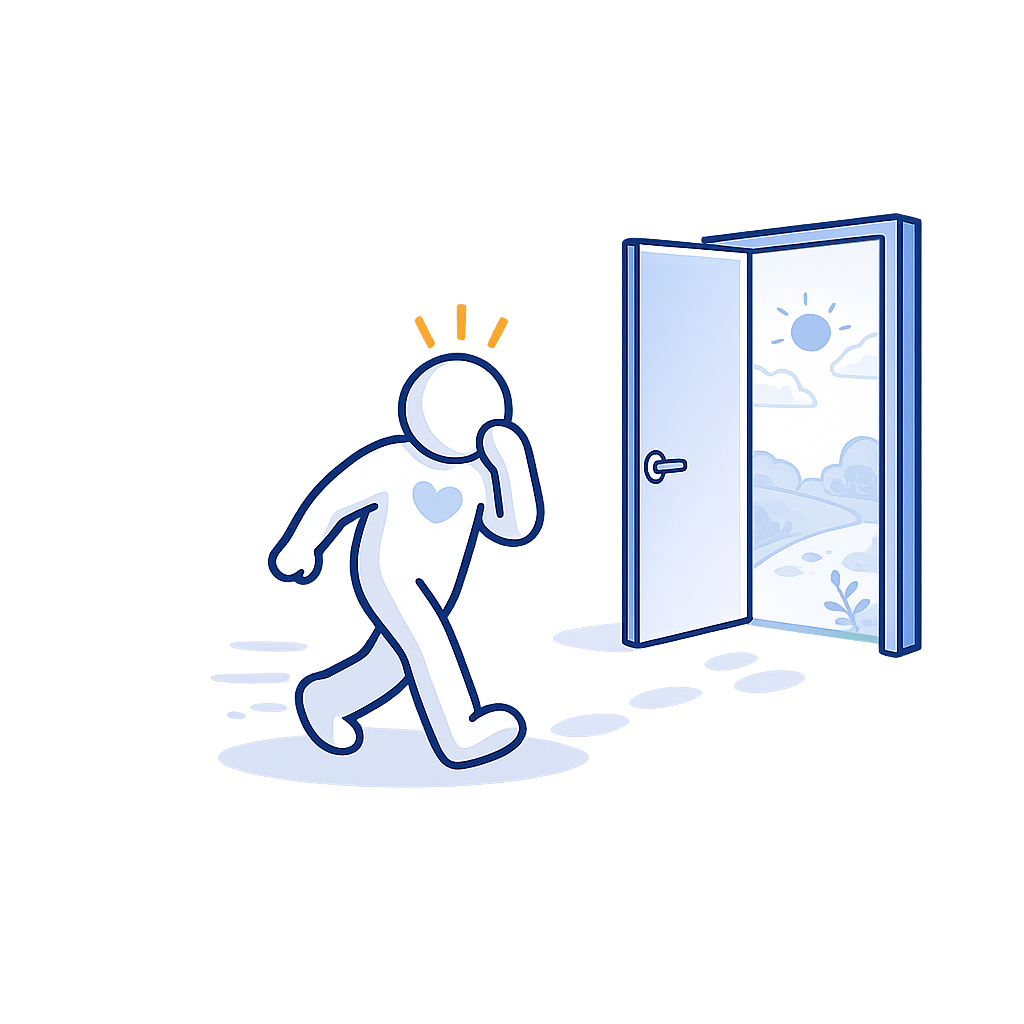
What do you notice?
Difficulty going outside can manifest itself in many ways.
You may, for example, notice that:
- you stay indoors more often;
- you only go out if someone comes with you;
- you are afraid of falling;
- to avoid crowds or traffic;
- if you are unsure whether to walk or cycle;
- you are afraid that you will not be able to return;
- you expect to have symptoms before you set off;
- you cancel your appointments;
- you feel more dependent.
Sometimes, just the thought of going outside can cause anxiety. This may lead you to put off your little trip outside.
What might be the reason for this?
A fear of going outside can develop following a fall, a panic attack, illness, pain or a period of reduced physical activity. Your body or mind has then learnt that being outdoors can be stressful.
Practical considerations also play a part. Poor pavements, heavy traffic, a lack of benches, rain or a lack of clear planning can all make it more difficult to access the area.
In addition, anxiety, shame or a lack of confidence can have an impact. If you are worried that others might see you or that you need help, you might prefer to stay indoors.
What can you do yourself?
It helps to build up going outside gradually.
For example, you could:
- starting with standing right on the doorstep;
- choose a short, fixed route;
- going outside at quiet times;
- to ask someone to come along;
- to use a tool if it provides support;
- choosing a place to rest along the way;
- take your phone with you, just to be on the safe side;
- Afterwards, write down what went well.
The aim is not to rush things. The aim is to build trust.
When is it advisable to seek help?
It is wise to seek help if you hardly ever go out anymore or if anxiety is limiting your daily life. Advice is also important if you have fallen or are afraid of falling.
Please get in touch if you are experiencing panic attacks, feeling down or becoming increasingly withdrawn.
How Rondom can help
Together, we explore what makes going outside exciting and which steps are achievable. In doing so, we focus on trust, balance, energy, the environment and any anxiety.
A occupational therapist can provide support in planning routes, organising resources and making practical preparations. A physiotherapist can help with strength, balance and walking. A podiatrist can help if foot problems, your gait or your shoes are affecting your stability. In cases of anxiety, panic or embarrassment, psychological support is appropriate.
We are looking for ways to make going out feel safer and more familiar again.
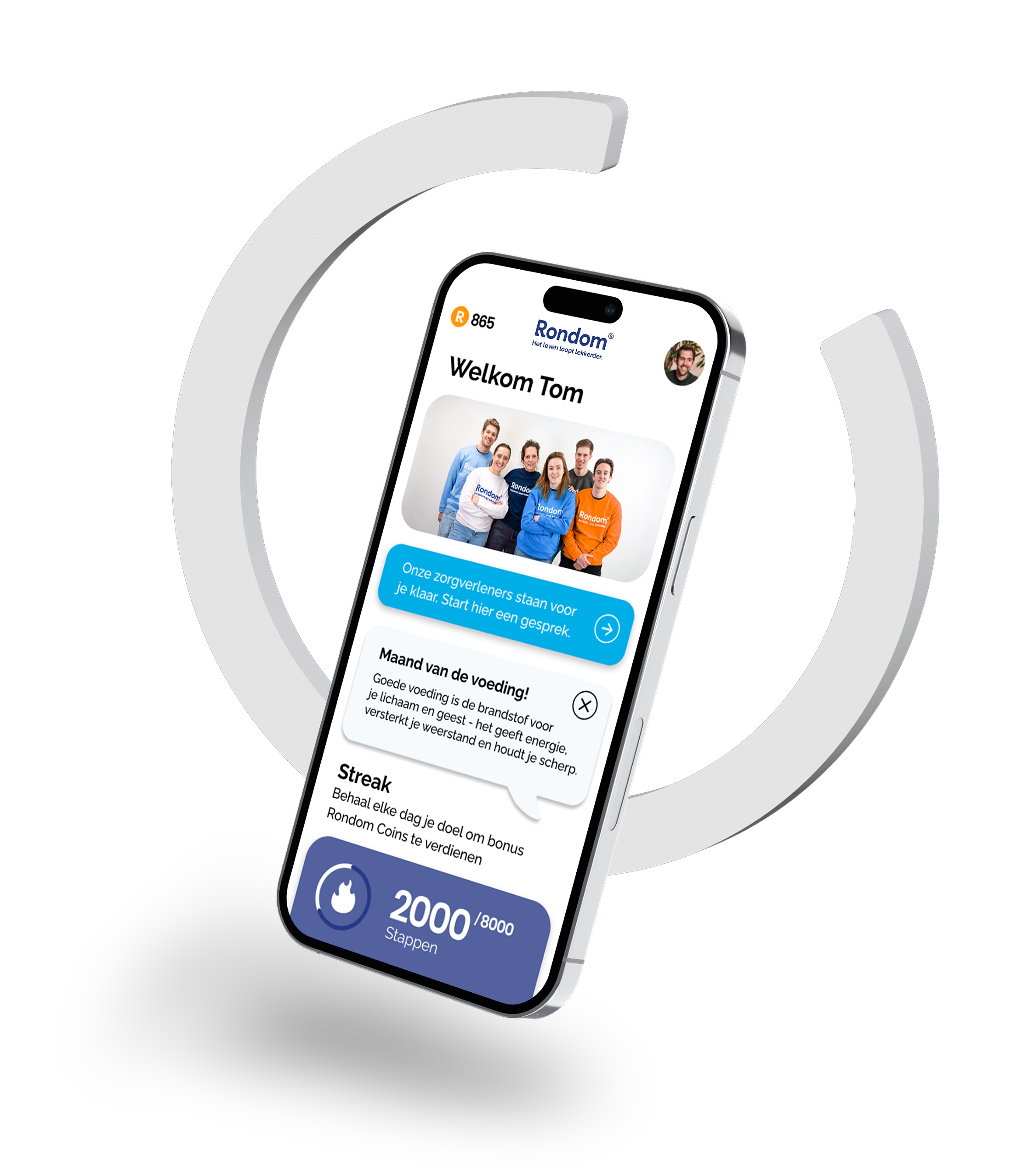
Work on your health with the Rondom app
- Direct contact with healthcare professionals via chat
- A community where you share experiences and motivate one another
- Personal challenges that match your goals
- Step counter for your daily exercise
- Earn points for healthy choices
- Articles, videos, recipes and assignments
- Register for (online) events