Carrying on with work despite pain or tiredness
Do you find that work is becoming increasingly difficult due to pain or fatigue? Perhaps you manage to get through the working day, but afterwards you feel completely drained. Or you find yourself carrying on at work, even though your body is actually already telling you that it’s had enough. In the long run, this can take a heavy toll on you. Carrying on working whilst experiencing symptoms is often a matter of striking a balance. You want to do your job well, not put a strain on your colleagues and fulfil your responsibilities. At the same time, your body or mind may need more rest than you’re used to. If that balance is missing, work can start to feel more and more like a struggle for survival.

What do you notice?
Pain or tiredness whilst at work can have various effects.
You may, for example, notice that:
- you are exhausted at the end of the working day;
- pain increases during certain tasks;
- you find yourself needing breaks more and more often;
- you find it harder to concentrate;
- you are more likely to make mistakes;
- you are more irritable than usual;
- you have little energy left at home;
- you use your free time to recover from work;
- you are worried that you won’t be able to keep up with the work.
Sometimes people put on a brave face at work. Colleagues then fail to realise how much effort it takes. This can feel lonely and makes it harder to ask for help in time.
What might be the reason for this?
Work often requires more energy than just the tasks themselves. Commuting, social interactions, stimuli, deadlines and switching between tasks also take their toll. If you are in pain or feeling tired, this overall strain can become too much.
Pain can cause you to move differently or avoid certain positions. Fatigue can mean you do not recover as well between working days. Stress, poor sleep or a busy personal life can also cause your energy reserves to run out more quickly.
Sometimes your job may no longer be well suited to what you are capable of at that moment. That does not necessarily mean that you cannot do your job. It may, however, mean that your tasks, pace, breaks or workplace need to be organised differently.
What can you do yourself?
It helps to take your energy levels and symptoms seriously. Not just at the end of the day, but whilst you’re still at work.
For example, you could:
- spread heavy tasks throughout the day;
- take short breaks before you become exhausted;
- alternate between sitting, standing and moving;
- discuss which tasks can be temporarily adjusted;
- not to overbook your working day;
- set aside time to recover after work;
- keep a record of your symptoms to identify patterns;
- indicate in good time when something is becoming too much.
Don’t keep pushing yourself until you really can’t go on any longer. Making adjustments earlier on often helps you to keep going for longer.
When is it advisable to seek help?
It is wise to seek help if pain or tiredness is increasingly affecting your working day. Even if you are unable to do anything at home after work, often need time to recover or are worried about being unable to work, it is a good idea to seek advice.
Please also ask for help if you are unsure what you can discuss with your employer or company doctor. It may help to clarify what you need to ensure that work remains manageable.
How Rondom can help
Together, we’ll look at what makes work difficult and what adjustments might help. This involves your tasks, work pace, posture, energy levels and recovery.
A occupational therapist can help with energy management, task allocation and workplace adjustments. A physiotherapist can help with pain, posture, strength and movement. A lifestyle coach can help with recovery, sleep and daily routines. In cases of stress or mental strain, it can psychological support should be appropriate.
We are looking for practical solutions to help you manage your workload more effectively.
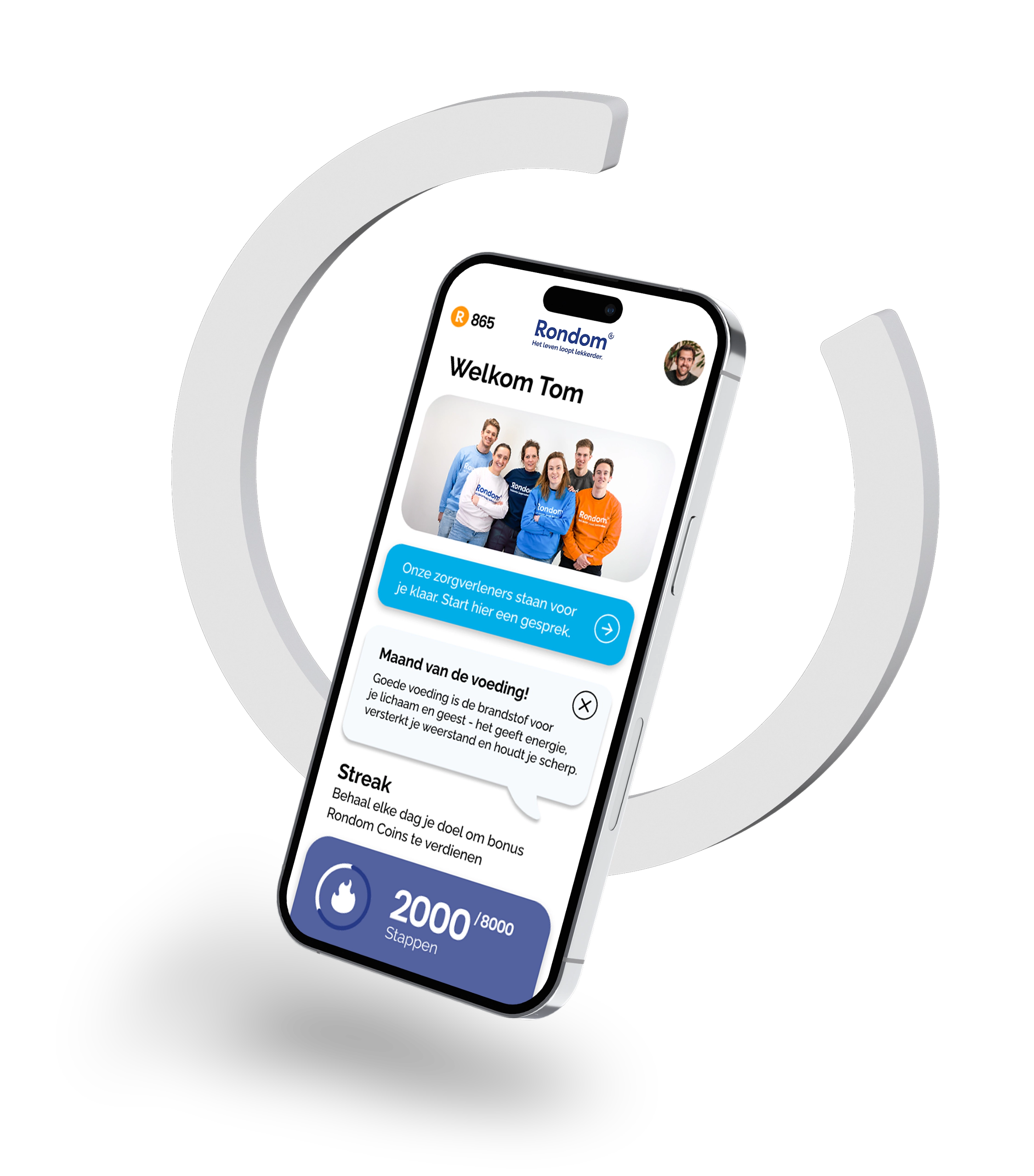
Work on your health with the Rondom app
- Direct contact with healthcare professionals via chat
- A community where you share experiences and motivate one another
- Personal challenges that match your goals
- Step counter for your daily exercise
- Earn points for healthy choices
- Articles, videos, recipes and assignments
- Register for (online) events