1. Home
  2. Healthy living and participation
  3. Zelfzorg en dagelijkse taken
  4. Omgaan met pijn vermoeidheid of beperkingen tijdens zelfzorg

What do you think of our website?

We would love to hear what works well and what could be better. Your feedback helps us improve our website.

What would you like to give feedback on?

Read how we use feedback data.

Please note: Do not share medical details or a citizen service number (BSN).

Rondom – Het leven loopt lekkerder
Nederlands
  • Employers
  • Partners
  • Research
  • Working at
Rondom app
Ordering insolesAfspraak maken
Rondom – Het leven loopt lekkerder
Afspraak maken
Rondom – Het leven loopt lekkerder

We’d be happy to help you further.

  • info@rondomlopengroep.nl
  • 088-1180570

Need help?

  • Frequently Asked Questions
  • Reimbursement
  • Complaints procedure
  • What does your health insurer cover?

Contact

  • Book an appointment

Need help?

  • Frequently Asked Questions
  • Reimbursement
  • Complaints procedure
  • What does your health insurer cover?

Contact

  • Book an appointment

Services

  • Occupational therapy
  • Lifestyle and Dietetics
  • Podiatry and chiropody care
  • Psychology and social work
  • Physiotherapy
  • Rondom in Business
  • Rondom Shoes

Discover Rondom

  • Healthy living and participation
  • Activities
  • Rondom app
  • Social impact
  • Research

About Rondom

  • Current
  • Find a location near you

Follow Rondom

LinkedInInstagramFacebook

Life runs more smoothly.

General (payment) terms and conditionsPrivacy StatementCookie Policy
  • What do you notice?
  • What might be the reason for this?
  • What can you do yourself?
  • When is it advisable to seek help?
  • How Rondom can help
  • Download the Rondom app
  • Make an appointment

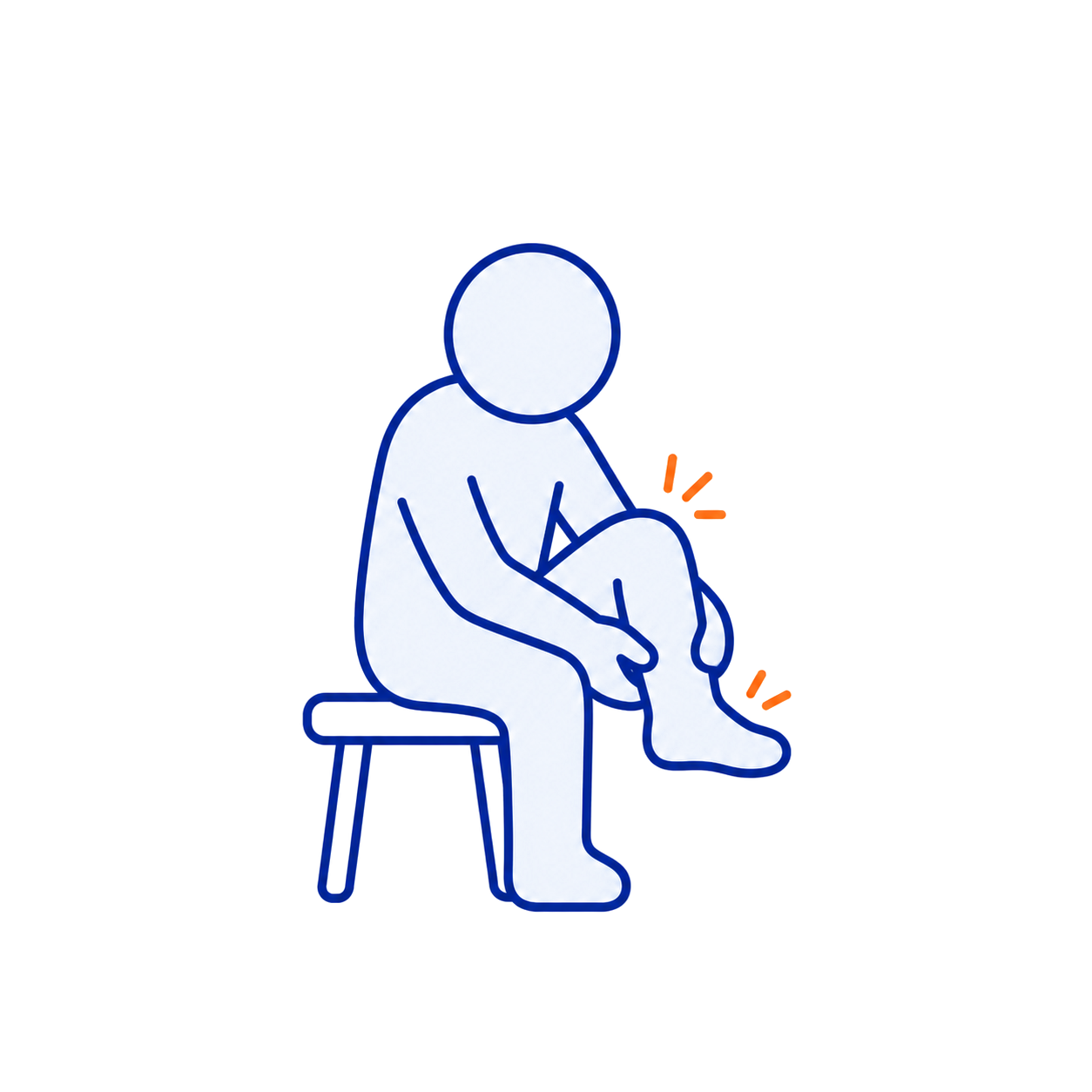
Coping with pain, fatigue or limitations whilst managing your own care

Do you experience pain, do you tire easily, or do you find that your body doesn’t always do what you want it to? If so, everyday self-care tasks can suddenly become very demanding. Taking a shower, getting dressed, preparing a meal or starting your day can then feel like a real struggle. This isn’t just an excuse. These are everyday activities that require a lot of energy and movement. If self-care becomes more difficult, it can affect how you start your day. Perhaps you need to rest first before you can do anything else. Or you might be saving your energy for work, family or appointments, and self-care ends up taking a back seat. In the long run, this can take a heavy toll on you.
Coping with pain and limitations in self-care
What do you notice?

Pain, tiredness or limitations can affect self-care in various ways. Sometimes it is the body that sets the limit. Sometimes it is the number of tasks carried out in quick succession.

You may, for example, notice that:

  • you have little energy left after washing or getting dressed;
  • pain increases during everyday activities;
  • you need more time to get started;
  • you put off tasks because you dread them;
  • you have to choose between self-care and other things;
  • you become irritated or discouraged more easily;
  • you do less often what is good for you;
  • you need help, even though you would rather not.

Sometimes the outside world doesn’t realise how much effort something takes. That can feel lonely. You may be doing a lot just to keep going, whilst finding it really hard inside.
What might be the reason for this?

Related topics

  • Daring to ask for help

    Do you find it difficult to ask for help? Perhaps you think others are already busy enough. Or you don’t want to be a burden to anyone. As a result, many people wait too long, whilst asking for help can actually help you to continue functioning more independently and with greater peace of mind. Asking for help is not the same as giving up. It means you are taking your needs seriously. Sometimes, just a little help is enough to get you through the day better. Yet the barrier can be high, especially if you’re used to doing everything yourself.

  • Difficulty eating and drinking

Was this information helpful?

Self-care requires strength, movement, balance, attention and energy. If one of these elements is lacking, everyday tasks can become more difficult.

Pain can cause you to avoid certain movements or to move differently. Fatigue can cause you to push yourself beyond your limits more quickly. Limitations in your hands, feet, back, shoulders or legs can mean that tasks take longer to complete.

Stress and tension can also have an impact. When your mind is full, your body often feels heavier. And if your day has few moments of rest, it becomes harder to recover.

What can you do yourself?

It helps to organise self-care differently. Not everything has to be done at the same time or in the same way as it used to be.

For example, you could:

  • start with the most important task at that moment;
  • spread tasks across the morning, afternoon and evening;
  • take a rest before you are completely exhausted;
  • working whilst seated wherever possible;
  • using aids to make movements easier;
  • Take pain seriously and don’t just keep pushing through;
  • think in advance about which tasks are really necessary today;
  • ask for help with tasks that require a lot of energy.

Try to recognise your limits before you push yourself too far. Many people only rest when they can no longer cope. Taking a break earlier can actually help you have more energy left for the rest of the day.

When is it advisable to seek help?

It is wise to seek help if self-care is becoming increasingly energy-sapping or if you find yourself neglecting important matters. It is also a good idea to seek advice if pain is getting worse, fatigue is dominating your day or you are increasingly pushing yourself beyond your limits.

Don’t wait until you’re completely stuck. Especially when experiencing pain and fatigue, it can help to consider load distribution, posture, aids and recovery periods at an early stage.

How Rondom can help

Together, we’ll look at how you can better maintain your self-care without constantly pushing yourself beyond your limits. In doing so, we’ll take into account your energy levels, your symptoms, your habits and your environment.

A occupational therapist can help you approach daily tasks differently and manage your energy more effectively. A physiotherapist can help with mobility, strength and balance. A lifestyle coach can offer guidance on recovery, sleep, routine and healthy habits. If stress or mental strain plays a major role, then psychological support should be appropriate.

We are looking for practical steps. The aim is to help you look after yourself better in a way that suits your body and your daily routine.

Have you noticed that eating or drinking isn’t as easy as it used to be? Perhaps you have a reduced appetite, find eating takes a lot of energy, or struggle to eat or drink enough. Pain, tiredness or other health issues can also affect how and what you eat. Eating and drinking well is important for your health. It provides energy, helps your body recover and supports your day-to-day functioning. If eating or drinking becomes difficult, this can affect your fitness, independence and quality of life.

  • Difficulty getting dressed

    Have you noticed that getting dressed is taking more and more time or energy? Perhaps you’re finding it difficult to fasten buttons or put on your socks properly. Sometimes moving can be painful when changing clothes. You may also find yourself choosing comfortable clothes more often, because other clothes have become too difficult to manage. Getting dressed may seem like a simple task, but there is a lot involved. You need to be able to bend down, reach, turn, keep your balance and make small movements with your hands. If you find this increasingly difficult, getting dressed can become frustrating – especially if you want to remain independent and don’t want to have to ask for help all the time.

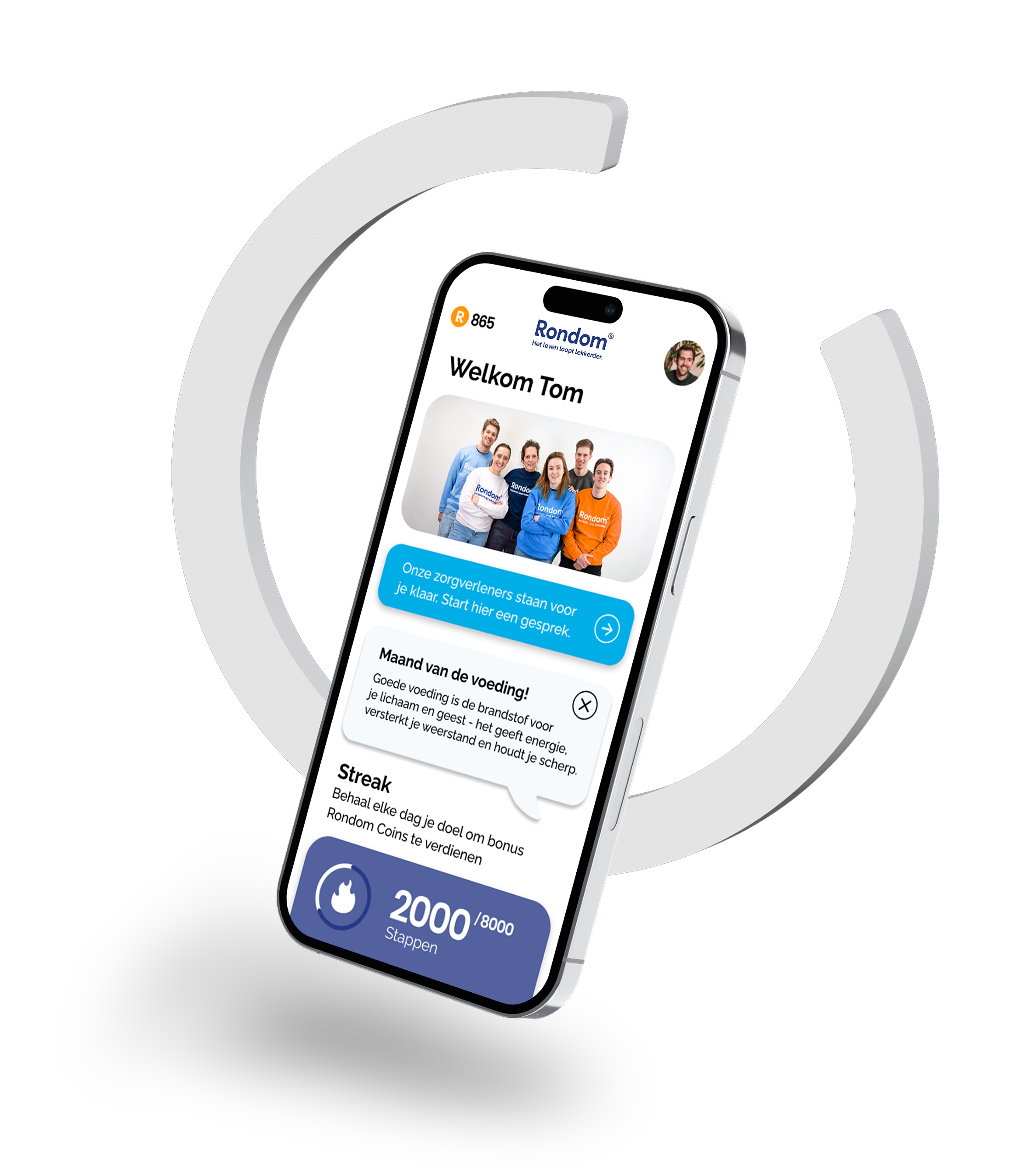
  • Work on your health with the Rondom app

    • Direct contact with healthcare professionals via chat
    • A community where you share experiences and motivate one another
    • Personal challenges that match your goals
    • Step counter for your daily exercise
    • Earn points for healthy choices
    • Articles, videos, recipes and assignments
    • Register for (online) events
    Discover the Rondom app

    Find a healthcare provider near you

    Book an appointmentCall usDownload the Rondom app