1. Home
  2. Healthy living and participation
  3. Zelfstandigheid en regie
  4. Vertrouwen terugkrijgen

What do you think of our website?

We would love to hear what works well and what could be better. Your feedback helps us improve our website.

What would you like to give feedback on?

Read how we use feedback data.

Please note: Do not share medical details or a citizen service number (BSN).

Rondom – Het leven loopt lekkerder
Nederlands
  • Employers
  • Partners
  • Research
  • Working at
Rondom app
Ordering insolesAfspraak maken
Rondom – Het leven loopt lekkerder
Afspraak maken
Rondom – Het leven loopt lekkerder

We’d be happy to help you further.

  • info@rondomlopengroep.nl
  • 088-1180570

Need help?

  • Frequently Asked Questions
  • Reimbursement
  • Complaints procedure
  • What does your health insurer cover?

Contact

  • Book an appointment

Need help?

  • Frequently Asked Questions
  • Reimbursement
  • Complaints procedure
  • What does your health insurer cover?

Contact

  • Book an appointment

Services

  • Occupational therapy
  • Lifestyle and Dietetics
  • Podiatry and chiropody care
  • Psychology and social work
  • Physiotherapy
  • Rondom in Business
  • Rondom Shoes

Discover Rondom

  • Healthy living and participation
  • Activities
  • Rondom app
  • Social impact
  • Research

About Rondom

  • Current
  • Find a location near you

Follow Rondom

LinkedInInstagramFacebook

Life runs more smoothly.

General (payment) terms and conditionsPrivacy StatementCookie Policy
  • What do you notice?
  • What might be the reason for this?
  • What can you do yourself?
  • When is it advisable to seek help?
  • How Rondom can help
  • Download the Rondom app
  • Make an appointment

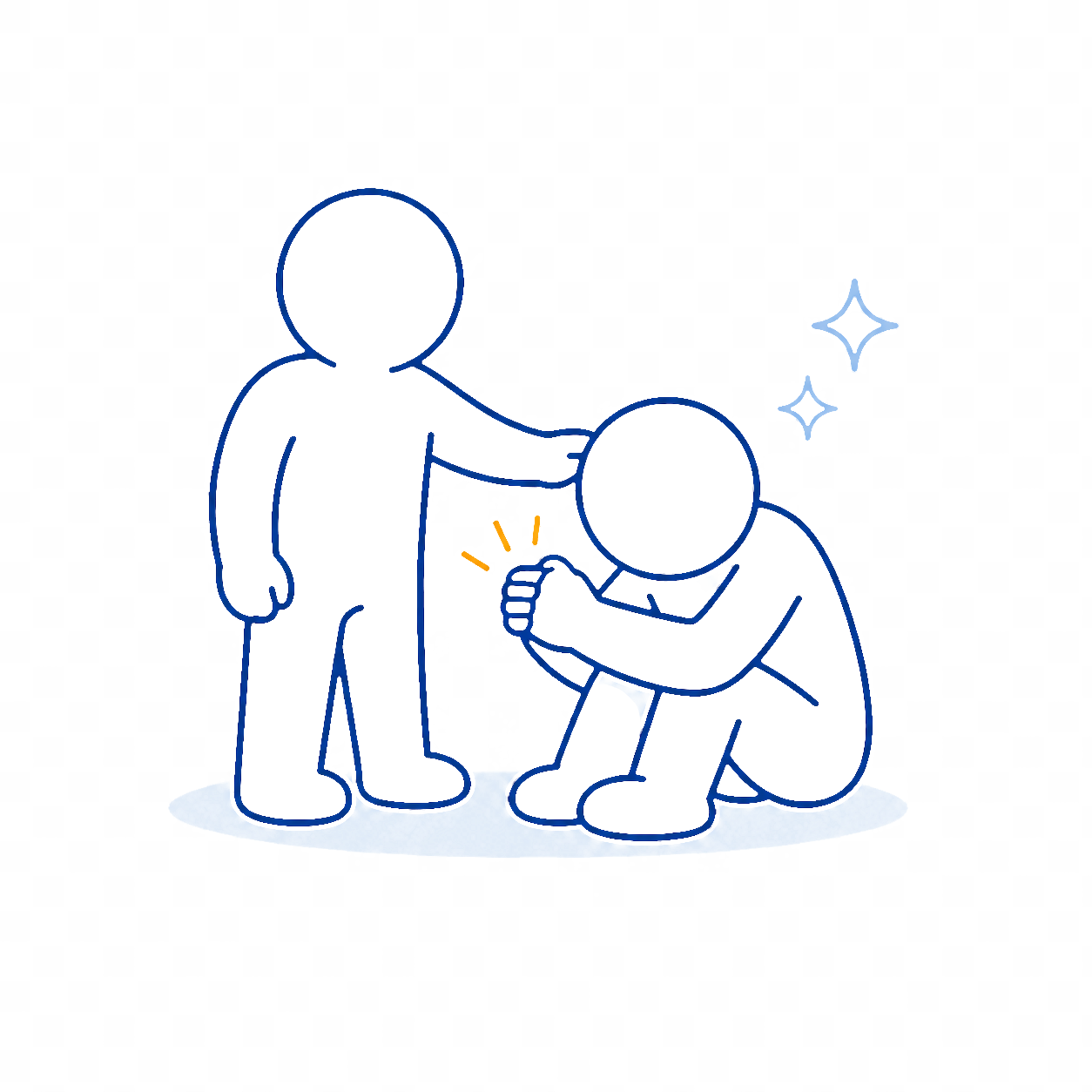
Regaining trust

Have you noticed that you have less confidence in yourself or your body? Perhaps you no longer feel confident enough to take on certain activities. Or you may be unsure whether you can cope with your day-to-day life, work, household chores or social engagements. This can happen following an illness, health issues, burnout or a period when things just weren’t going well. Regaining confidence takes time. It usually doesn’t return simply by thinking that things will be alright. It grows through small experiences in which you realise: I can do this. That’s why it’s important to build it up step by step.
Regaining trust
What do you notice?

Having less confidence can influence your choices and behaviour.

You may, for example, notice that:

  • avoids your activities;
  • you are afraid of a relapse;
  • if you are in any doubt;
  • you quickly think that something won’t work out;
  • you seek confirmation from others;
  • you are unsure about your body;
  • you take less initiative;
  • you feel tense when carrying out routine tasks;
  • you feel disappointed when something doesn’t live up to expectations.

Sometimes you compare yourself to how you used to be. That can be painful and makes it harder to see the progress you’ve made.
What might be the reason for this?

Related topics

  • Dealing with dependency

    Do you find it difficult to be more dependent on others? Perhaps you need help with transport, housework, personal care, paperwork or appointments. This can have a big impact on you. You may feel grateful for the help, whilst at the same time feeling sad or angry that you need it. Dependence affects your independence, freedom and self-esteem. It is understandable if you struggle with this. Needing help does not mean you can no longer do anything for yourself. It is about working together to find a balance between receiving support and retaining control over your own life.

  • Drawing up a daily schedule

Was this information helpful?

Confidence can be undermined by pain, tiredness, a fall, illness, panic, overstimulation or prolonged stress. Your body or mind has then experienced that something was too much.

Disappointments can also play a part. If you have tried something several times and then experienced problems, trying again can be nerve-wracking.

Furthermore, uncertainty about your limits can make you feel insecure. If you do not know what is safe or achievable, every step feels like a big one.

What can you do yourself?

It helps to build trust through small, achievable steps.

For example, you could:

  • start with something that feels safe;
  • decide in advance when you will stop;
  • write down afterwards what went well;
  • gradually expanding its activities;
  • rest plans before and after exercise;
  • ask for support from someone you trust;
  • not only paying attention to symptoms, but also to what went well;
  • be understanding if a step does not go to plan.

Trust grows through repetition. Even a small step that succeeds is valuable.

When is it advisable to seek help?

Seeking help is a sensible thing to do if uncertainty is holding you back in your daily activities. Guidance can also help if you are afraid to exercise, travel, work or take part in social activities.

Ask for help if your world is getting smaller and smaller or if you’re not sure how to rebuild it safely.

How Rondom can help

Together, we’ll explore the areas where you’d like to regain confidence. In doing so, we’ll focus on your symptoms, energy levels, physical activity, stimuli, thoughts and your goals.

A occupational therapist can provide support in establishing daily routines. A physiotherapist can help if confidence in physical activity is an issue. In cases of anxiety, embarrassment or uncertainty, psychological support should be appropriate. A lifestyle coach can help with rhythm, recovery and perseverance.

Together, we’ll look for small steps that will help rebuild your trust.

Do you find that your day is turning out differently to how you’d planned? Perhaps you’re planning too much, forgetting to take breaks, or not getting round to what’s important. Drawing up a daily schedule can help you get a better grip on things, especially if your energy is limited or if your symptoms fluctuate. A good daily plan isn’t just a long list of tasks. It’s a realistic balance between doing, resting, taking care of yourself, working and relaxing. It’s precisely by planning in rest that you often have more energy left for what really matters.

  • Making independent choices

    Have you noticed that making decisions for yourself is becoming more difficult? Perhaps you find yourself hesitating more often than before. Or you may notice that others are quicker to decide for you what is sensible. This may be well-intentioned, but it can also feel as though you have less control over your own life. Making independent choices isn’t just about big decisions. It’s also about everyday matters. What will you and won’t you do today? What help will you accept? Which activities suit your energy levels? If your health or capacity changes, these kinds of choices can suddenly feel much more burdensome.

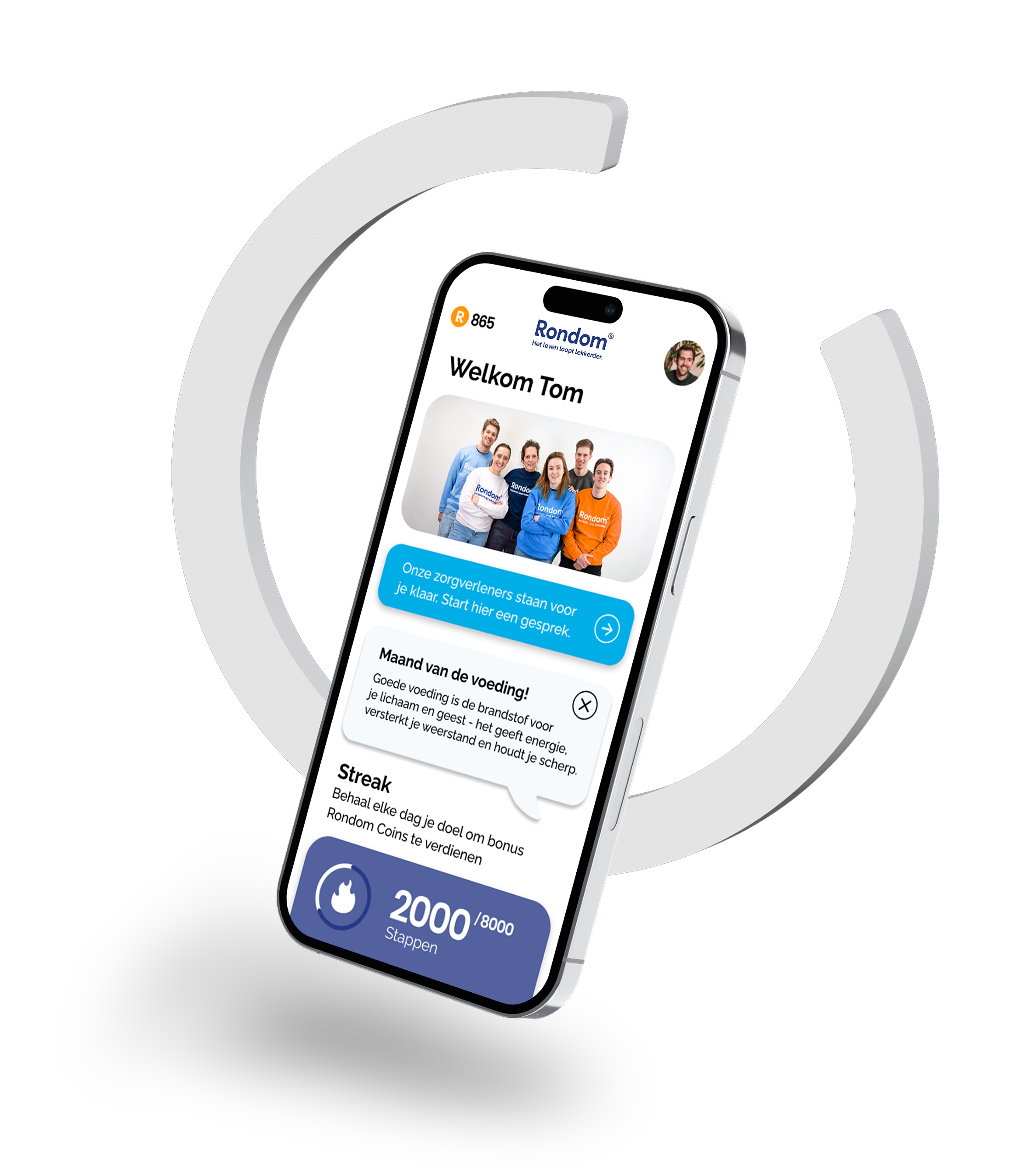
  • Work on your health with the Rondom app

    • Direct contact with healthcare professionals via chat
    • A community where you share experiences and motivate one another
    • Personal challenges that match your goals
    • Step counter for your daily exercise
    • Earn points for healthy choices
    • Articles, videos, recipes and assignments
    • Register for (online) events
    Discover the Rondom app

    Find a healthcare provider near you

    Book an appointmentCall usDownload the Rondom app