1. Home
  2. Healthy living and participation
  3. Stress prikkels en mentale belasting
  4. Piekeren

What do you think of our website?

We would love to hear what works well and what could be better. Your feedback helps us improve our website.

What would you like to give feedback on?

Read how we use feedback data.

Please note: Do not share medical details or a citizen service number (BSN).

Rondom – Het leven loopt lekkerder
Nederlands
  • Employers
  • Partners
  • Research
  • Working at
Rondom app
Ordering insolesAfspraak maken
Rondom – Het leven loopt lekkerder
Afspraak maken
  • What do you notice?
  • What might be the reason for this?
  • What can you do yourself?
  • When is it advisable to seek help?
  • How Rondom can help
  • Advice and treatment
  • Download the Rondom app
  • Make an appointment

Worrying

Do you find that your mind just keeps going round in circles? Perhaps you keep thinking about what could go wrong, what you still have to do, or what you should have said instead. You want to stop thinking, but you can’t. Especially in bed, in the shower or during quiet moments, worrying can suddenly take over. Worrying can be exhausting. It sometimes feels as though thinking helps you stay in control. But often, worrying doesn’t provide a solution. It fills your head with more thoughts and makes your body more tense. This makes it harder to sleep, concentrate and relax.

What do you notice?

Worrying can affect your day in various ways. It is often not just in your mind, but also in your body and behaviour.

You may, for example, notice that:

  • you keep having the same thoughts;
  • you have difficulty falling asleep;
  • you often wake up worrying;
  • you find it difficult to make choices;
  • you are tense or agitated;
  • you pay less attention to what you are doing;
  • you are easily distracted;
  • These situations keep repeating themselves in your head;
  • you seek a great deal of validation from others.

Perhaps you feel ashamed of your worrying. You may know that it doesn’t help, but you still can’t seem to stop. That’s very common. Worrying often starts as a way of getting to grips with a situation. But after a while, worrying can become a habit that is difficult to break.

What might be the reason for this?

Worrying often arises from stress, uncertainty or a heavy burden of responsibility. When there is a lot going on, your mind tries to get to grips with it by going over everything in your head repeatedly.

Fatigue can also exacerbate worrying. If you sleep poorly or do not recover well, it becomes harder to let go of your thoughts. Symptoms, pain, illness or worries about work and home life can also play a part.

Sometimes you worry because you’re afraid of making the wrong choice. Or because you expect a lot from yourself. Then your mind keeps searching for certainty, even though that certainty isn’t always there.

What can you do yourself?

It helps to limit worrying. You don’t need to push thoughts away, but you can learn to deal with them differently.

For example, you could:

  • write down your concerns;
  • choose a specific time to reflect;
  • distinguish between what you can resolve and what you cannot;
  • choose a small first step;
  • try relaxation or breathing exercises;
  • exercising to relieve tension;
  • clear your mind before going to sleep;
  • talking to someone who can listen calmly.

Don’t try to fight every thought. It often helps more to simply notice that you are worrying and then go back to what you were doing.

When is it advisable to seek help?

Seeking help is advisable if worrying is disrupting your sleep, work, studies or daily tasks. It is also a good idea to contact your GP if you are feeling increasingly anxious, low or exhausted.

Please also seek help if you are unable to stop your thoughts and are consequently unable to function properly. You do not have to cope with this on your own.

How Rondom can help

Together, we’ll look at when your worries arise and what helps you find more peace of mind. In doing so, we’ll focus on stress, sleep, energy levels, your daily routine and the pressure you’re feeling.

Psychological Support can help you deal with your thoughts, worries and stress in a different way. A lifestyle coach can support sleep, relaxation and rhythm. A occupational therapist can help if worrying is linked to too many tasks, a lack of perspective or difficulty with planning.

We’re looking for practical ways to help you clear your mind and keep your day more organised.

Advice and treatment

test
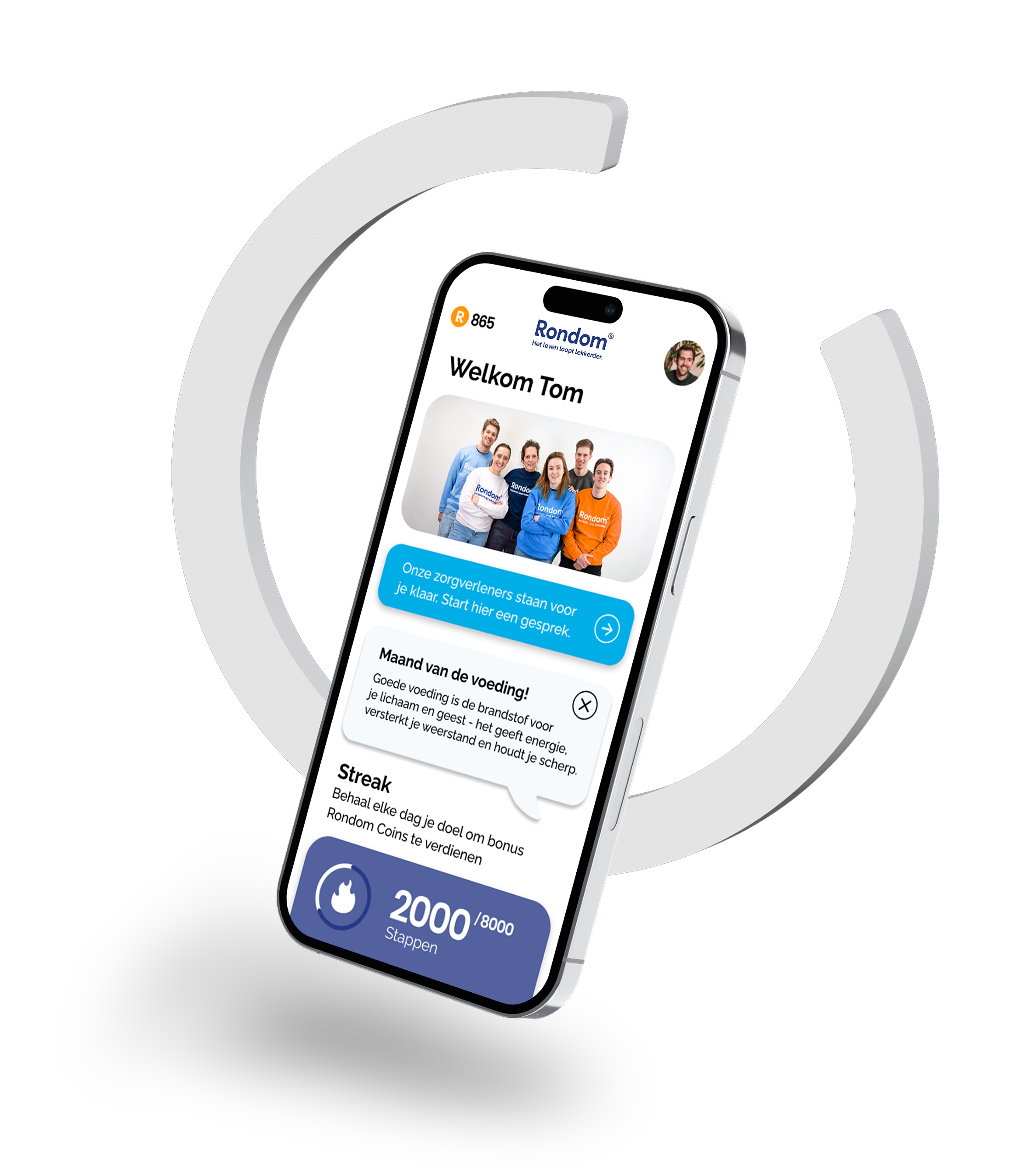
Work on your health with the Rondom app

  • Direct contact with healthcare professionals via chat
  • A community where you share experiences and motivate one another
  • Personal challenges that match your goals
  • Step counter for your daily exercise
  • Earn points for healthy choices
  • Articles, videos, recipes and assignments
  • Register for (online) events
Discover the Rondom app

Find a healthcare provider near you

Book an appointmentCall usDownload the Rondom app

Related topics

  • Emotional strain caused by physical symptoms

    Do you find that your symptoms are not only physically taxing, but also take a heavy emotional toll on you? Perhaps you feel sad, angry or frustrated because things no longer come naturally. Or you may feel insecure about your body, your future or what others expect of you. Physical symptoms often affect more areas than just the place where you feel pain or have a limitation. They can impact your work, family, social life, sleep and self-image. This can be emotionally draining. It’s only natural that you don’t always remain strong or positive in the face of this.

  • Lower self-confidence

    Have you noticed that your self-confidence has waned? Perhaps you find yourself doubting yourself, your body or what you are capable of more often. Things that used to come naturally now feel stressful or uncertain. This can have a significant impact on your work, social life, relationships and day-to-day choices. A loss of self-confidence rarely happens overnight. It develops gradually when you experience difficulties, find yourself stuck more often, or realise you can no longer do everything as you used to. This can be painful, especially if you are used to being independent, active or caring.

  • Overstimulation

    Do you find that noise, light, crowds or a lot of information quickly become too much for you? Perhaps you find it harder to cope with a crowded shop or a busy workplace. Overlapping conversations or notifications on your phone can also be stimulating. Whereas you used to be able to carry on as normal, it now feels as though your head is filling up. Overstimulation can have a significant impact on your daily life. You might start avoiding busy places, cancel social engagements or need a lot of time to recover after an ordinary day. That’s not unusual. If your mind or body has to process too many stimuli, the system becomes overloaded more quickly.

Was this information helpful?

Rondom – Het leven loopt lekkerder

We’d be happy to help you further.

  • info@rondomlopengroep.nl
  • 088-1180570

Need help?

  • Frequently Asked Questions
  • Reimbursement
  • Complaints procedure
  • What does your health insurer cover?

Contact

  • Book an appointment

Need help?

  • Frequently Asked Questions
  • Reimbursement
  • Complaints procedure
  • What does your health insurer cover?

Contact

  • Book an appointment

Services

  • Occupational therapy
  • Lifestyle and Dietetics
  • Podiatry and chiropody care
  • Psychology and social work
  • Physiotherapy
  • Rondom in Business
  • Rondom Shoes

Discover Rondom

  • Healthy living and participation
  • Activities
  • Rondom app
  • Social impact
  • Research

About Rondom

  • Current
  • Find a location near you

Follow Rondom

LinkedInInstagramFacebook

Life runs more smoothly.

General (payment) terms and conditionsPrivacy StatementCookie Policy