1. Home
  2. Healthy living and participation
  3. Sociaal meedoen en eropuitgaan
  4. Lopen en staan

What do you think of our website?

We would love to hear what works well and what could be better. Your feedback helps us improve our website.

What would you like to give feedback on?

Read how we use feedback data.

Please note: Do not share medical details or a citizen service number (BSN).

Rondom – Het leven loopt lekkerder
Nederlands
  • Employers
  • Partners
  • Research
  • Working at
Rondom app
Ordering insolesAfspraak maken
Rondom – Het leven loopt lekkerder
Afspraak maken
Rondom – Het leven loopt lekkerder

We’d be happy to help you further.

  • info@rondomlopengroep.nl
  • 088-1180570

Need help?

  • Frequently Asked Questions
  • Reimbursement
  • Complaints procedure
  • What does your health insurer cover?

Contact

  • Book an appointment

Need help?

  • Frequently Asked Questions
  • Reimbursement
  • Complaints procedure
  • What does your health insurer cover?

Contact

  • Book an appointment

Services

  • Occupational therapy
  • Lifestyle and Dietetics
  • Podiatry and chiropody care
  • Psychology and social work
  • Physiotherapy
  • Rondom in Business
  • Rondom Shoes

Discover Rondom

  • Healthy living and participation
  • Activities
  • Rondom app
  • Social impact
  • Research

About Rondom

  • Current
  • Find a location near you

Follow Rondom

LinkedInInstagramFacebook

Life runs more smoothly.

General (payment) terms and conditionsPrivacy StatementCookie Policy
  • What do you notice?
  • What might be the reason for this?
  • What can you do yourself?
  • When is it advisable to seek help?
  • How Rondom can help
  • Download the Rondom app
  • Make an appointment

Walking and standing

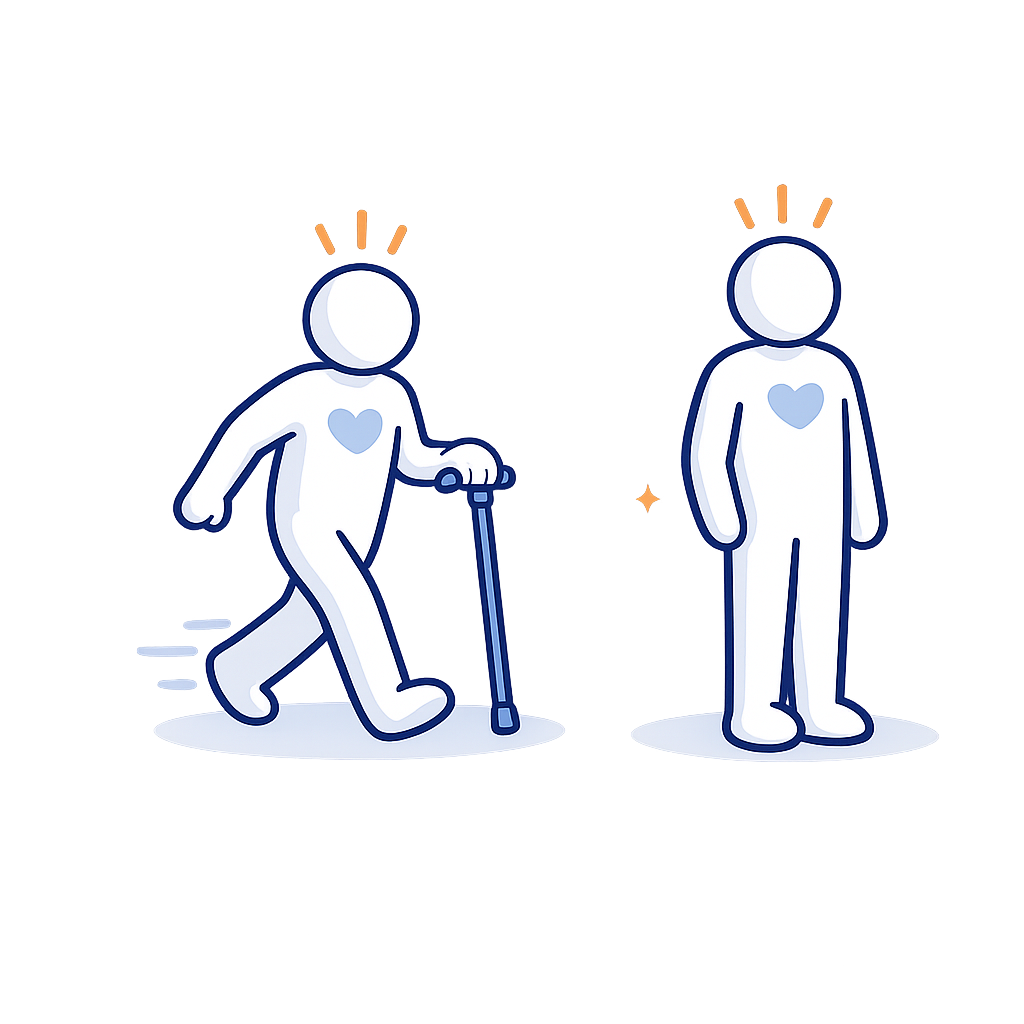
Have you noticed that walking or standing is more difficult than it used to be? Perhaps you are experiencing pain in your feet, knees, hips or back. Or you may feel unsteady when you have to stand for longer periods. For example, in a shop, at work or whilst out and about. Walking and standing are normal parts of daily life, but they can have a significant impact if they become difficult. If walking or standing causes discomfort, you often make adjustments naturally. You go shorter distances, take the car more often, avoid crowded places or prefer to stay seated. This may help temporarily, but it can also lead to a decline in your fitness and confidence.
Walking and standing
What do you notice?

Difficulty walking or standing can manifest itself in various ways.

You may, for example, notice that:

  • you experience pain whilst walking or standing;
  • your legs or feet feel heavy;
  • you get tired more quickly;
  • if you feel unsteady on uneven ground;
  • you walk less far than you used to;
  • you often have to sit;
  • avoid activities that require you to stand for long periods;
  • if you need a long time to recover after walking or standing;
  • you are afraid of tripping or falling.

Sometimes you may find that you choose your daily activities based on the availability of benches, the distance involved or soft surfaces. This shows that walking and standing affect your freedom.
What might be the reason for this?

Related topics

  • Avoiding family visits or social engagements

    Do you find yourself cancelling family visits or social engagements more often than you’d actually like? Perhaps you look forward to an engagement at first, but on the day itself you find yourself dreading it. You wonder whether you’ll be able to cope, whether there’ll be enough rest, and whether others understand what you need. This can cause a great deal of stress. Social engagements often require more than just being present. You have to travel, talk, process sensory input, sometimes sit or stand for long periods, and then recover afterwards. This can be too much. Avoiding such situations may feel safe in the short term, but in the long run it can mean you miss out on social contact and enjoyment.

  • Cycling

Was this information helpful?

Difficulty walking or standing may be caused by pain, tiredness, reduced strength, balance problems or a change in gait. Foot position, footwear, fitness and joint problems may also play a part.

In addition, work, household chores or other activities can place too much strain on one side of the body. Standing for long periods on a hard floor or walking a lot without allowing time for recovery can exacerbate symptoms.

Fear of falling can also have an impact. If you move unsteadily, you often tense more muscles. This can actually make walking more difficult.

What can you do yourself?

It helps to pace walking and standing carefully and to provide support where necessary.

For example, you could:

  • gradually increase distances;
  • wear good shoes;
  • plan breaks before symptoms worsen;
  • alternate between standing and sitting;
  • choosing routes with rest stops;
  • avoid heavy bags;
  • exercise at a pace that suits you;
  • keep track of symptoms to identify patterns.

Try not just to focus on how far you get, but also on how you recover afterwards.

When is it advisable to seek help?

It is advisable to seek help if walking or standing causes regular pain or if you are avoiding certain activities. It is also worth seeking advice if you feel unsteady on your feet, nearly fall over or find you cannot walk as far as you used to.

Please contact us in the event of sudden severe pain, loss of sensation, a red and swollen leg, or shortness of breath.

How Rondom can help

Together, we’ll look at what makes walking and standing difficult. In doing so, we’ll pay attention to your feet, shoes, posture, strength, balance, energy levels and daily activities.

A podiatrist can help with foot problems, gait and footwear. A occupational therapist can help think through how to balance workloads between work, household chores and other activities. A physiotherapist can help with strength, balance, fitness and movement.

Together, we look for solutions that make walking and standing more manageable again.

Have you noticed that cycling isn’t as easy as it used to be? Perhaps you feel unsteady when getting on your bike, experience pain whilst cycling, or feel anxious in traffic. Cycling offers a great deal of freedom. You can go where you like, get some exercise outdoors and are less dependent on others. If cycling becomes more difficult, it can have a significant impact on your daily life. Cycling requires balance, strength, reaction time, situational awareness and confidence. The bike itself must also fit you properly. If any one of these things changes, cycling can become stressful or difficult.

  • Daring to go outside

    Do you find going outside a bit daunting? Perhaps you’re worried about falling, experiencing symptoms, losing your bearings or panicking. Or you may feel insecure because you’ve lost confidence in your body. Going outside may seem simple, but it can be a big step if you feel vulnerable. Being outdoors is important for exercise, social interaction, daylight and independence. If you’re less willing to go outside, your world can quickly become smaller. It’s important to take this seriously and see, step by step, what helps.

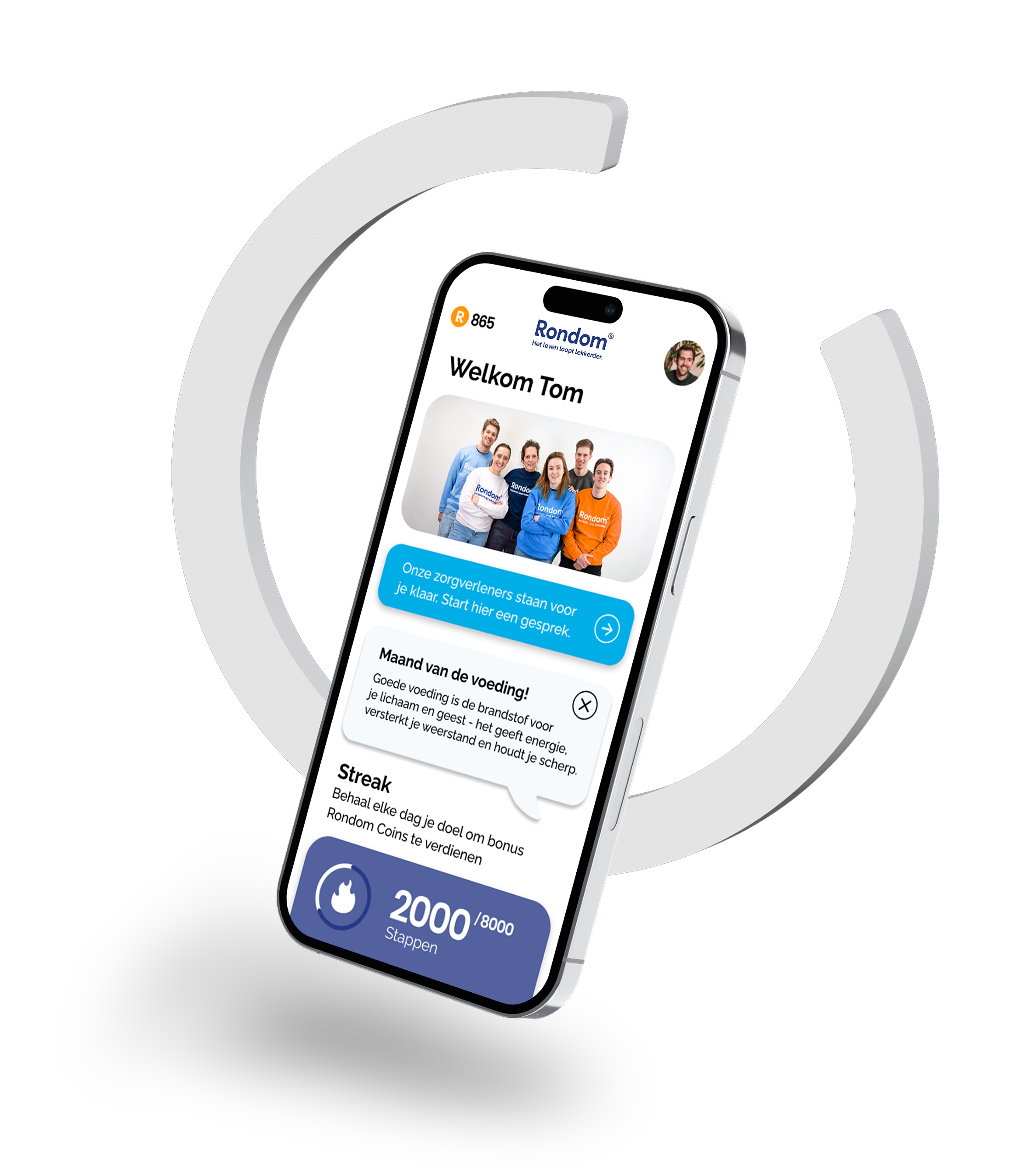
  • Work on your health with the Rondom app

    • Direct contact with healthcare professionals via chat
    • A community where you share experiences and motivate one another
    • Personal challenges that match your goals
    • Step counter for your daily exercise
    • Earn points for healthy choices
    • Articles, videos, recipes and assignments
    • Register for (online) events
    Discover the Rondom app

    Find a healthcare provider near you

    Book an appointmentCall usDownload the Rondom app