Taking control
Do you feel as though you have less control over your day or your health? Perhaps there are lots of appointments, advice, restrictions or people offering their input. That can be helpful, but it can also be overwhelming at times. You’d like to stay in the driving seat, even if you need help. Staying in control does not mean you have to do everything on your own. It means you remain involved in decisions that affect your life. What is important to you? What do you want to continue doing yourself? What do you need help with? As your health changes, these are important questions.
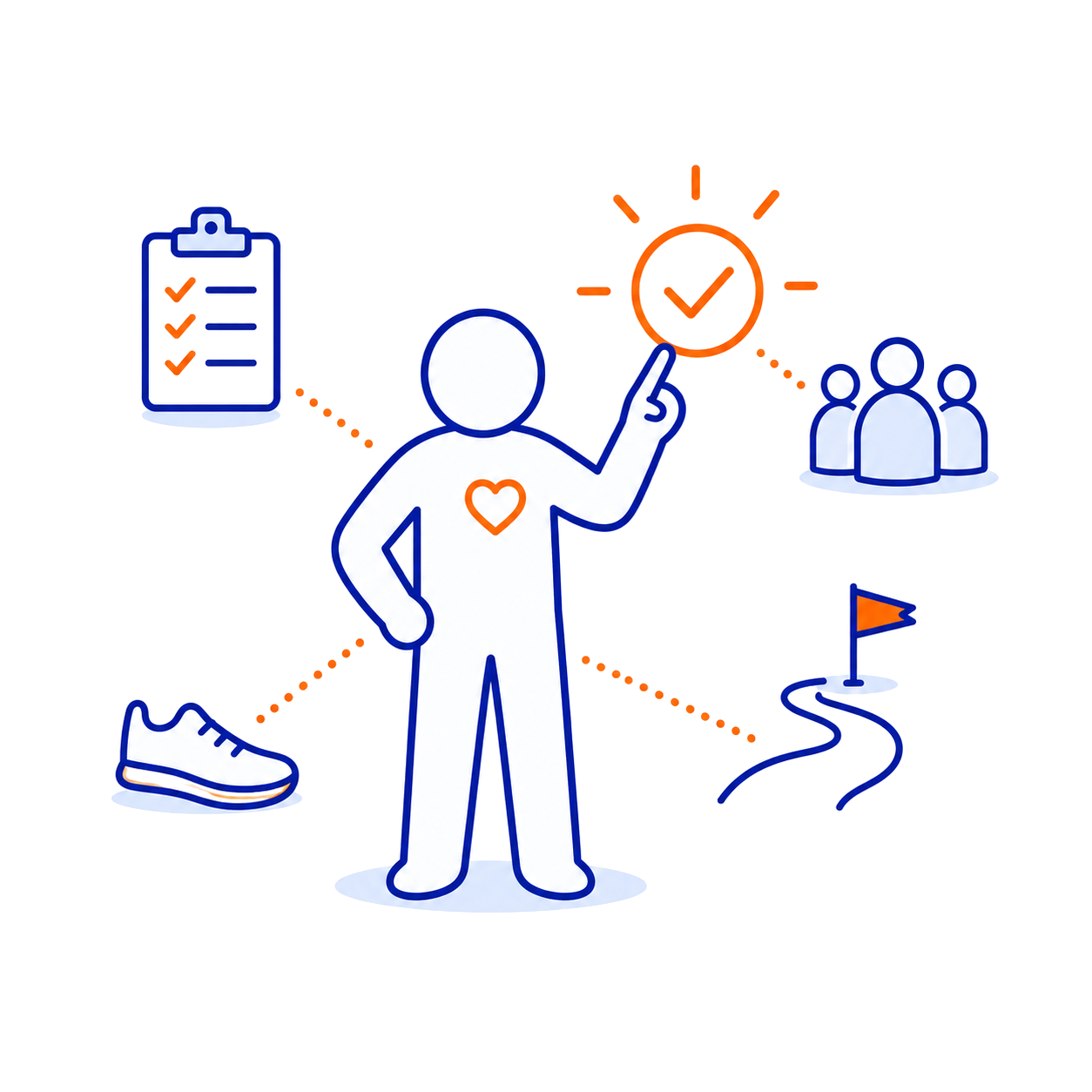
What do you notice?
Having less control can feel as though the day is just happening to you. You mainly react to what needs to be done, rather than setting the direction yourself.
You may, for example, notice that:
- you have a lot of appointments and find it hard to keep track of them;
- you are not sure who is responsible for what;
- others can sort out a lot for you;
- you find it difficult to express your wishes;
- if you feel dependent;
- if you feel that you are lagging behind;
- you have little time for the things that matter to you;
- if you are unsure which type of help is appropriate;
- you are uncertain about the future.
Sometimes you may feel that your symptoms are controlling everything. In such cases, it can help to take a fresh look at the things you can influence.
What might be the reason for this?
People’s ability to manage their own lives can come under pressure due to illness, pain, fatigue, limitations or mental strain. Receiving a lot of conflicting advice can also cause confusion.
In addition, dependence on others can have an impact. If you need help with transport, housework, work or care, it may feel as though you have less control over your own life.
Uncertainty about the future is also a factor. If you do not know how your symptoms will develop, it becomes more difficult to make plans. As a result, keeping things under control can take a great deal of energy.
What can you do yourself?
It helps to clarify what is important to you. Taking control often starts with getting an overview.
For example, you could:
- write down what you want to continue doing yourself;
- keep track of what help you receive and from whom;
- ask questions if anything is unclear;
- keep appointments and advice in one place;
- indicate what you would like to see in the support provided;
- discuss options before others make a decision;
- set small goals for your day or week;
- Check regularly to see what still fits.
Taking control can also mean consciously seeking help. Help can actually give you the space to continue making your own choices.
When is it advisable to seek help?
Seeking help is a sensible thing to do if you’re losing track of things or feel that others are making too many decisions for you. Even if you’re not sure what sort of support is right for you, advice can help.
Ask for help if you find that your day consists mainly of obligations, organising things and recovering. In that case, looking at things together can help you regain a sense of direction.
How Rondom can help
Together, we’ll look at the areas where you’d like to feel more in control. In doing so, we’ll take into account your daily tasks, energy levels, requests for support, appointments and personal goals.
A occupational therapist can help you get a clearer picture and decide what you want to continue doing yourself. A lifestyle coach can support you in developing healthy habits and recovery. In times of uncertainty, stress or a loss of confidence, it can psychological support should be appropriate.
Together, we will look for practical steps to help you take more control of your daily life.
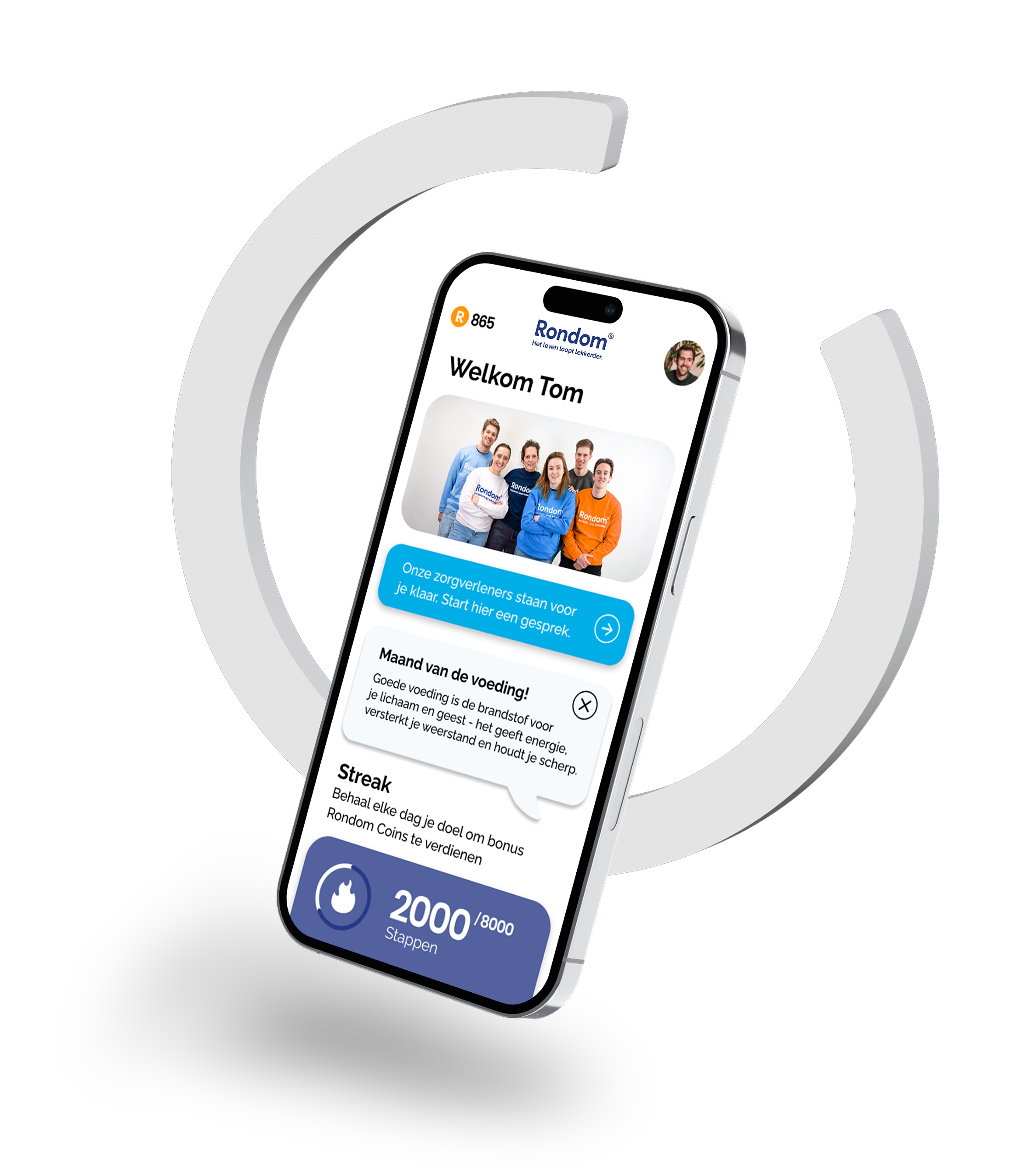
Work on your health with the Rondom app
- Direct contact with healthcare professionals via chat
- A community where you share experiences and motivate one another
- Personal challenges that match your goals
- Step counter for your daily exercise
- Earn points for healthy choices
- Articles, videos, recipes and assignments
- Register for (online) events