Work-related stress
Do you feel that work is taking too much out of you? Perhaps you manage to get through the day, but find that you can’t do anything at home. Or you start the working day feeling anxious, because you know you have too much on your plate. Work-related burnout often develops gradually. This can make it difficult to realise in time that things aren’t going well. Burnout doesn’t mean you’re weak. It means that the demands placed on you and your ability to recover are no longer in balance. If this goes on for too long, symptoms can worsen and you may end up taking sick leave.
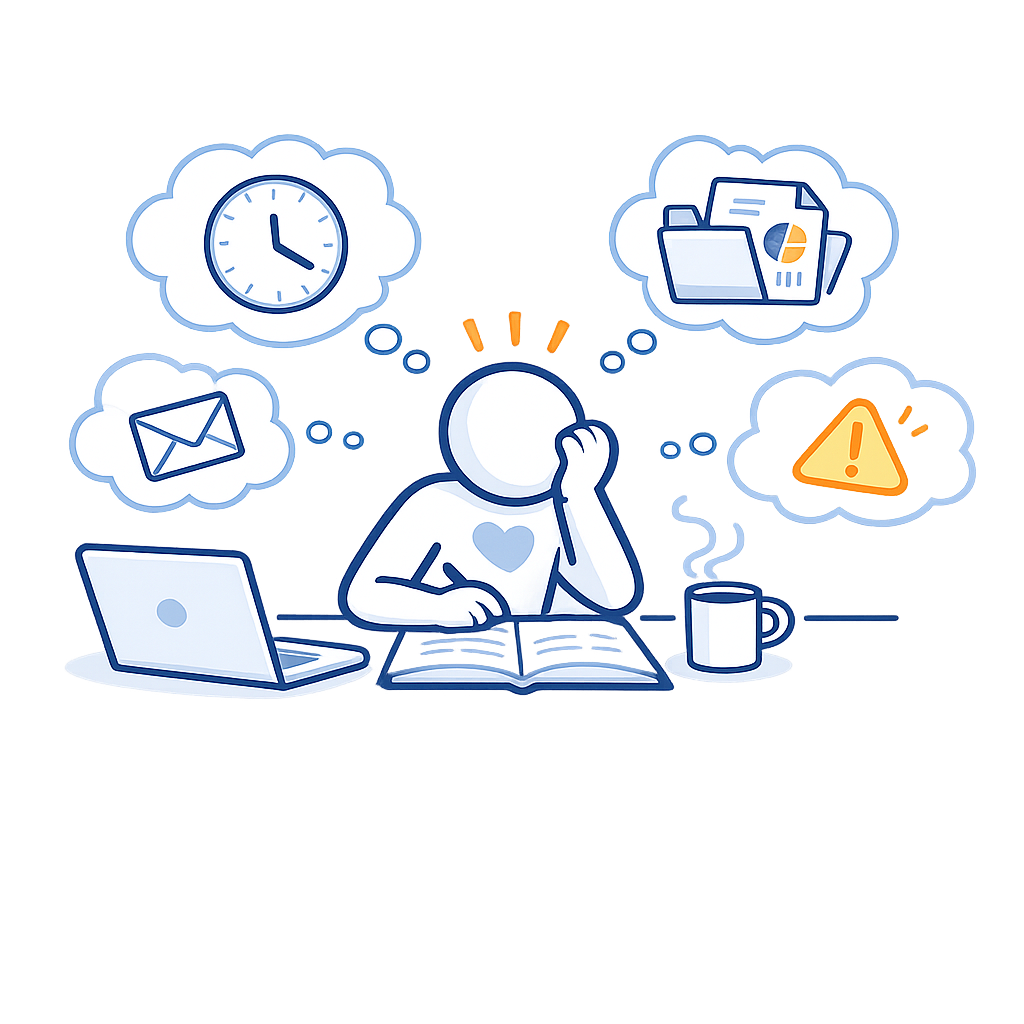
What do you notice?
Overwork can cause physical, mental and emotional symptoms.
You may, for example, notice that:
- you are getting increasingly tired;
- you are recovering poorly after work;
- you get irritated more easily;
- you have difficulty concentrating;
- you dread working days;
- you feel pain or tension in your body;
- you make mistakes more often;
- you skip breaks;
- you have less patience or energy at home.
Sometimes you may find that you are no longer really able to relax. Your mind remains focused on work, even when you are off work and don’t have to work.
What might be the reason for this?
Work-related stress is often caused by a combination of factors. Workload, high expectations, insufficient recovery time, physical symptoms and personal stress can all exacerbate one another.
Your capacity also plays an important role. You may find that you are physically less able to cope due to pain, tiredness or health issues. Or that you have less mental energy due to stress, tension or emotional strain. Tasks that used to come naturally may then require more effort.
Uncertainty at work can also take a lot out of you. Think of changing tasks, little scope for autonomy, conflicts, a lot of distractions or having to be available at all times.
In addition, personal beliefs may play a part. You want to do well, not let your colleagues down or be a nuisance. As a result, you might carry on for longer than is good for you.
What can you do yourself?
It helps to take the warning signs seriously and not wait until things get out of hand.
For example, you could:
- write down which tasks take a lot of energy;
- really take breaks;
- discuss what can be scaled back temporarily;
- set clearer limits on accessibility;
- alternate heavy tasks with lighter ones;
- planning recovery time after work;
- keep track of your symptoms and energy levels;
- Talk to your line manager or company doctor in good time.
Minor adjustments can prevent the strain from increasing further.
When is it advisable to seek help?
It is wise to seek help if you find that your workload is becoming too much on a long-term basis. It is also important to seek advice if you are sleeping poorly, are often feeling stressed, can no longer cope at home, or are afraid of having a breakdown.
Be sure to ask for help if you keep ignoring symptoms or if you’re unsure how to broach the subject at work.
How Rondom can help
Together, we look at where the stress is coming from and what is needed to restore balance. In doing so, we focus on workload, tasks, energy, recovery and boundaries.
A occupational therapist can help with energy management, task allocation and work organisation. A lifestyle coach can help with sleep, recovery and healthy habits. In cases of stress, tension or worrying, it can psychological support should be appropriate. If physical symptoms are involved, a physiotherapist help.
We are looking for feasible steps to reduce stress and prevent relapse.
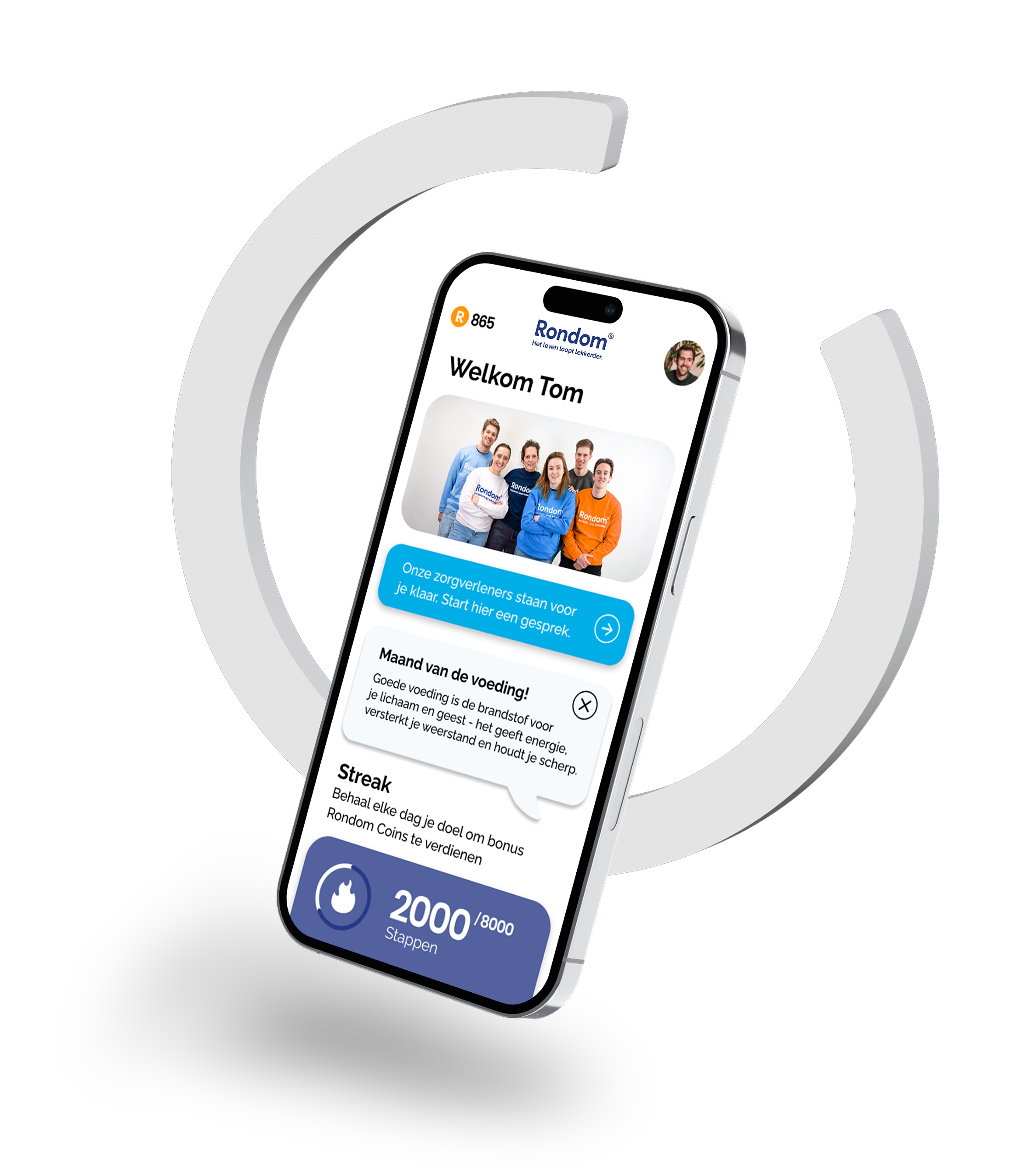
Work on your health with the Rondom app
- Direct contact with healthcare professionals via chat
- A community where you share experiences and motivate one another
- Personal challenges that match your goals
- Step counter for your daily exercise
- Earn points for healthy choices
- Articles, videos, recipes and assignments
- Register for (online) events