Tensions at home
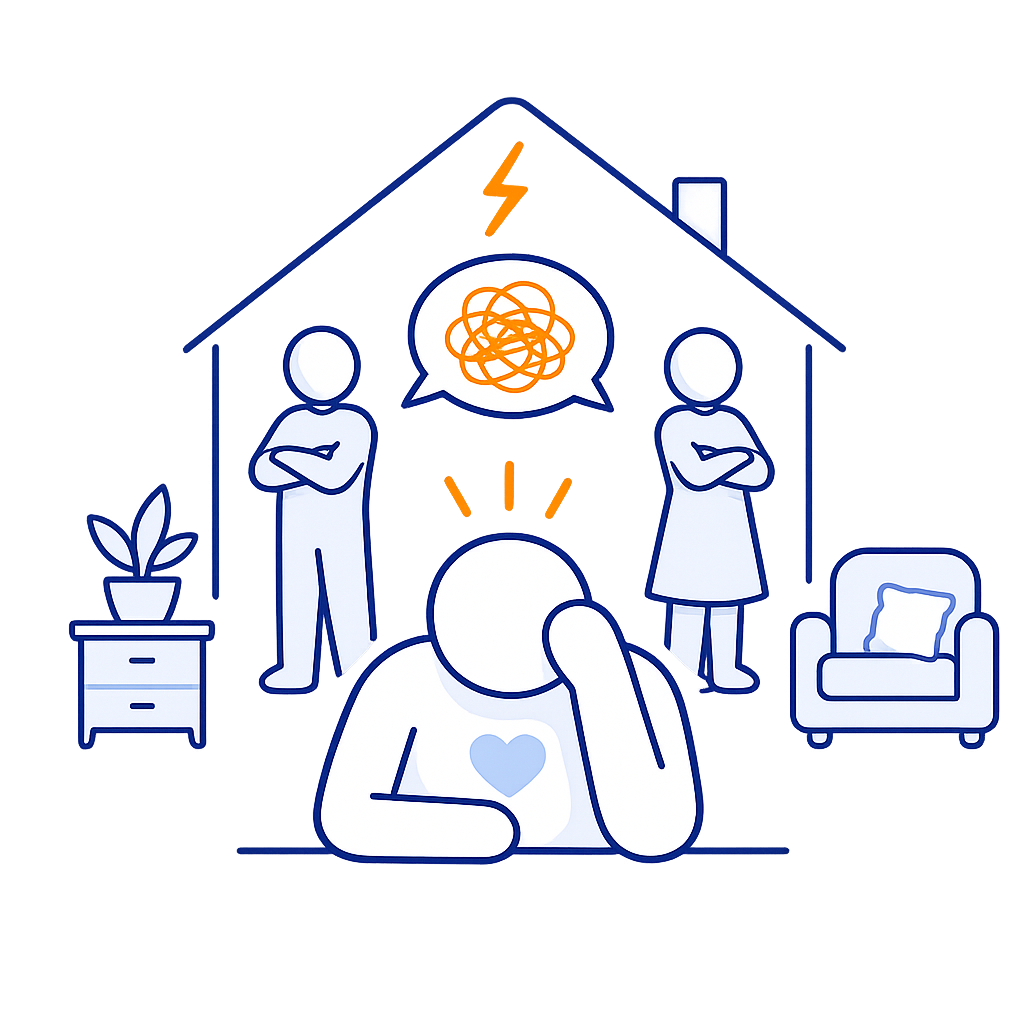
Have you noticed that there is more tension at home due to health issues, care responsibilities or tiredness? Perhaps irritations arise more quickly, conversations become shorter, or the focus is often on what isn’t going well. That can be upsetting. Home is supposed to be a place where you can relax, but when under prolonged strain, that is precisely where tension can build up. Tension at home does not mean that you do not care for one another. Often, everyone is tired, worried or feeling lost. When health issues or care responsibilities have a significant impact, the dynamics at home change. It is important to discuss this in good time.
What do you notice?
Tensions at home can manifest themselves in various ways.
You may, for example, notice that:
- you react more irritably;
- conversations more often end in arguments;
- you understand each other less well;
- practical tasks, leading a discussion;
- if you feel you are not being heard;
- you swallow things to avoid an argument;
- children showing signs of stress;
- you have less time to relax together;
- you feel alone at home.
Sometimes, in fact, there is less talking. Everyone tries to carry on, but the distance between them grows.
What might be the reason for this?
Tension at home can arise from pain, tiredness, stress, caring for a relative, financial worries or changing roles. As one’s capacity to cope diminishes, there is less room for patience and understanding.
Unclear expectations also play a part. Who does what? What is feasible? When is help needed? If this is not clear, misunderstandings are more likely to arise.
Furthermore, sadness or helplessness can manifest as anger. This can sometimes make conversations more difficult.
What can you do yourself?
It helps to identify stress early on, before it gets out of hand or worsens.
For example, you could:
- choose a quiet moment to talk;
- express what you are feeling without blame;
- discuss which tasks are becoming too much;
- making arrangements regarding rest and support;
- explain things to children where appropriate;
- doing something together that is not related to healthcare;
- consider seeking external help;
- If you feel tension building up, take a short break.
Don’t try to sort everything out when everyone is tired or angry. A conversation often goes better at a quieter time.
When is it advisable to seek help?
It is wise to seek help if tensions keep recurring or if you are no longer able to communicate effectively. Help is also important if children are experiencing a great deal of stress or if you do not feel safe at home.
In the event of danger, threats or violence, immediate help is required. Contact your GP.
How Rondom can help
Together, we look at what causes stress at home and what is needed to find more peace of mind. In doing so, we focus on tasks, boundaries, communication, energy and recovery.
A occupational therapist can help to redistribute daily tasks differently. Psychological Support can help with stress, emotions and communication. A lifestyle coach can support recovery, sleep and circadian rhythm.
Together, we look for practical steps that bring more peace of mind and clarity at home.
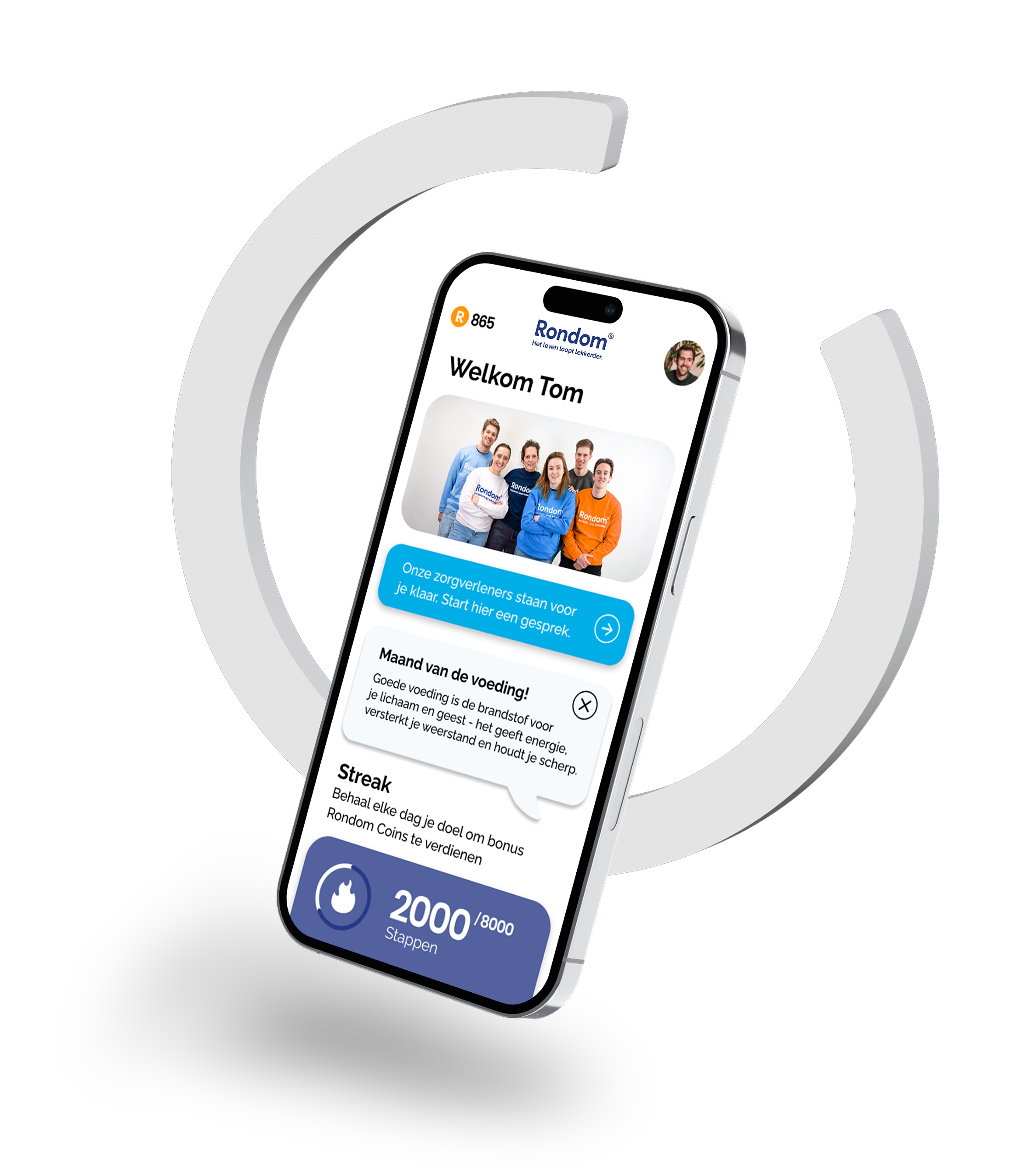
Work on your health with the Rondom app
- Direct contact with healthcare professionals via chat
- A community where you share experiences and motivate one another
- Personal challenges that match your goals
- Step counter for your daily exercise
- Earn points for healthy choices
- Articles, videos, recipes and assignments
- Register for (online) events