Temperature measurement to prevent foot ulcers
Temperature measurement to prevent foot ulcers
Recognising foot wounds using temperature measurements
A foot ulcer is a wound that heals poorly. This is common among people with diabetes. Around 34 per cent of people with diabetes develop a foot ulcer. A foot ulcer can lead to infection, amputation and a reduced quality of life. This has major consequences for the individual concerned, and for the healthcare system in the Netherlands.
People who have previously had a foot ulcer are at greater risk of developing another one. Around 40 per cent develop another ulcer within a year. Preventing these ulcers is therefore important.
As a healthcare organisation, we believe that care should not only focus on treatment, but also on the early identification of risks. By intervening at an earlier stage, complications may be prevented. In this way, we help to maintain quality of life and reduce the burden on the healthcare system.
Early detection using skin temperature
A major cause of a foot ulcer is too much pressure on the foot. People who have reduced sensation in their feet often do not notice this pressure in time. As a result, damage can occur without them realising it. We want to prevent this as much as possible.
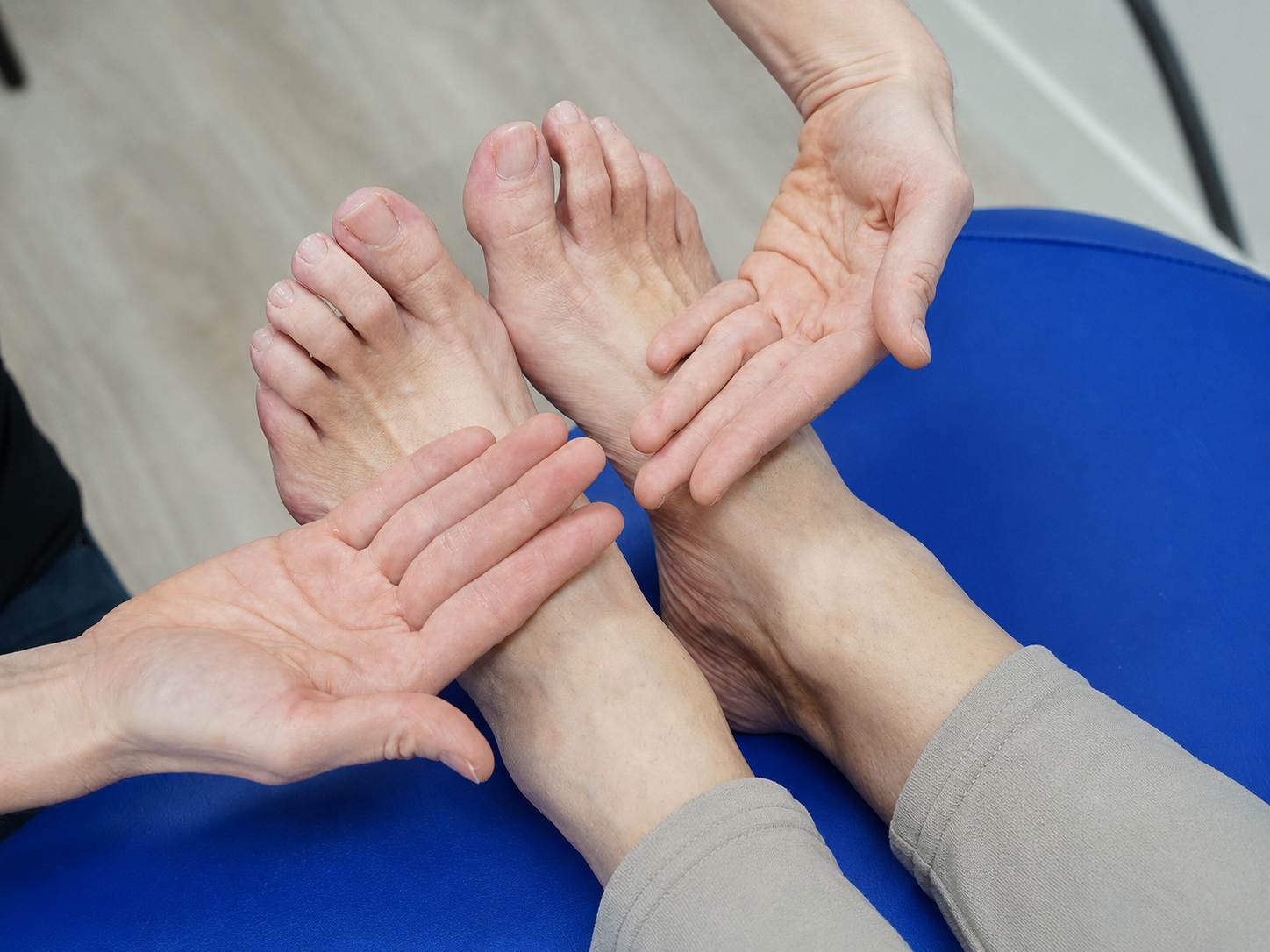
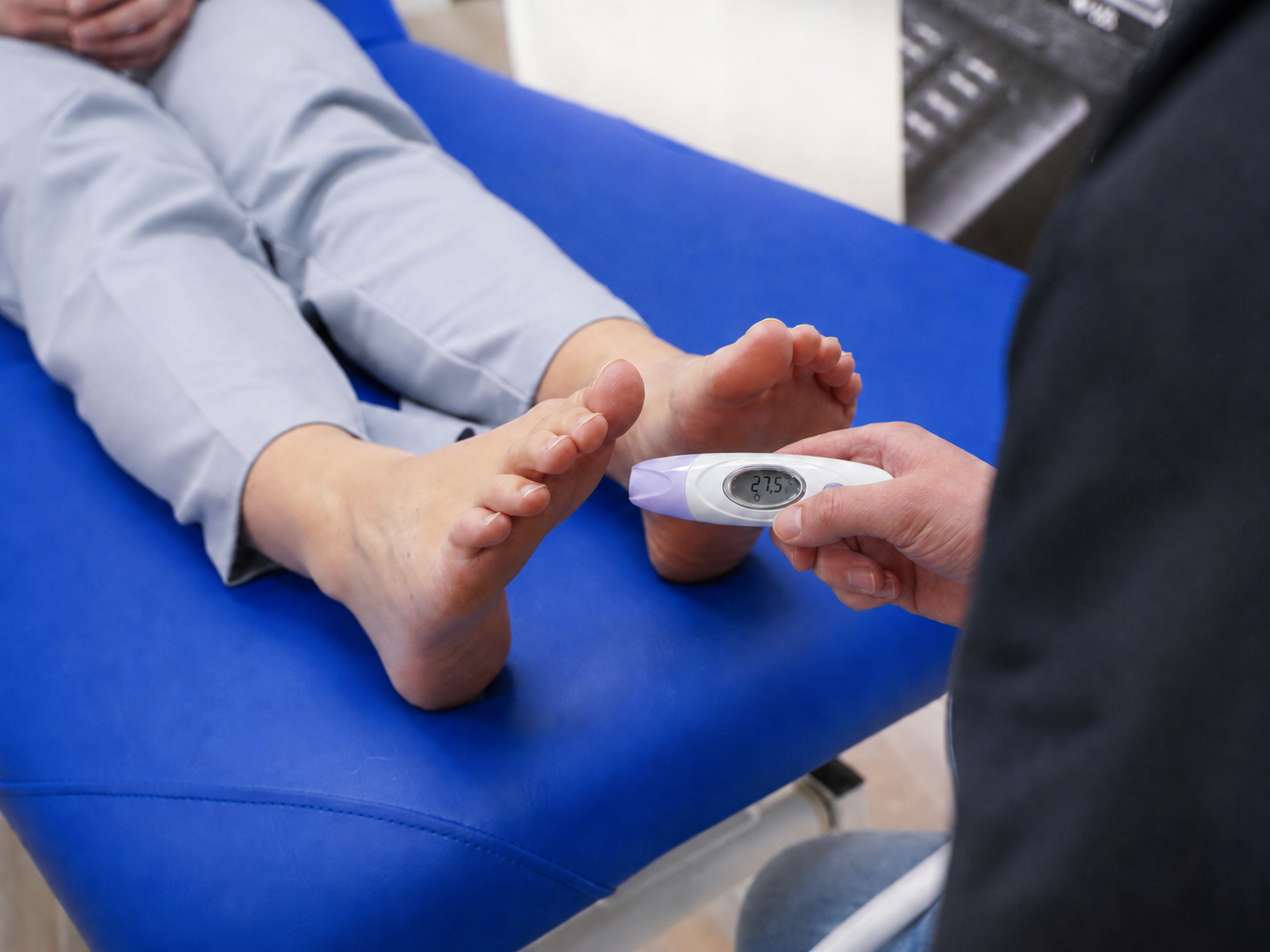
We can detect early-stage pressure damage by measuring the skin temperature of the feet. Research shows that an area becoming warmer may indicate damage caused by excessive pressure. By regularly measuring the temperature of both feet, we can quickly see if one foot or a particular area is becoming warmer than the other. A higher temperature may be an early sign of a wound.
If we notice that one area is clearly becoming warmer than the other foot, we can take immediate action. In such cases, we advise the client to temporarily reduce the strain on that foot. We can also start podiatric treatment. In this way, prevention becomes an integral part of daily care and we help to prevent wounds.
Practice-oriented research
The optimal use of temperature measurements in practice has not yet been established. That is why the project ‘Implementing foot skin temperature measurements in the home setting within the current care process’ has been launched. We are carrying this out in collaboration with other organisations in the field of foot and wound care, on behalf of the Homeland Academic Workplace.
In consultation with healthcare professionals, people with diabetes and informal carers, the requirements that an assessment tool must meet were established. Market research was carried out on this basis. No existing instrument fully met all the criteria. Therefore, instruments that meet the core requirements were selected. These have been tested in foot care practice. The results are currently being analysed.
Through this research, we are working to develop evidence-based care that can be applied in practice. Would you like to read more? Click here.
Network partner: Academic Workplace Homeland
We are a network partner of the Homeland Academic Workplace. Within this network, we conduct research into aids that reduce pressure on the foot. This research focuses on people with diabetes or reduced sensation in their feet, who have a chronic wound or are at high risk of developing one.
The aim of this partnership is to improve the provision of assistive devices in the home. In doing so, we aim to prevent amputations, reduce costs and help people maintain their quality of life for as long as possible.
By working together, we bridge the gap between research and practice. In this way, we are working to improve healthcare step by step.