Dietary pattern
Would you like to eat more healthily, but aren’t quite sure where to start? Perhaps you’ve read so much conflicting advice that you’ve actually lost your way. Or maybe you do know what’s healthy, but you can’t seem to stick to it during your busy week. A healthy diet doesn’t have to be perfect. Above all, it needs to fit in with your life. Diet affects your energy levels, weight, recovery, blood pressure, cholesterol and how you feel. Yet eating healthily isn’t just about knowledge. It’s also about planning, shopping, habits, taste, emotions and time.
What do you notice?
A diet that isn’t quite right can manifest itself in various ways.
You may, for example, notice that:
- you have little energy;
- you often feel peckish between meals;
- you skip meals;
- you often opt for quick fixes;
- you eat little fruit or vegetables;
- you eat a lot of sweet or savoury foods;
- you eat irregularly;
- you find it difficult to plan your shopping;
- you do not know which choices are healthy.
Sometimes, eating healthily can feel complicated or expensive. It doesn’t always have to be that way. Even small changes can make a big difference.
What might be the reason for this?
Eating habits are formed by routine. What you buy, when you eat, how much time you have and who you eat with all have an influence.
Stress, tiredness and poor sleep can make you more likely to opt for convenience. Emotions can also influence eating behaviour.
Furthermore, unclear or contradictory advice can be confusing. This makes it more difficult to choose what is right for you.
What can you do yourself?
It helps to adjust your diet step by step.
For example, you could:
- choose fixed mealtimes;
- add vegetables to meals more often;
- choose wholemeal products;
- drink water or tea instead of sweet drinks;
- prepare some healthy snacks;
- planning your shopping with a list;
- don’t be too hard on yourself;
- to see which habit yields the greatest benefit.
Eating healthily doesn’t have to be perfect every day. It’s about the choices you usually make.
When is it advisable to seek help?
It is wise to seek help if you are unsure what is healthy for you or if eating causes you a great deal of stress. Advice is also important if you are overweight, underweight, have high blood pressure, high cholesterol, diabetes or stomach and bowel problems.
Please contact your GP if you are losing weight rapidly for no apparent reason, are experiencing binge eating or feel anxious about food.
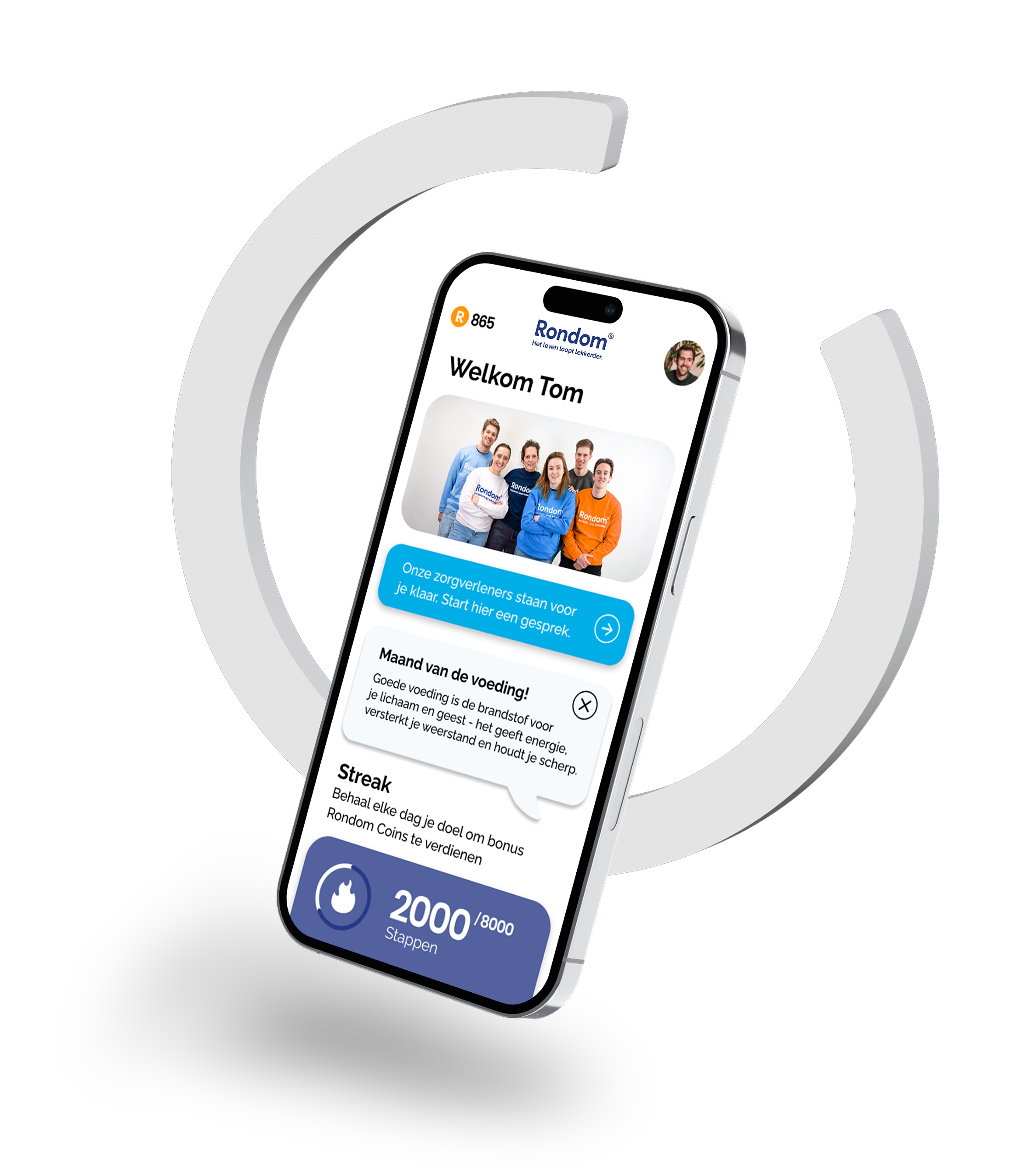
How Rondom can help
Together, we’ll look at how your diet fits in with your daily routine, energy levels and goals. We’ll focus on mealtimes, shopping, stress, sleep, exercise and sticking to your plan.
A lifestyle coach can help make healthier choices practical and achievable. In cases of emotional eating or negative thoughts about food, it can psychological support should be appropriate. A occupational therapist can help if planning, managing energy or cooking is difficult.
Together, we’ll look for a diet that’s healthy and suits your daily life.