Preventive measures for diabetes
Preventive measures following a diagnosis of diabetes mellitus involve minimising the risk of complications or problems as much as possible by providing early information and implementing therapies. Information may include, amongst other things, advice on footwear and foot care. Treatments may include podiatric insoles or orthoses (toe protectors) to, for example, distribute pressure across the feet and toes as evenly as possible.
When to see a podiatrist...
If risk factors for foot problems are suspected, you will be referred to a podiatrist. In the case of type 1 diabetes mellitus, a referral to a podiatrist often only occurs once foot problems have arisen. This depends on the patient’s age and other health issues.
Symptoms that people with diabetes may experience include strange sensations in the feet and toes, (night-time) cramps in the calves, calluses, corns and cracked skin.
A treatment
The treatment consists of providing information and education to you and, if necessary, to your partner or other relevant parties. In addition, an initial screening will be carried out to identify and/or assess risk factors. Once these have been identified, your feet will be examined for painful areas and to assess their functionality.
The result
The expected outcome is that various topics previously discussed during the information session will be repeated, as quite a lot of information is covered during the session. Step by step, you will become familiar with the various points covered in the information session. Regular check-ups with a diabetes nurse or the GP’s practice nurse are essential. They will also provide you with information on (other) aspects relevant to diabetes mellitus. N.B. Collaboration between primary and secondary care is preferred (GP, diabetes nurse, podiatrist).
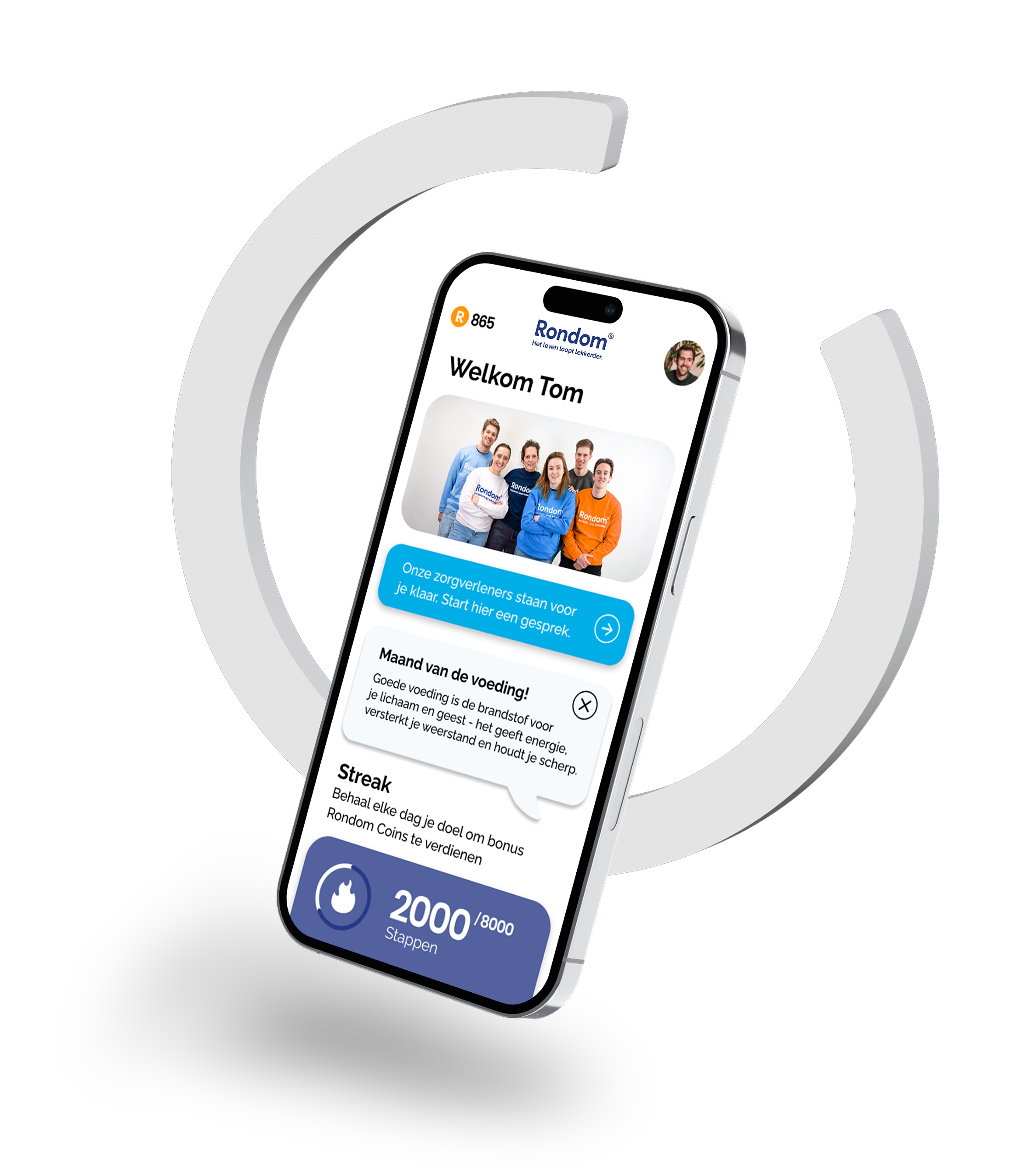
Work on your health with the Rondom app
- Direct contact with healthcare professionals via chat
- A community where you share experiences and motivate one another
- Personal challenges that match your goals
- Step counter for your daily exercise
- Earn points for healthy choices
- Articles, videos, recipes and assignments
- Register for (online) events