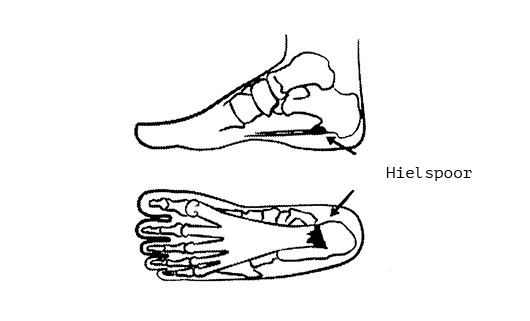
Heel spur
Heel spurs often cause pain under the heel when weight is borne on it; the pain is usually localised in one specific spot.
What is a heel spur?
A heel spur, also known as plantar fasciitis, is an irritation or inflammation of the plantar fascia beneath the foot. The plantar fascia plays a key role in the foot’s roll and stabilisation whilst walking. When it becomes overloaded, plantar fasciitis may develop. The pain that results is commonly referred to as a ‘heel spur’. This strain can lead to inflammation and even a chronic condition: plantar fasciosis. A heel spur can only be diagnosed by means of an X-ray at a hospital.
Causes of heel spurs
Tendinitis often arises as a result of several factors. The most important factor is a change in the foot’s gait caused by postural abnormalities. In addition, wearing unsuitable shoes with soles that are too soft and too flexible, being overweight and overexertion can all play a part.
Symptoms of heel spurs
- A sharp, stabbing pain under the foot.
- The pain is often most severe in the morning, especially when getting out of bed.
- Pain may also occur after standing for a long time or not moving for a long time. This is sometimes accompanied by stiffness.
- Pain is also often felt when standing on tiptoes and when bending the toes.
- The pain is usually localised on the sole of the heel.
Heel spur treatment
Early treatment by a podiatrist can shorten the duration of heel spurs. Heel spurs are mainly caused by overuse, so it is important to get plenty of rest. It is also important to support the foot to prevent the tendon from overstretching. A good, stable shoe is essential, often with a corrective podiatric insole. When holding the shoe in your hand, you should be able to bend the outsole at the forefoot. The outsole should not bend in the middle.
In some cases, a podiatrist can provide immediate relief to the tendon by applying a tape, thereby reducing the tensile force on the tendon plate’s attachment. The podiatrist can also give you advice on footwear and stretching exercises; please see our leaflets ‘Footwear Tips’ and ‘Stretching Exercises’ for more information.
Insoles for heel spurs
Podiatric insoles can help with heel spurs and heel pain. Heel spurs are often caused by an incorrect foot position, and insoles in your shoes can resolve this problem. The insoles influence the alignment of your feet and ensure optimal pressure distribution. This gives the overloaded tendon under your foot more rest and can help reduce the pain.
First aid for heel spurs
What is the best course of action for heel spurs? We asked our podiatrist and sonographer Sepp Mortelmans. Click here to read more.