Osgood Schlatter (knee pain in children)
Osgood-Schlatter disease is the most common cause of knee pain in (active) children. The child often feels pain just below the knee, where the patellar tendon attaches to the shinbone.
What is Osgood-Schlatter disease?
Osgood-Schlatter disease is the most common cause of knee pain in (active) children. The condition is more common in boys than in girls. In boys, it most commonly occurs between the ages of 10 and 15, and in girls between the ages of 8 and 13.
One of the growth plates of the knee is located at the front, below the knee, where the patellar tendon attaches to the tibia. This is also known as the growth plate bump below the knee. Osgood Schlatter’s disease involves painful overuse or irritation of this growth plate.
The origins of Osgood-Schlatter disease
When a child jumps and runs a lot whilst playing sport, such as in basketball, volleyball and athletics, pain may develop because the growth plates are overloaded. Pain and swelling can also be caused by an abnormal foot position, such as, for example, a flat feet or holvoet. This results in increased tension on the thigh muscles and the patellar tendon. These, in turn, pull on the growth plate, which causes the symptoms. In addition, trauma or injury, being overweight, weak and/or too-short muscles, or excessive strain can also be causes of these symptoms.
Osgood-Schlatter symptoms
- The child often feels pain just below the knee, where the hamstring attaches to the shinbone.
- The pain can occur in either one or both knees.
- There is often swelling or a small lump at the site of the pain.
- Pressing on the painful area, such as when kneeling, can also trigger the pain.
- If the pain started whilst exercising, it often subsides in the hours following the exercise.
Osgood-Schlatter disease and podiatry
Often, the child’s age and the location of the pain are sufficient to make a diagnosis. Sometimes it is necessary to take an X-ray or perform an ultrasound scan to confirm the diagnosis. Once the child has finished growing and the growth plate has closed, the pain will disappear of its own accord. However, the lump that has formed may be permanent. Most children do not experience any problems with this later in life.
Following the examination, the podiatrist can determine whether footwear advice or a podiatric insole should be prescribed. This is because a podiatric insole, in combination with footwear advice, helps to reduce the tension exerted by the patellar tendon on the kneecap. The treatment will be necessary until the growth plate has fully matured.
90 per cent of patients respond well to non-surgical treatment. In principle, the child does not need to stop playing sport, but if they are experiencing severe pain, it is better to rest. Sometimes it may also be necessary to cool the painful area and to stretch and/or strengthen the thigh muscles.

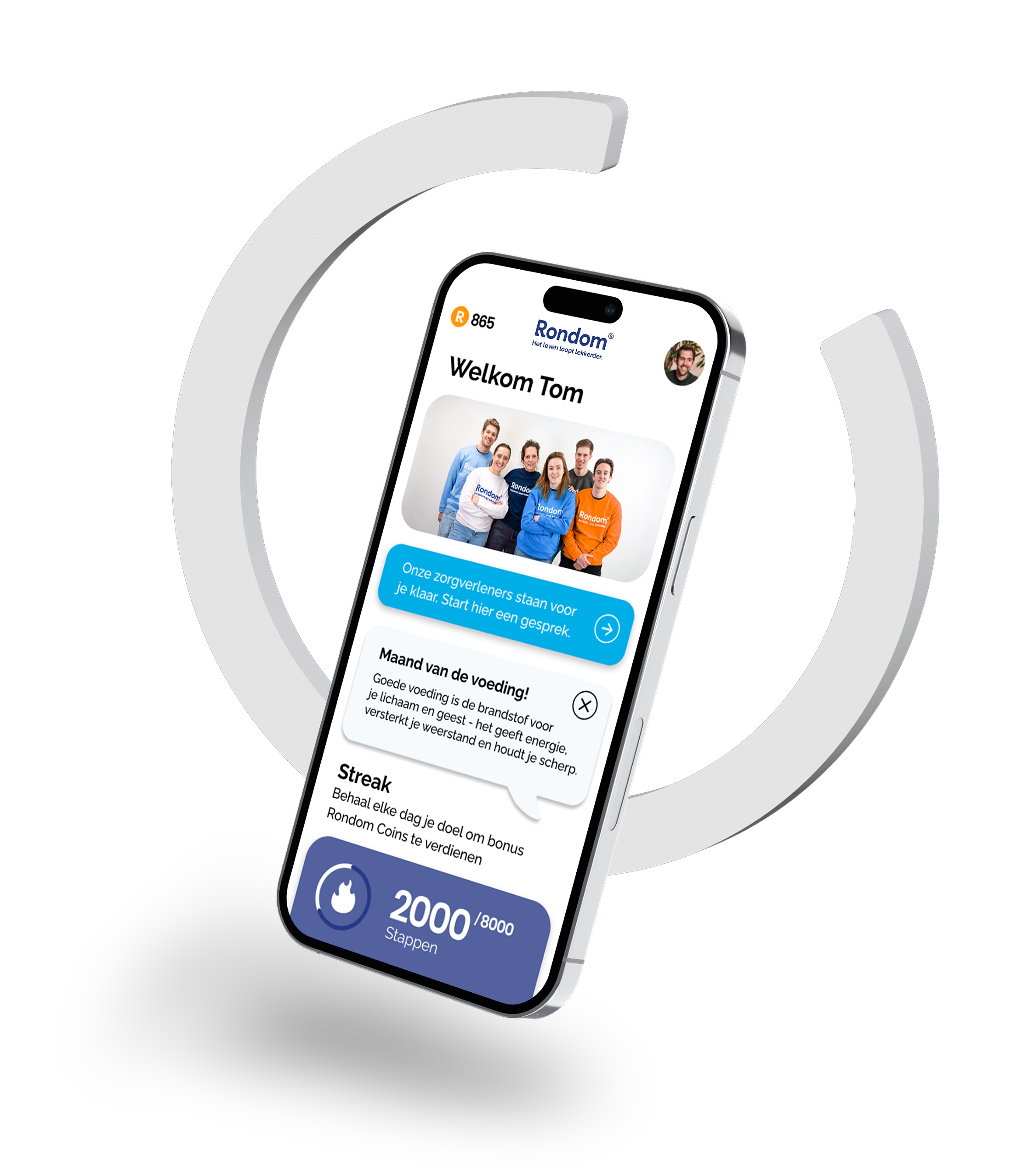
Work on your health with the Rondom app
- Direct contact with healthcare professionals via chat
- A community where you share experiences and motivate one another
- Personal challenges that match your goals
- Step counter for your daily exercise
- Earn points for healthy choices
- Articles, videos, recipes and assignments
- Register for (online) events