Rondom uses the CPHQ questionnaire to gain a broader insight into health
From 1 November, we will be sending all our clients the CPHQ questionnaire ahead of their first appointment. This comprehensive health questionnaire allows us to look beyond the symptoms that bring someone to us. We also identify other factors that influence health and day-to-day functioning.
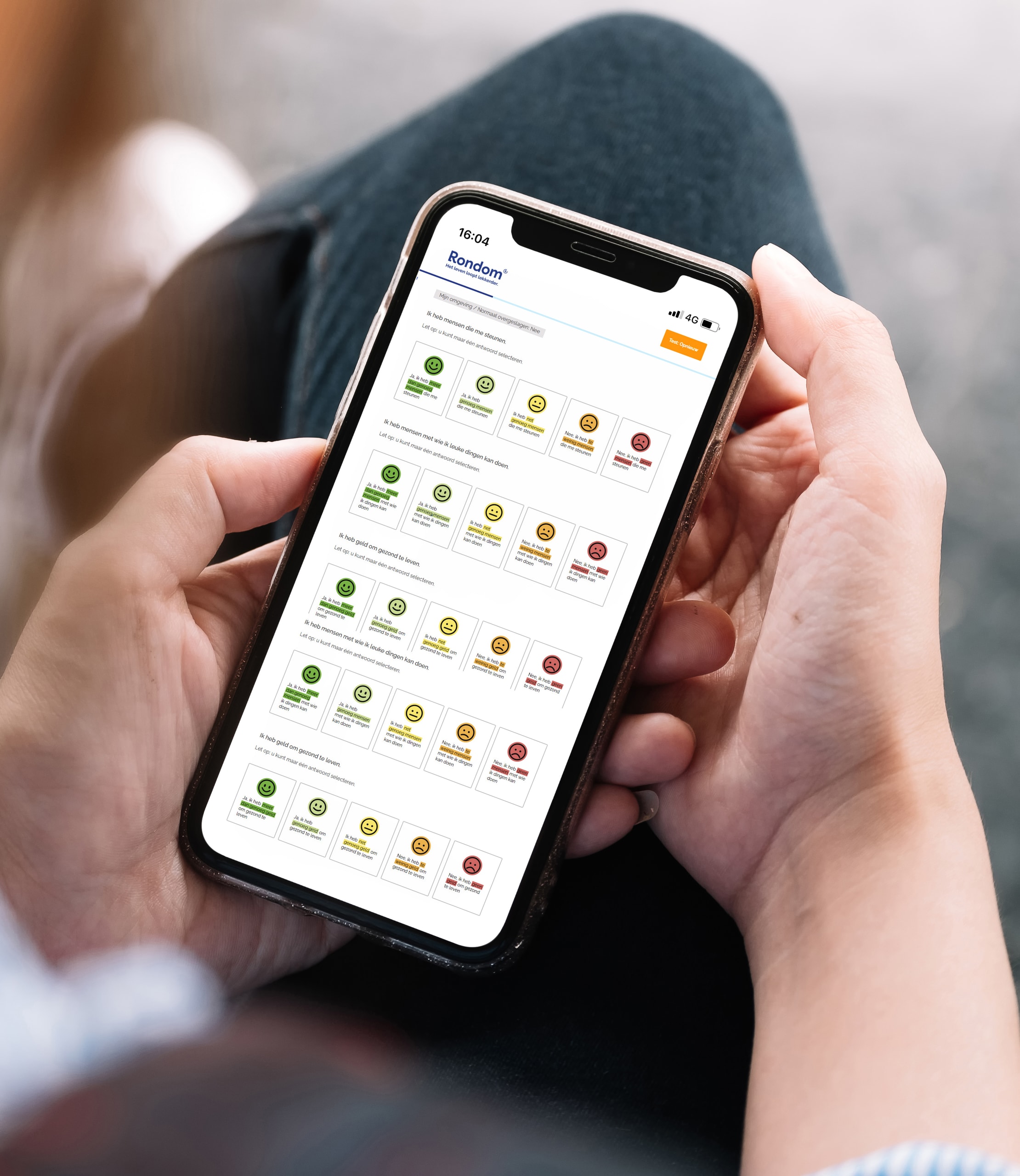
From 1 November, we will be sending all our clients the CPHQ questionnaire ahead of their first appointment. This comprehensive health questionnaire allows us to look beyond the symptoms that bring someone to us. We also identify other factors that influence health and day-to-day functioning.
Health is determined by many different factors. These include, for example, how a person feels, but also physical activity, social support, financial resources and the opportunities to participate in everyday life.
The CPHQ questionnaire helps to assess these different aspects in a standardised way. The answers give our healthcare professionals a broader picture of the client’s situation and support the discussion about what someone needs to stay healthy or take appropriate steps.
Monitoring health on an ongoing basis
Clients receive the CPHQ questionnaire before their first appointment at Rondom. We then ask them to complete the questionnaire again every 12 months. This applies even if someone has not had an appointment at Rondom in the past year.
By repeating the questionnaire annually, changes in health over a longer period can be identified. In this way, we do not just look at the moment when someone comes to us with symptoms; we also continue to monitor their health afterwards. This helps us to further improve the quality, accessibility and coherence of our care and to target prevention more effectively.
A broad view of health
The use of the CPHQ questionnaire is in line with our broader view of health. At Rondom, we look not only at symptoms, but also at factors in daily life that influence how a person feels and functions. By assessing these factors every year, we can identify changes earlier, provide support in good time and, where possible, prevent symptoms from arising or worsening.