When should you see a podiatrist?
You can consult a podiatrist if you have problems with your feet, toes, nails, ankles, knees, hips or back. Even if moving around has become less comfortable or your symptoms recur, it may be worth investigating whether your posture, foot position or the way you move plays a role in this.
When people think of a podiatrist, they mainly think of foot problems. That’s true: feet often play an important role in podiatry. But feet are not separate from the rest of your body. The way your feet move affects how you stand, walk and move. As a result, problems can also be felt in other parts of your body, such as your ankles, knees, hips or back.
The podiatrist therefore does not just look at the area where you are experiencing pain. Instead, they examine how your feet, posture and the way you move are all interconnected. This helps to identify which factors are influencing your symptoms and what kind of support might be appropriate.

When can podiatry help?
A visit to a podiatrist can help with various types of symptoms or if you notice that standing, walking or moving is less comfortable than you are used to. Not only if you have pain in your feet, but also if symptoms recur or if you notice that your posture or the way you move is changing. The podiatrist will assess whether your feet are a contributing factor.
A visit to a podiatrist may be appropriate if you:
- you have pain in your feet or toes;
- experiences symptoms whilst walking, exercising or standing for long periods;
- notice that your posture or the way you move is changing;
- regularly suffers from strain;
- notices that symptoms recur despite rest or exercise;
- are experiencing problems with shoes or strain on your feet;
This also applies to complaints relating to diabetes, rheumatism Podiatry can offer support for these and other chronic conditions.
As your feet influence how you stand and move, symptoms may be felt in various places. Below, you can read more about common symptoms where the podiatrist will assess whether your feet, posture and the way you move play a role.
Problems with the foot, ankle or lower leg
Problems with the feet or ankles can have a significant impact on daily activities. Sometimes these problems develop gradually, for example due to prolonged strain. Other problems arise following an injury or a change in movement patterns.
Examples of conditions that podiatry can help with:
- heel pain or heel spur;
- pain under the forefoot;
- Achilles tendon problems;
- ankle complaints or complaints following a sprain;
- pain when walking or standing for long periods;
- strain to the foot or lower leg.
Problems with toes and toenails
Problems with toes and toenails can also affect mobility and day-to-day functioning. The podiatrist investigates the cause of the problems and looks, for example, at the pressure on the foot, the position of your toes and the way you walk.
Sometimes these involve skin or nail problems, and sometimes changes in the position of the toes that cause pain or strain.
For example, you might consider:
- calluses and corns;
- ingrown toenails;
- abnormal toe alignment;
- pain or pressure when wearing shoes;
- recurring irritation or strain.
Knee, hip or back problems
Not all symptoms originate at the site where you feel pain. Symptoms in the knees, hips or back can sometimes be linked to the way your feet move or how your body is weighted. The podiatrist will assess whether your posture, foot position or gait affects your symptoms and will examine how different parts of the body work together during movement.
Podiatry may be suitable for:
- leg length discrepancy or pelvic obliquity;
- recurring knee problems;
- pain whilst walking or exercising;
- hip problems caused by strain or posture;
- back problems where movement or posture appears to be a factor;
- symptoms that keep recurring without any clear cause.

For children, sportspeople and those with specific healthcare needs
The cause of symptoms varies from person to person and depending on the stage of life. That is why podiatry is not just for people with a specific foot problem, but for people of all ages and in various situations.
A growing child, an athlete who exercises intensively, or someone with a condition that has a particular impact on their feet or places extra strain on their body: every situation requires a different approach. The podiatrist will investigate which factors are affecting your symptoms and assess what is needed to ensure you can continue to exercise comfortably and safely.
Podiatry, for example, may be suitable for:
- children with symptoms whilst growing or moving;
- athletes who experience symptoms during training or competition;
- people with a chronic condition such as diabetes or rheumatism;
- older people who need support with walking or maintaining their balance;
- people with recurring foot or postural problems.
Collaboration with other healthcare providers
Problems with the feet, posture and movement do not always occur in isolation. Sometimes several factors play a role at the same time, such as strength, strain, lifestyle, recovery or daily habits. In such situations, we look beyond just the feet.
That is why our podiatrists work alongside other healthcare professionals at Rondom where necessary. Depending on your situation, this could be, for example, a physiotherapist, lifestyle coach, occupational therapist or other practitioner.
Not every complaint requires podiatry alone. By looking at your symptoms, goals and day-to-day functioning together, assessment and treatment are better aligned. This ensures you receive support that is tailored to your needs.
Podiatry assistants
Good podiatry care is not just about the right treatment. It also requires attention, professional expertise and effective collaboration. That is why our podiatrists work closely with Rondom’s certified podiatry assistants.
Our podiatry assistants are trained by Rondom and form part of our treatment teams. The assistants support the podiatrist with preparatory and support tasks. This allows the podiatrist to focus more on assessment, treatment and personalised care. As a result, there is more scope for personalised attention, we can work efficiently and the quality of our care remains high.
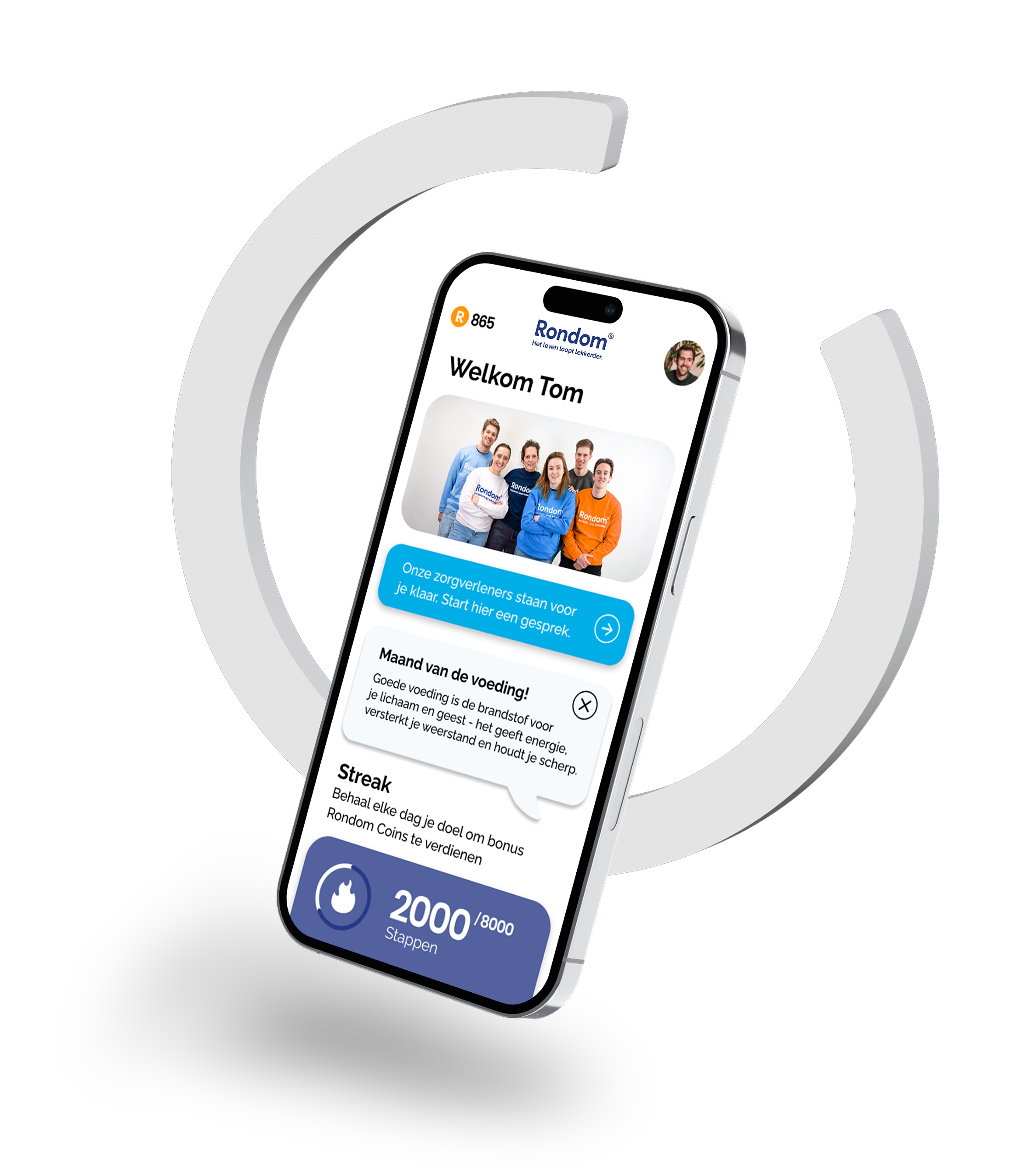
Work on your health with the Rondom app
- Direct contact with healthcare professionals via chat
- A community where you share experiences and motivate one another
- Personal challenges that match your goals
- Step counter for your daily exercise
- Earn points for healthy choices
- Articles, videos, recipes and assignments
- Register for (online) events