1. Home
  2. Healthy living and participation
  3. Wonen en veilig thuis
  4. Moeite met traplopen en veilig bewegen in huis

What do you think of our website?

We would love to hear what works well and what could be better. Your feedback helps us improve our website.

What would you like to give feedback on?

Read how we use feedback data.

Please note: Do not share medical details or a citizen service number (BSN).

Rondom – Het leven loopt lekkerder
Nederlands
  • Employers
  • Partners
  • Research
  • Working at
Rondom app
Ordering insolesAfspraak maken
Rondom – Het leven loopt lekkerder
Afspraak maken
Rondom – Het leven loopt lekkerder

We’d be happy to help you further.

  • info@rondomlopengroep.nl
  • 088-1180570

Need help?

  • Frequently Asked Questions
  • Reimbursement
  • Complaints procedure
  • What does your health insurer cover?

Contact

  • Book an appointment

Need help?

  • Frequently Asked Questions
  • Reimbursement
  • Complaints procedure
  • What does your health insurer cover?

Contact

  • Book an appointment

Services

  • Occupational therapy
  • Lifestyle and Dietetics
  • Podiatry and chiropody care
  • Psychology and social work
  • Physiotherapy
  • Rondom in Business
  • Rondom Shoes

Discover Rondom

  • Healthy living and participation
  • Activities
  • Rondom app
  • Social impact
  • Research

About Rondom

  • Current
  • Find a location near you

Follow Rondom

LinkedInInstagramFacebook

Life runs more smoothly.

General (payment) terms and conditionsPrivacy StatementCookie Policy
  • What do you notice?
  • What might be the cause of this?
  • What can you do yourself?
  • When is it advisable to seek help?
  • How Rondom can help
  • Download the Rondom app
  • Make an appointment

Difficulty with climbing stairs and moving around the house safely

Perhaps you’ve noticed that climbing stairs or moving around the house doesn’t come as easily as it used to? Perhaps you find yourself holding onto the banister more often or climbing stairs more slowly. Even small thresholds, loose rugs or a lack of support can suddenly become a problem. Your home should be a place where you feel safe. If moving about the house causes you stress, this can have a significant impact on your independence. You might go upstairs less often, avoid certain rooms or ask for help more frequently. It is important to address this in good time.
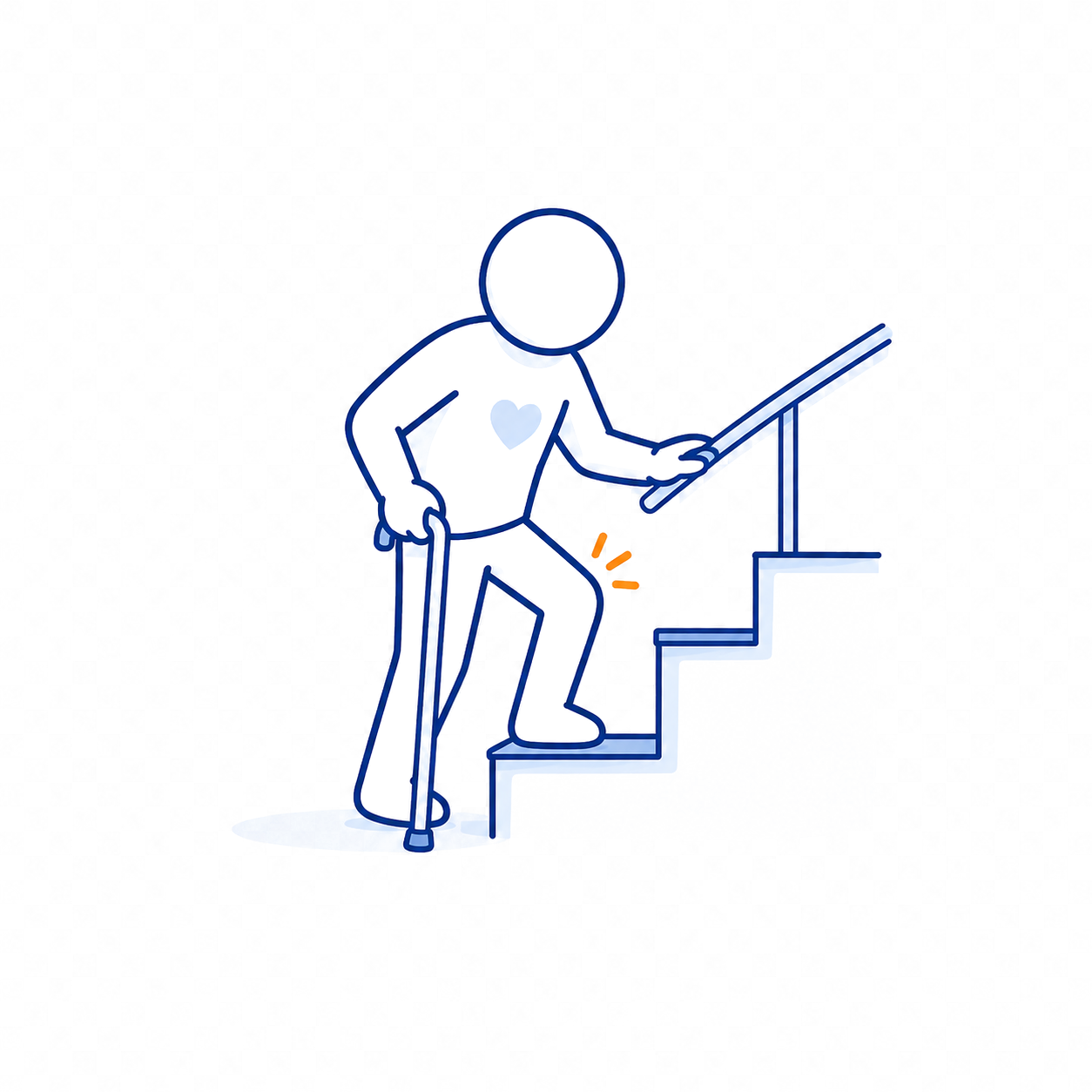
Difficulty with climbing stairs and moving safely around the house
What do you notice?

Moving around the house unsafely can develop gradually. Often, a person adapts without even realising it.

You may, for example, notice that:

  • climbing stairs takes more effort;
  • you become short of breath or tired on the stairs;
  • you experience pain when climbing stairs;
  • you’re afraid of tripping;
  • you have difficulty with thresholds;
  • you hold on to furniture;
  • if you are unsure in the bathroom or kitchen;
  • you feel less confident about carrying things;
  • you avoid certain areas.

Sometimes you may find that your confidence has waned. You can still move about, but it feels less safe than it used to.
What might be the cause of this?

Related topics

  • Adapting the home to accommodate health issues

    Have you noticed that your home no longer meets your needs? Perhaps the stairs have become a struggle, the bathroom feels unsafe, or thresholds and narrow passageways are causing difficulties. This can make you feel insecure. Your home should, in fact, be a place where you can move about freely and safely. Home adaptations do not always have to be major. Sometimes it is just a small change, such as better lighting, a handrail or a different layout. Sometimes more is needed. The most important thing is that your home suits your daily life and the things you want to continue doing yourself.

  • Afraid of falling

Was this information helpful?

Difficulty climbing stairs and moving around the house can be caused by pain, reduced muscle strength, stiffness or problems with balance. Dizziness, reduced sensation in the feet or impaired vision can also play a part.

The home itself can increase risks. Examples include loose rugs, slippery floors, thresholds, poor lighting, cluttered walkways or a lack of a proper handrail on the stairs.

Fatigue also plays a part. When you are tired, you often react more slowly. This makes it more likely that you will trip or lose your balance.

What can you do yourself?

You can often make your home safer with small changes. It helps to take a critical look at the areas where you walk frequently.

For example, you could:

  • ensure good lighting;
  • remove or secure loose pieces of fabric;
  • keep walkways clear;
  • wear sturdy shoes or slippers;
  • make good use of the banister;
  • Do not carry things whilst climbing the stairs;
  • Get up gently before you start walking;
  • dry wet or slippery floors immediately;
  • make thresholds clearly visible.

Take uncertainty seriously. It’s fine to walk more slowly. The important thing is that you keep moving safely.

When is it advisable to seek help?

It is wise to seek help if you feel unsafe at home or if you have nearly fallen. Advice is also important if you avoid using the stairs, hold on to furniture or go out less often because you feel unsteady.

Don’t wait until you fall. It is often the small signs that indicate your home or the way you move needs attention.

How Rondom can help

Together, we’ll look at where moving around your home feels difficult or unsafe. In doing so, we’ll take into account your physical condition, your habits and the layout of your home.

A occupational therapist can look at safe walking routes, aids and adaptations in the home. A physiotherapist can help with strength, balance and confidence in movement. If a fear of falling plays a major role, it can psychological support for stress and anxiety should be appropriate.

Together, we look for solutions that ensure greater safety and peace of mind at home.

Are you worried about falling? Perhaps you have already fallen or nearly fallen. Or you may have noticed that you have become more cautious when walking, climbing stairs or going outside. That fear is understandable. Falling can have many consequences. Being afraid of falling can limit your life. You might go out less often, avoid busy places or ask someone to accompany you more often. As a result, your fitness may decline. It is therefore important to take the risk of falling seriously at an early stage.

  • Cooking and preparing meals

    Do you find that cooking takes more effort than it used to? Perhaps you can still manage it, but you’re exhausted afterwards. Or you’re increasingly opting for ready meals. Because chopping, lifting, standing and tidying up take up too much energy. That can be frustrating, especially if you want to look after yourself or others properly. Cooking is not just about making a meal. It requires organisation, planning, movement and energy. You have to decide what you’re going to eat. Then you have to gather the ingredients, chop them, cook them, keep an eye on them and then tidy up. If just one of those steps becomes difficult, cooking can quickly feel like a huge chore.

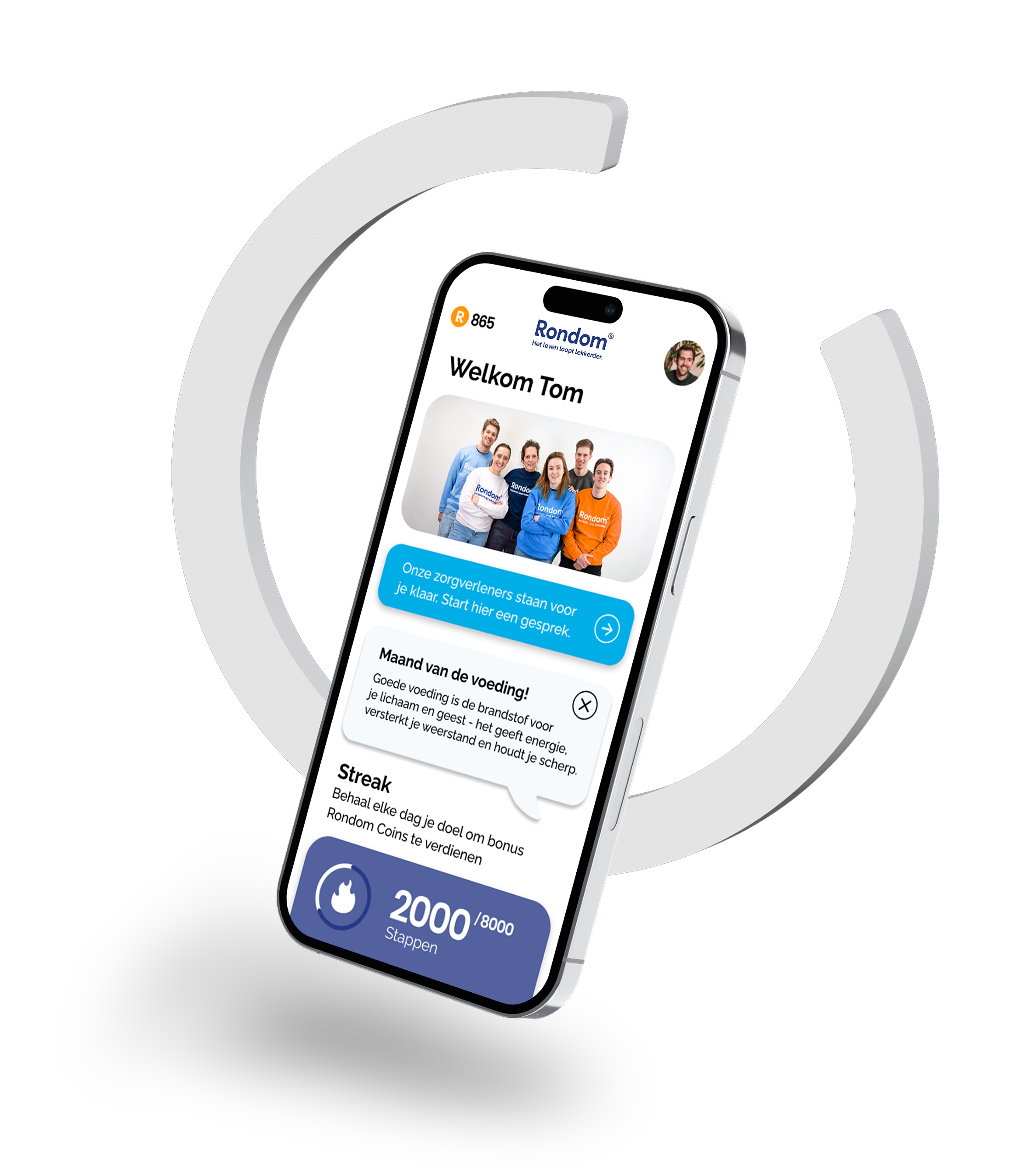
  • Work on your health with the Rondom app

    • Direct contact with healthcare professionals via chat
    • A community where you share experiences and motivate one another
    • Personal challenges that match your goals
    • Step counter for your daily exercise
    • Earn points for healthy choices
    • Articles, videos, recipes and assignments
    • Register for (online) events
    Discover the Rondom app

    Find a healthcare provider near you

    Book an appointmentCall usDownload the Rondom app