Rheumatism and ultrasound
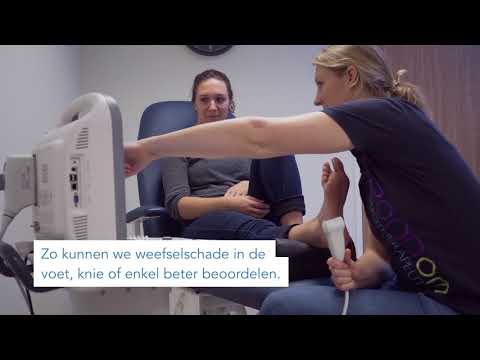
Ultrasound is used at Rondom Podotherapeuten to visualise and assess joints, muscles, tendons, nerves and ligaments in the foot and ankle. This enables the diagnosis of conditions such as joint inflammation, for example caused by rheumatism en gout, be identified quickly and accurately.
Rheumatism and ultrasound
Adhesions, fluid and overlying structures can pose a problem during a standard clinical foot examination. As a result, it is sometimes unclear what is causing the pain. Ultrasound is then a quick and effective way to visualise the foot. It can also be used for many different forms of rheumatic conditions, such as, for example, Rheumatoid Arthritis, Osteoarthritis, Psoriatic arthritis. It is also a virtually painless method. This makes it a good complement to the standard foot examination for people with rheumatism.
How can ultrasound help with foot problems?
- A distinction can be made between inflammatory reactions and stress-related problems. This allows for a more targeted treatment to be offered. For example, pressure redistribution can be achieved using a orthosis or perhaps a sole therapy to adjust the tax.
- Tendinitis or bursitis can be detected more quickly than with other methods. In this case too, treatment can then be adapted accordingly.
- Rheumatoid arthritis can be detected at an early stage; earlier than would be possible with a standard foot examination involving palpation (feeling/pressing on specific points of the foot).
- Even brief flare-ups of rheumatic inflammation can be predicted using ultrasound