Pain at the front of the ankle
Do you have pain at the front of your ankle? If so, you’ll often notice this when climbing stairs, squatting, exercising or bending your ankle forwards. Sometimes the ankle feels stiff or locked.
Pain at the front of the ankle can have various causes. It is often due to a pinched nerve or irritation at the front of the ankle joint.

What is it?
Pain at the front of the ankle is often caused by tissue at the front of the ankle joint becoming irritated or trapped.
With this condition, the ankle has reduced range of movement upwards. This is the movement you make when you bring your knee forwards whilst keeping your foot on the ground. This movement is necessary for walking, climbing stairs, squatting and playing sport.
Causes
This condition often develops following one or more ankle sprains. A sprain can cause irritation, swelling or scar tissue in the ankle joint. Sometimes, additional bone formation also occurs in the ankle, making movement more difficult.
Other factors can also contribute to the onset of ankle pain, such as:
- sports in which the ankle often bends far forwards;
- limited mobility of the ankle;
- an abnormal position of the foot;
- ankle instability;
- shoes with insufficient support.
What do you notice?
The pain is usually felt at the front of the ankle. Sometimes the pain radiates to the outside of the ankle or to the instep.
You may notice that:
- crouching or bending deeply at the knees is painful;
- causes symptoms when climbing stairs, running or jumping;
- the ankle feels stiff or locked;
- the ankle only swells after exercise;
- you find it more difficult to plant your foot;
- you will avoid these movements.
The impact of a healthy lifestyle and your mental health
Keep moving within your comfort zone and alternate exercise with sufficient rest. Strong muscles around the foot, ankle and calf help to keep the ankle more stable.
Sufficient sleep, a healthy diet and a gradual build-up of exercise or daily activity support recovery. It is important to temporarily limit movements that cause sharp pain, but not to rest the ankle completely unless absolutely necessary.
Mental stress Uncertainty can affect how you experience pain and how you move. If symptoms persist, this can make you feel uncertain when walking, exercising or climbing stairs. Our lifestyle coaches can work with you to see how getting enough sleep and eating a healthy diet can be incorporated into your daily life in a practical way. If your symptoms are affecting your work or daily activities, our occupational therapists contribute ideas.
What can you do yourself?
You can try to put a little less strain on it for a while. Do, however, keep moving within the limits of what feels comfortable.
To reduce symptoms, you can:
- avoid movements that cause sharp pain;
- build up your sporting activities gradually;
- wear shoes that provide sufficient support;
- Do not walk for too long with a stiff or painful ankle;
- Please get in touch if your ankle remains swollen or keeps giving way.
Advice and treatment
Our podiatrists We examine the position of your foot and the mobility of your ankle. We also assess the way you walk. This enables the podiatrist to determine what is causing strain on the front of the ankle.
Treatment may consist of:
- shoe advice;
- podiatric insoles to improve foot position and gait;
- tape to provide temporary support for the ankle;
- advice on fitness and training programmes;
- exercises for stability and mobility;
- ultrasound examination;
- collaboration with a physiotherapist.
Do we suspect wear and tear, a bone spur or another problem? In that case, we will refer you back to your GP for further investigation.
Shoe advice
If you experience pain at the front of the ankle, the right shoe can help reduce the strain on the ankle. When buying shoes, bear the following in mind:
- sufficient length and width, so that the toes have room. Shoes that are too narrow actually put extra pressure on the big toe;
- Buy shoes at the end of the day, as your feet are often slightly swollen then. That way, you can be sure the shoes fit properly;
- shoes made from soft and supple materials. Soft leather or supple fabric moulds better to the foot. This puts less pressure on the bump at the big toe;
- a good flex point on the shoe. The shoe must bend at the same point as your forefoot.
Rondom Shoes
Good shoes can prevent many ailments. At Rondom Schoenen We’ll help you choose shoes that suit your feet and your everyday life. This will help you reduce any discomfort and prevent new problems as much as possible.
At Rondom Schoenen, we use our knowledge and experience to put together a suitable range of shoes. In doing so, we take into account different foot shapes, needs and styles. We ensure there is a sufficient choice of good-quality shoes, across various price ranges.
Rondom Schoenen also has a knowledge base! Here you will find tips and information to help you choose the right shoes.
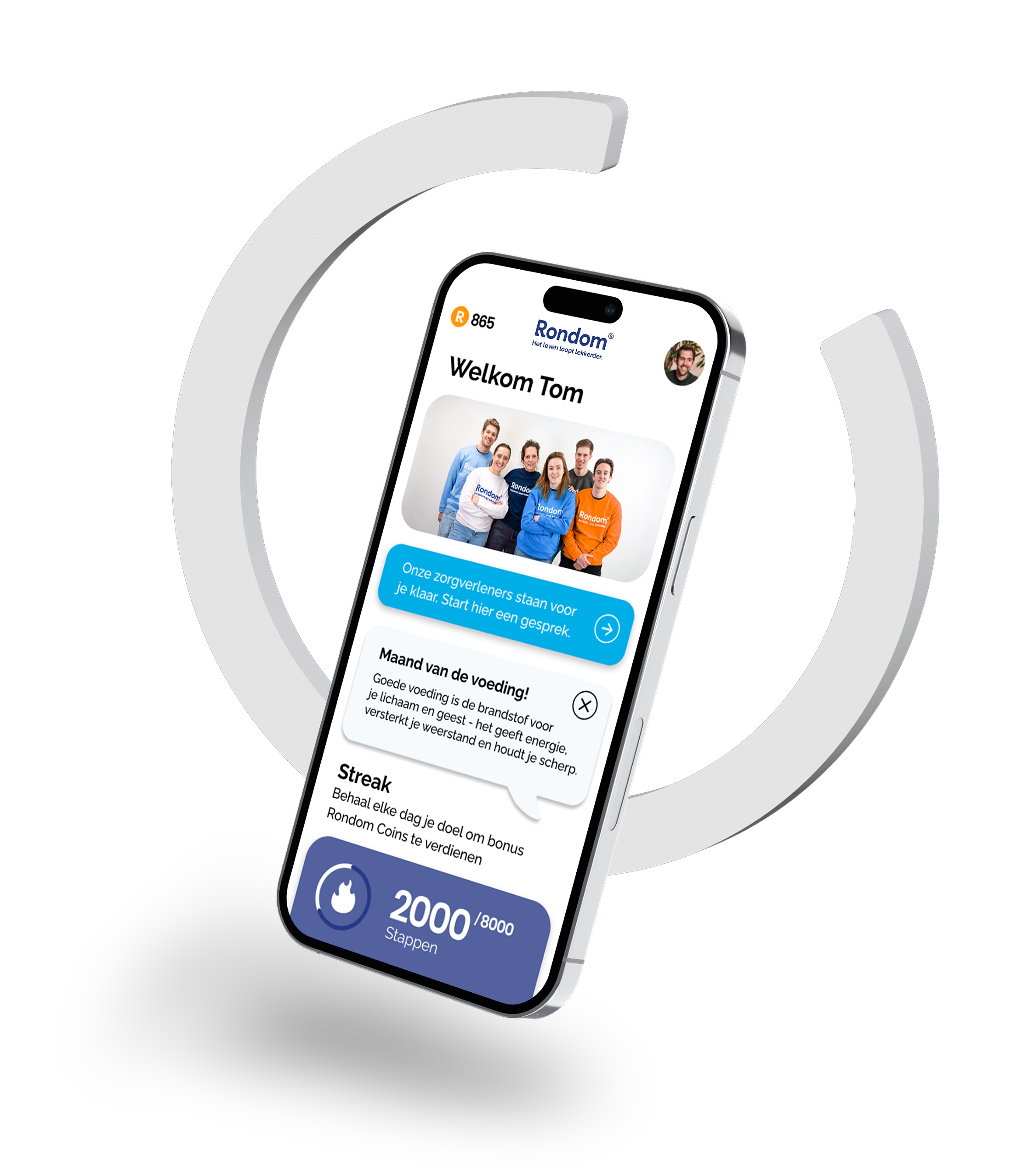
Work on your health with the Rondom app
- Direct contact with healthcare professionals via chat
- A community where you share experiences and motivate one another
- Personal challenges that match your goals
- Step counter for your daily exercise
- Earn points for healthy choices
- Articles, videos, recipes and assignments
- Register for (online) events