Returning to work after illness or health issues
Are you finding that returning to work is more daunting than you had expected? Perhaps you’d like to get back to work, but you’re unsure whether your body or mind is ready for it yet. Or you’re worried that you’ll take on too much too soon and end up having to take time off again. That’s perfectly understandable. Returning to work isn’t just about building up your hours. It’s also about confidence, energy, setting boundaries and managing your workload effectively. After an illness or health issues, work may feel different to how it used to. Tasks that used to come naturally may now require a lot of energy. Sometimes you’re not yet physically up to it. Sometimes it’s mainly mentally challenging to get back into a work routine. It’s important to build up your return to work gradually and realistically.
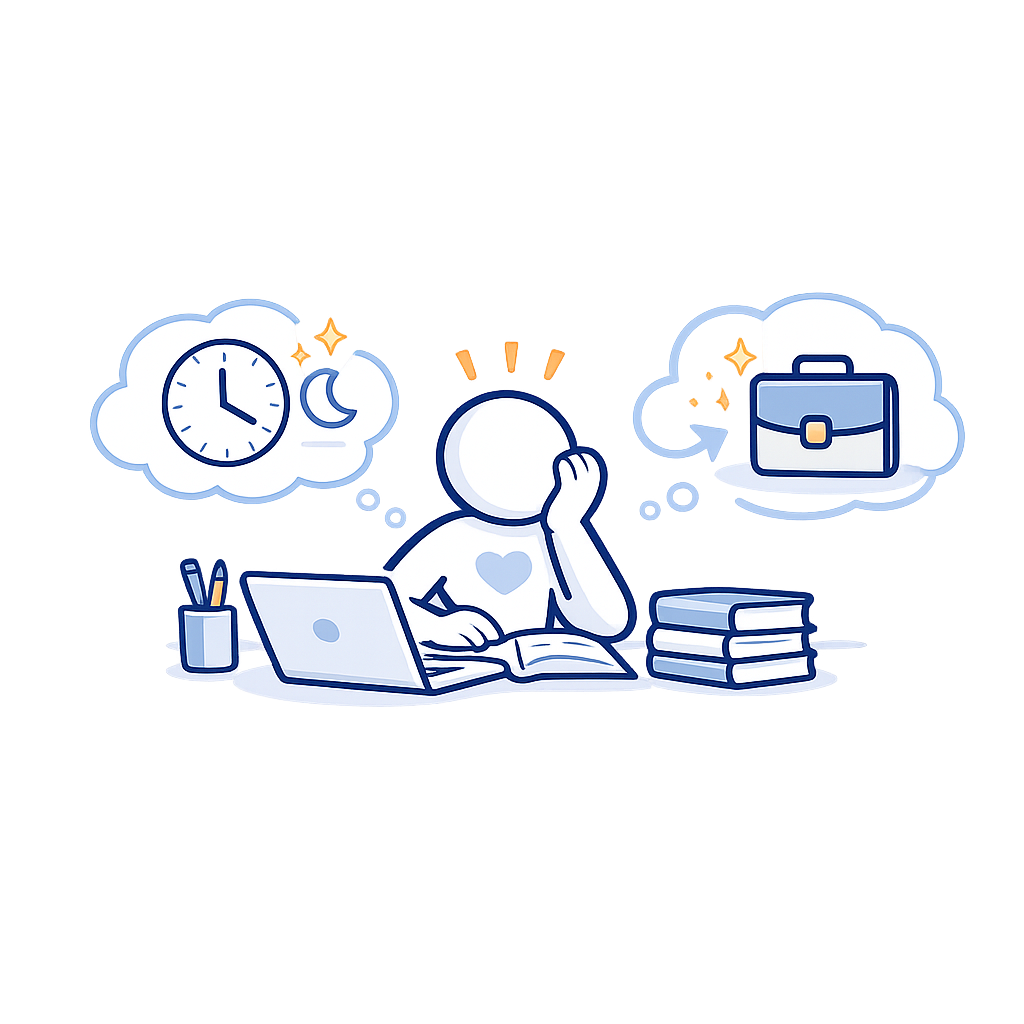
What do you notice?
Returning to work can be difficult in various ways. Sometimes you only realise this once you’ve started again.
You may, for example, notice that:
- you feel tired more quickly during or after work;
- you are dreading your first day at work;
- you’re worried that your colleagues expect too much of you;
- you have difficulty concentrating;
- pain or tension increases whilst working;
- if you are unsure about what you can and cannot do;
- you have little energy left after a day’s work;
- you find it difficult to set your boundaries;
- you are afraid of having another relapse.
Sometimes it feels as though you have to prove that you’re better again. That can put extra pressure on you. Whereas recovery often actually requires building things up step by step.
What might be the reason for this?
Returning to work can be difficult because your capacity for work is even lower than before. Your body or mind will therefore need more time to recover after exertion. Pain, tiredness, stress or poor sleep can also have an impact.
In addition, the working environment can be demanding. Think of work pressure, travelling time, lots of distractions, sitting for long periods, standing for long periods or frequently switching between tasks. Your own expectations also play a part. Many people want to get back to how things were as quickly as possible, but that isn’t always possible straight away.
Sometimes there is uncertainty about duties, working hours or the phased return to work. This can cause anxiety when returning to work. It is therefore important to liaise effectively with your employer and the company doctor.
What can you do yourself?
It helps to build up your return to work gradually and clearly. Don’t just look at how many hours you work, but also at what you do during those hours.
For example, you could:
- start with tasks that feel achievable;
- alternating work with short recovery periods;
- clearly discuss what you can and cannot do;
- spread your energy throughout the day;
- Take travel time into account in your planning;
- planning some rest after a day’s work;
- take signs of pain, stress or tiredness seriously;
- make arrangements with your employer or company doctor.
Don’t just focus on the first day back at work. Returning to work is a process that takes several weeks or months. It is normal for this to take time.
When is it advisable to seek help?
It is wise to seek help if your return to work keeps getting held up or if you notice that your symptoms worsen as soon as you start working again. It is also a good idea to seek advice if you are unsure about your limits, are afraid of a relapse or are unsure how to build up your workload gradually.
Please also seek help if you are always exhausted after work or can no longer manage at home. This may be a sign that your workload is not suited to your capacity.
How Rondom can help
Together, we’ll look at what’s needed to make work feasible again. In doing so, we’ll take into account your symptoms, energy levels, tasks, workplace and recovery periods.
A occupational therapist can help with organising work, managing energy and adapting tasks. A physiotherapist can provide support where pain, strength or movement are factors. A lifestyle coach can help with sleep, recovery and daily routines. In cases of stress, uncertainty or mental strain, it can psychological support should be appropriate.
We are looking for a plan that suits your situation. The aim is for you to be able to return to work without constantly pushing yourself beyond your limits.
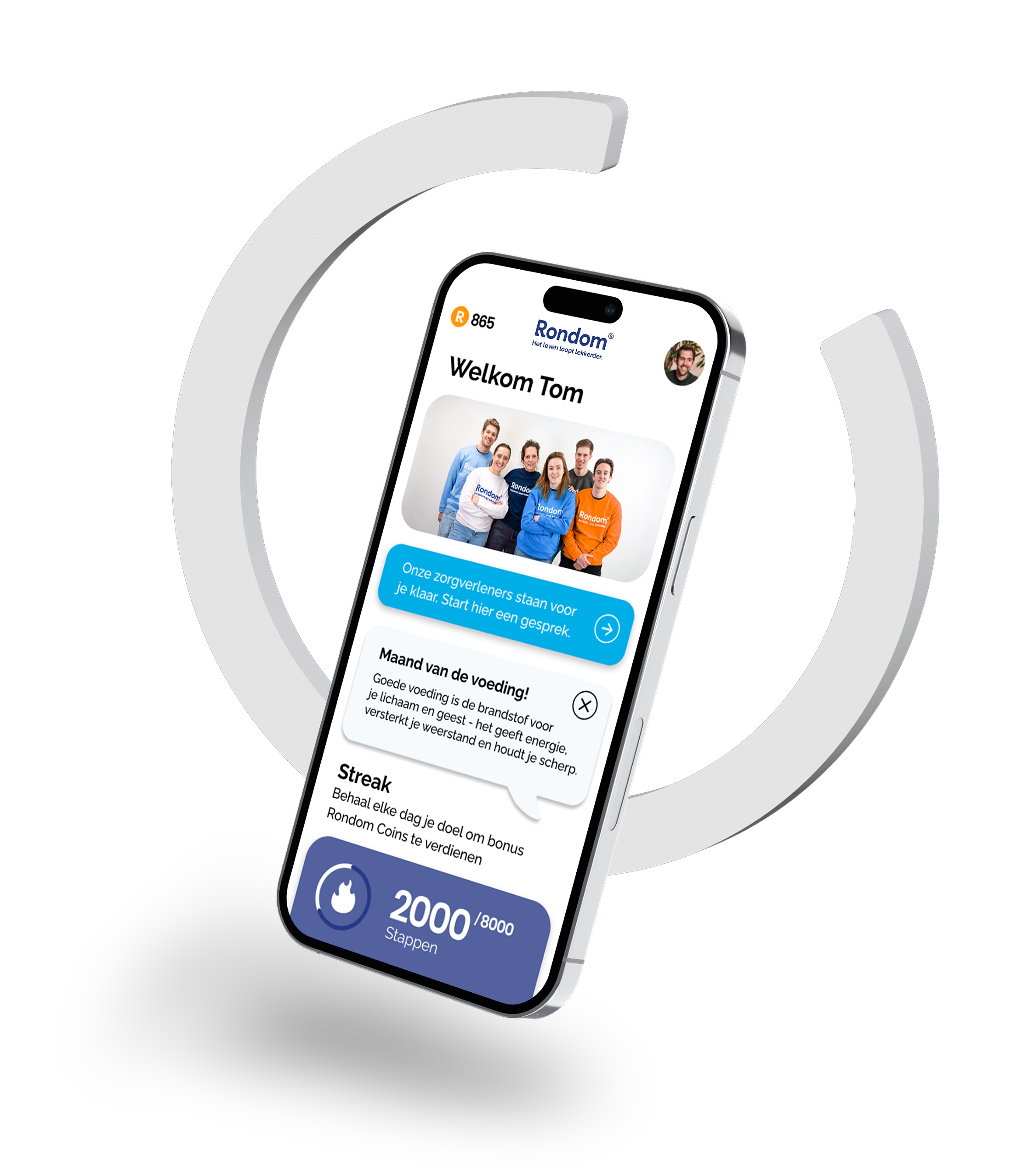
Work on your health with the Rondom app
- Direct contact with healthcare professionals via chat
- A community where you share experiences and motivate one another
- Personal challenges that match your goals
- Step counter for your daily exercise
- Earn points for healthy choices
- Articles, videos, recipes and assignments
- Register for (online) events